Tata Motors joins Delhi-NCR truck, bus replacement scheme with 8% discount
Synopsis
Two of India's biggest commercial vehicle makers — Tata Motors and Ashok Leyland — have now signed on to the Centre's Delhi-NCR fleet replacement scheme, together covering roughly half the market. With an 8% manufacturer discount, a 5% interest subsidy, and a decade-long tax concession from states, the incentive stack is unusually deep. The real question is whether it moves enough BS-IV fleet owners to act.
Key Takeaways
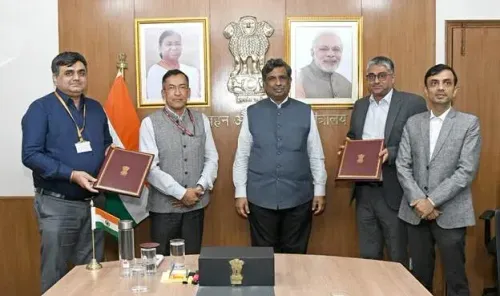
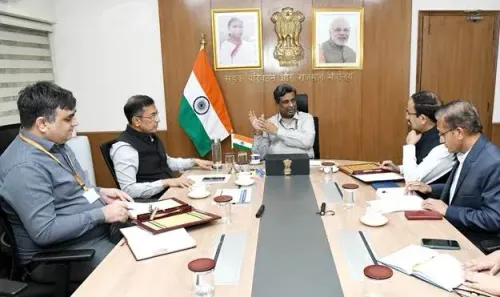
Tata Motors signed an MoU with the Ministry of Road Transport and Highways on 18 June to join the Delhi–NCR fleet replacement scheme.
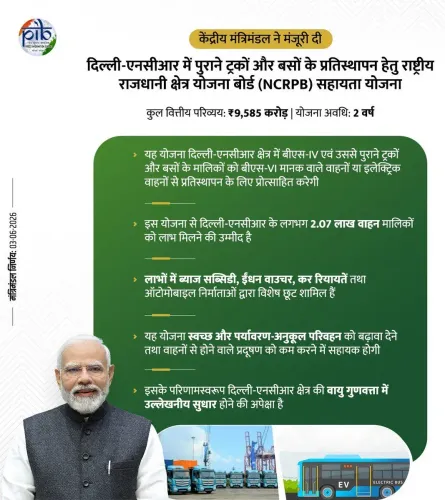
The company will offer an 8 per cent discount on eligible trucks and buses; EV discounts are capped at the ICE equivalent for the same GVW category.
The Central government adds a 5 per cent interest subsidy and fuel vouchers for 5 years ; state governments offer up to 100 per cent motor vehicle tax concession for 10 years .
Ashok Leyland and Switch Mobility signed similar MoUs earlier this week; together with Tata Motors they hold around 50 per cent of the trucks and buses market.
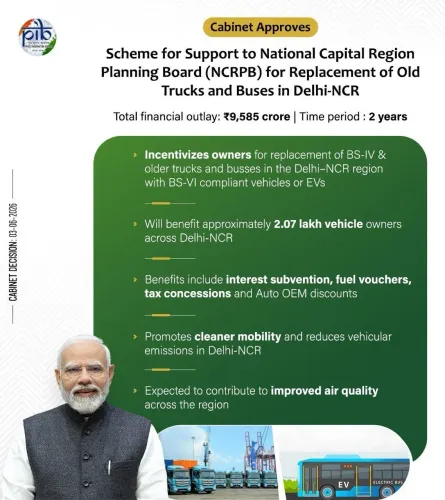
The scheme targets BS-IV or older vehicles registered in Delhi–NCR for replacement with BS-VI or electric alternatives.
Tata Motors holds 53.9 per cent of the heavy truck segment and 46.4 per cent of the M&HCV market nationally.
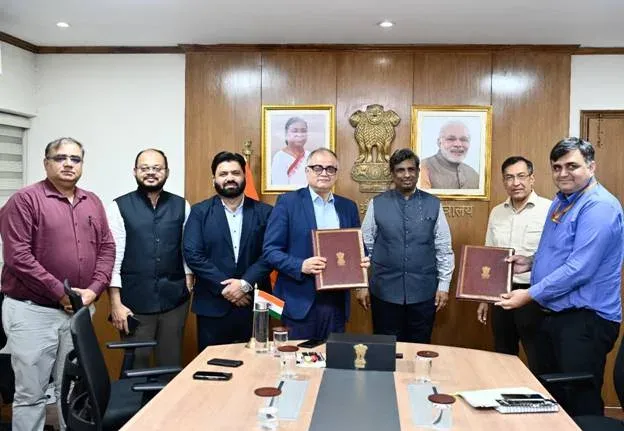
Tata Motors on Thursday, 18 June signed a Memorandum of Understanding (MoU) with the Ministry of Road Transport and Highways to participate in the Centre's fleet modernisation scheme for the Delhi–NCR region, offering an 8 per cent discount on eligible trucks and buses to help phase out high-polluting older vehicles.
What the MoU Covers
Under the agreement, Tata Motors will extend an 8 per cent discount on the ex-showroom price of trucks and buses purchased under the scheme. For electric vehicles, the discount will be capped at the equivalent applicable to an Internal Combustion Engine (ICE) vehicle of the same Gross Vehicle Weight (GVW) category, according to a statement issued by the Ministry of Road Transport and Highways.
Beyond the manufacturer discount, the Central government will provide a 5 per cent interest subsidy and fixed monthly fuel vouchers for five years. Participating state governments will offer up to 100 per cent concession on motor vehicle tax for 10 years and a full waiver of registration fees for eligible beneficiaries.
Ashok Leyland Also On Board
Earlier this week, Ashok Leyland and its subsidiary Switch Mobility also signed MoUs with the government for the scheme's implementation. Together, Tata Motors and Ashok Leyland collectively hold approximately 50 per cent of the country's market share in trucks and buses, giving the scheme significant commercial weight from the outset.
Who Is Eligible and Why It Matters
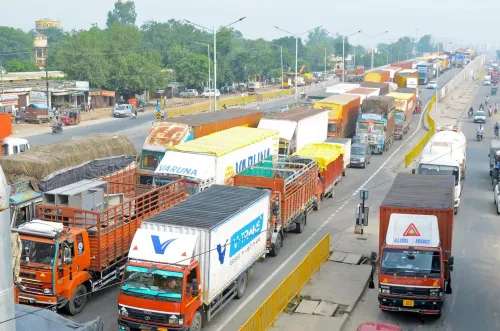
The scheme targets owners of trucks and buses registered in Delhi–NCR that comply with Bharat Stage-IV (BS-IV) or earlier emission norms. Eligible owners can replace these vehicles with Bharat Stage-VI (BS-VI) compliant or electric alternatives. The initiative is aimed squarely at reducing vehicular pollution in one of India's most air-quality-stressed urban zones.
Notably, the signing of these MoUs marks a formal operationalisation milestone for the scheme, moving it from policy announcement to industry commitment. This comes amid sustained pressure on the Delhi–NCR region to curb transport-sector emissions, which remain a significant contributor to the area's chronic air quality crisis.
Tata Motors' Market Position
Tata Motors commands approximately 35.5 per cent of India's overall commercial vehicle retail market. In heavier segments, its dominance is more pronounced — nearly 46.4 per cent of the Medium and Heavy Commercial Vehicle (M&HCV) market and up to 53.9 per cent in the heavy truck (HCV) segment. Its participation is therefore expected to drive substantial uptake of the scheme among fleet operators.
With two of the sector's largest players now committed, the government's fleet replacement push in Delhi–NCR moves into its next phase — one that will test whether financial incentives are sufficient to overcome fleet operators' inertia around vehicle upgrades.
Point of View
Central interest subsidies, and decade-long state tax relief. But the track record of voluntary replacement schemes in India is mixed: fleet operators, particularly small and medium transporters who dominate Delhi-NCR's truck population, have historically prioritised running costs over compliance. The real stress test will come when registration data shows how many BS-IV vehicles actually get scrapped versus how many owners pocket the discount on a vehicle they would have bought anyway. With Tata Motors and Ashok Leyland holding half the market, supply is not the constraint — demand conversion is.
NationPress
25 Sept 2026
Frequently Asked Questions
What is the Delhi-NCR truck and bus replacement scheme?
It is a Central government initiative to replace old, high-polluting trucks and buses registered in Delhi–NCR — those complying with BS-IV or earlier norms — with BS-VI compliant or electric vehicles. The scheme combines manufacturer discounts, a central interest subsidy, and state-level tax concessions to incentivise fleet owners.
What discount does Tata Motors offer under the scheme?
Tata Motors will provide an 8 per cent discount on the ex-showroom price of eligible trucks and buses. For electric vehicles, the discount is capped at the level applicable to an ICE vehicle of the equivalent Gross Vehicle Weight category.
What additional benefits does the government provide?
The Central government offers a 5 per cent interest subsidy and fixed monthly fuel vouchers for five years. Participating state governments can provide up to 100 per cent concession on motor vehicle tax for 10 years and a full waiver of registration fees for eligible beneficiaries.
Which other companies have joined the scheme?
Ashok Leyland and its subsidiary Switch Mobility signed MoUs with the government earlier the same week. Together with Tata Motors, these companies account for approximately 50 per cent of India's trucks and buses market.
Why is Tata Motors' participation significant?
Tata Motors holds around 35.5 per cent of India's overall commercial vehicle retail market, 46.4 per cent of the M&HCV segment, and up to 53.9 per cent of the heavy truck segment. Its scale means a large share of eligible fleet owners will be able to access the discount through Tata's dealer network.