Chhattisgarh CMO drives crackdown on fake fertilisers for farmers
Synopsis
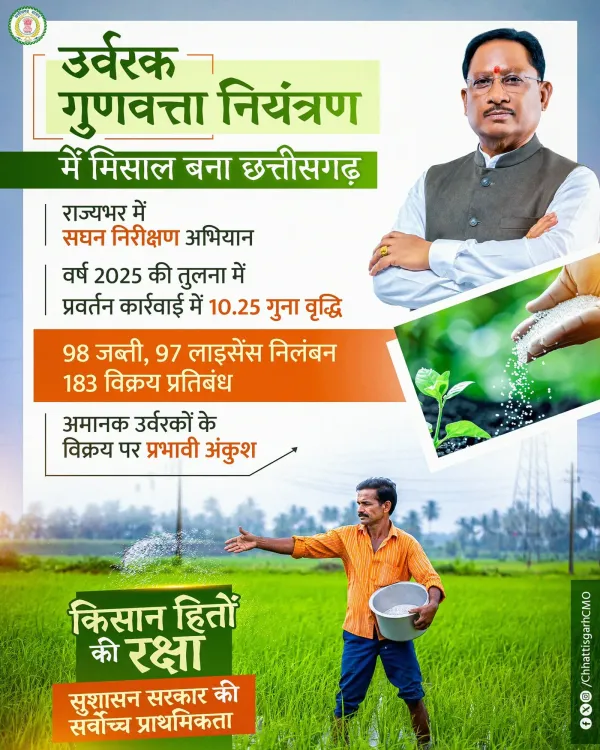
The Chhattisgarh CMO on 21 July 2026 announced a state-wide intensive surveillance campaign against fake and substandard fertilisers, pledging regular inspections, strict monitoring, and tough action against violators to ensure certified inputs reach farmers and boost agricultural productivity.
Key Takeaways
The Chief Minister's Office of Chhattisgarh declared farmer welfare its highest governance priority in a post dated 21 July 2026 .
An intensive state-wide surveillance campaign is under way to detect and eliminate spurious and substandard fertilisers from the supply chain.
The drive involves regular inspections, strict monitoring , and stringent legal action against those found guilty of selling fake inputs.
The campaign aims to ensure only certified, quality fertilisers reach Chhattisgarh's farming communities, strengthening farmer confidence.
Improved input quality is expected to enhance crop quality and agricultural output across the state.
The initiative aligns with the national Fertilizer (Control) Order, 1985 framework, with state-level enforcement as the key mechanism.
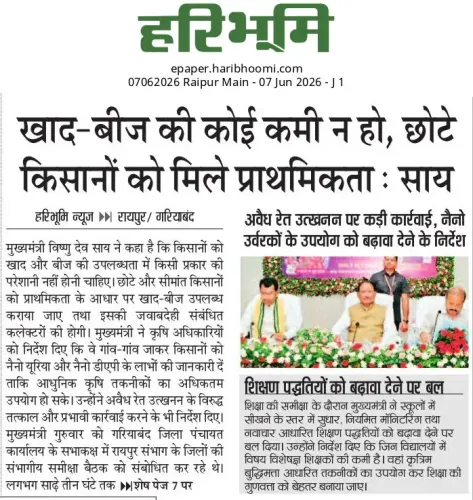
The Chief Minister's Office of Chhattisgarh announced on Tuesday, 21 July 2026, that the state government has launched a sustained, intensive surveillance campaign across Chhattisgarh to shield farmers from spurious and substandard fertilisers, calling farmer welfare its highest governance priority.
The post, shared in Hindi, states: 'किसान हितों की रक्षा सुशासन सरकार की सर्वोच्च प्राथमिकता है' ('Protecting farmer interests is the topmost priority of the good-governance government'). It adds that regular inspections, strict monitoring, and stringent action against violators are now ensuring that only certified, quality fertilisers reach cultivators across the state.
Context
Chhattisgarh is a central Indian state where agriculture — particularly paddy cultivation — forms the backbone of rural livelihoods. Millions of small and marginal farmers depend on timely access to genuine agricultural inputs to protect their crop yields and incomes. Counterfeit or substandard fertilisers can devastate harvests, leaving farming households in financial distress and undermining the state's food-security goals. The CMO's announcement signals that the state administration has identified fake fertilisers as a systemic risk requiring active enforcement, not merely regulatory paperwork. The campaign is described as 'sghana nigrani abhiyan' — a dense or intensive surveillance drive — conducted across the entire state.Policy Backdrop
Fertiliser quality regulation in India is governed primarily by the Fertilizer (Control) Order, 1985, enacted under the Essential Commodities Act. This order establishes nationwide standards for fertiliser composition, packaging, and labelling, and mandates licensing for dealers and distributors. State governments are responsible for enforcement on the ground through their agriculture departments. Indian state governments periodically intensify such enforcement drives, particularly ahead of sowing seasons, when demand for fertilisers peaks and the risk of adulteration or counterfeiting rises. These actions complement central government programmes focused on soil health and input quality, including the Soil Health Card scheme, which aims to give farmers data-driven guidance on fertiliser use. The Chhattisgarh initiative fits a broader national pattern in which agrarian states facing challenges with counterfeit agricultural products have stepped up inspection regimes and dealer accountability mechanisms to protect cultivators.Stakeholders and Impact
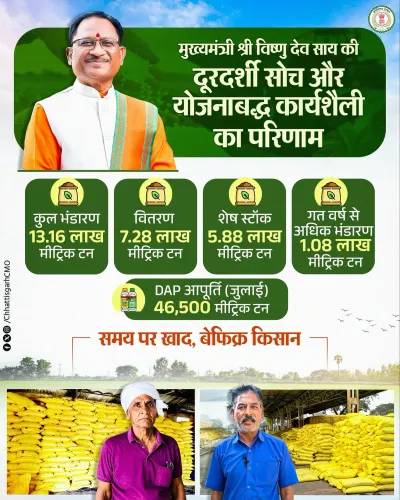
The primary beneficiaries are the farmers of Chhattisgarh, who stand to gain from assured access to certified fertilisers, leading to better crop quality and higher productivity. The CMO's statement notes that the campaign has already strengthened farmer confidence, improved farming quality, and is pushing the state toward greater agricultural output. Fertiliser dealers and distributors operating in the state face heightened scrutiny. Those found selling spurious or substandard products face strict legal action under the Fertilizer (Control) Order, which can include licence cancellation, fines, and criminal prosecution. Legitimate dealers, by contrast, benefit from a level playing field as unlicensed or fraudulent competitors are weeded out. For the broader agrarian economy, reliable input quality translates into more predictable yields, better farmer incomes, and reduced dependence on distress relief measures — a cascading benefit for rural consumption and state finances.What's Next
The state agriculture department's inspection outcomes — including the number of samples tested, violations detected, and penalties imposed — will be a key measure of the campaign's effectiveness. Observers will also watch whether the state proposes amendments to fertiliser licensing rules in the next legislative session to institutionalise the enforcement gains. If the intensive surveillance drive sustains momentum through the kharif sowing season, it could serve as a replicable model for other agrarian states grappling with similar input-quality challenges. The Chhattisgarh government's framing of farmer welfare as a 'good-governance' deliverable also signals that agricultural enforcement will remain a visible political priority in the months ahead.Point of View
The administration is tying agricultural enforcement directly to its political identity. The campaign follows a well-worn playbook used by agrarian state governments across India, but its success will ultimately depend on whether inspection data is made public and penalties are consistently applied. If the drive produces measurable reductions in fake-fertiliser complaints, it could strengthen the government's rural credibility ahead of future electoral cycles.
NationPress
21 Jul 2026
Frequently Asked Questions
What action is the Chhattisgarh government taking against fake fertilisers?
The Chhattisgarh government has launched a state-wide intensive surveillance campaign involving regular inspections, strict monitoring, and stringent action against dealers found selling spurious or substandard fertilisers, as announced by the Chief Minister's Office on 21 July 2026.
Which law governs fertiliser quality in India?
Fertiliser quality and distribution in India are regulated by the Fertilizer (Control) Order, 1985, enacted under the Essential Commodities Act. It sets nationwide standards and mandates licensing for fertiliser dealers, with state governments responsible for on-ground enforcement.
How does the Chhattisgarh fertiliser crackdown benefit farmers?
By ensuring only certified and quality fertilisers reach cultivators, the campaign protects crop yields, strengthens farmer confidence, improves farming quality, and pushes the state toward higher agricultural productivity, according to the CMO's statement.
What is 'Sushaasan Sarkar' in the context of Chhattisgarh?
'Sushaasan Sarkar' translates to 'good-governance government' and is the political branding used by the current Chhattisgarh administration to describe its governance approach, including initiatives like the fertiliser quality enforcement drive.
Is the fake fertiliser problem common in other Indian states?
Yes, Indian state governments periodically launch enforcement drives against substandard agricultural inputs. Similar quality-control measures have been reported in other agrarian states, particularly ahead of sowing seasons when demand for fertilisers peaks and risks of adulteration rise.