China-Pak Boundary Commission: Technical body with a Kashmir dispute at its core
Synopsis
The China–Pakistan Boundary Joint Commission, activated in Islamabad on 16–17 September 2026, is being framed by Beijing and Islamabad as routine border administration — but India sees something far more consequential: the slow institutionalisation of a disputed 1963 land transfer that New Delhi has never recognised. With CPEC infrastructure running through Pakistan-administered Kashmir and regular bilateral meetings now scheduled, critics warn that technical cooperation is quietly doing the work that political negotiations never could.
Key Takeaways
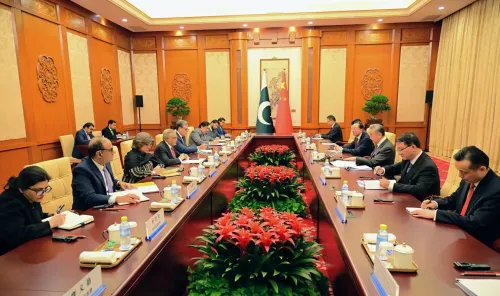
The China–Pakistan Boundary Joint Commission held its first meeting in Islamabad on 16–17 September 2026 , co-chaired by Li Ya (China) and Bilal Mahmood Chaudhary (Pakistan).
The commission is rooted in the 2013 China–Pakistan Agreement on the Boundary Management System and the contested 1963 boundary agreement that transferred the Shaksgam Valley (~ 5,180 sq km ) to Chinese control.
India has never recognised the 1963 agreement, asserting that Pakistan had no legal authority to transfer territory that India claims as part of Ladakh .
India's Ministry of External Affairs formally rejected the commission, calling it without legal basis and stating Pakistan cannot negotiate over territory under its 'illegal and forcible occupation.' The commission also supports trade and movement through the Khunjerab Pass , closely linked to CPEC infrastructure — which India separately opposes as passing through disputed territory.
The 1963 agreement's Article 6 described the settlement as provisional, pending resolution of the Kashmir dispute — a clause critics say the new commission effectively circumvents.
The activation of the China–Pakistan Boundary Joint Commission on 16–17 September 2026 in Islamabad may read like routine border administration, but it has triggered a sharp legal objection from India — one that cuts to the heart of the unresolved Kashmir dispute and the contested status of the Shaksgam Valley. What Beijing and Islamabad call practical cooperation, New Delhi calls an attempt to permanently institutionalise an arrangement made without its consent.
A New Mechanism Takes Shape
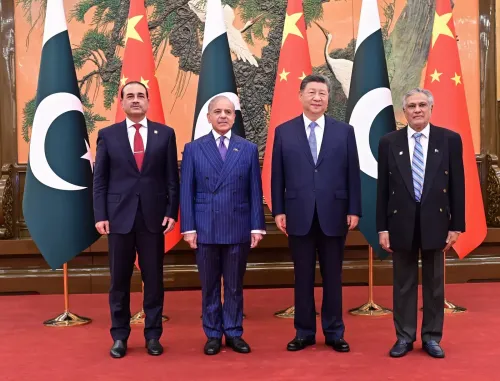
The commission held its inaugural meeting in Islamabad on 16–17 September 2026, co-chaired by Li Ya of China's Foreign Ministry and Bilal Mahmood Chaudhary of Pakistan's Foreign Ministry. Discussions covered border management, joint surveys, cross-border movement, trade, and people-to-people links. Both sides agreed to hold the next meeting in China.
The commission was established under the 2013 China–Pakistan Agreement on the Boundary Management System. Article 45 of that agreement provides for a joint supervisory body with duties that include inspecting the frontier, conducting surveys, maintaining boundary markers, managing cross-border facilities, and handling incidents. Crucially, while the commission may designate alternate marker sites if an original position cannot be restored, it is not mandated to alter the boundary line itself.
The Disputed Legal Foundation
The commission's legitimacy rests on the 1963 China–Pakistan Boundary Agreement, signed in Beijing on 2 March 1963. That agreement placed the Shaksgam Valley — also referred to as the Trans-Karakoram Tract — under Chinese control, covering an area of approximately 5,180 square kilometres. India has never recognised the agreement, maintaining that the Shaksgam Valley is part of Ladakh and that Pakistan had no legal authority to transfer territory it did not lawfully possess.
Notably, the 1963 agreement itself acknowledged its provisional nature. Its Article 6 stipulated that once India and Pakistan resolved the Kashmir dispute, the relevant sovereign authority would reopen negotiations with China to conclude a formal boundary treaty. Critics argue this clause is pivotal: the original arrangement recognised that the Kashmir question was unresolved, yet the new commission creates a continuing administrative system for managing the frontier — effectively treating a provisional arrangement as settled.
Trade, Connectivity and Strategic Depth
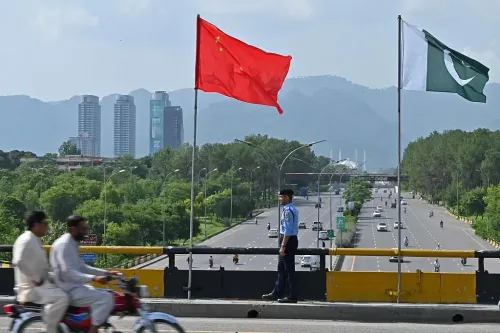
Beyond boundary demarcation, the commission is designed to facilitate trade and movement through the Khunjerab Pass, the principal land crossing linking China's Xinjiang region with Pakistan. The pass connects to the Karakoram Highway and feeds into the China–Pakistan Economic Corridor (CPEC).
India objects to CPEC infrastructure passing through Pakistan-administered Kashmir, territory it claims as its own. Critics argue that infrastructure investment and official border cooperation are not politically neutral — roads, crossing points and surveys conducted on disputed ground can create facts on the ground that complicate any future settlement. For Beijing, the commission secures a strategically sensitive corridor between Xinjiang and Pakistan. For Islamabad, it deepens trade ties and security cooperation with its closest ally.
India's Legal Objection
India's Ministry of External Affairs formally rejected the commission following its activation, stating that there is no legally recognised China–Pakistan boundary with respect to Indian territory and describing the body as having no legal basis. New Delhi reiterated that Pakistan has no authority to enter into arrangements involving territory that India considers under Pakistan's illegal and forcible occupation.
India's objection operates on two distinct tracks. First, it rejects the original 1963 transfer of the Shaksgam Valley as invalid from its inception. Second, it opposes the CPEC-linked infrastructure and any related border cooperation in Pakistan-administered Kashmir. India has made clear that the commission's activities cannot alter its sovereignty claims or confer legitimacy on Chinese and Pakistani control.
China and Pakistan, for their part, treat their bilateral agreements as legally valid and describe the commission as standard border cooperation. Their stated position is that the body will manage technical matters without prejudicing India's larger Kashmir claims — a framing New Delhi explicitly rejects.
Why the Commission Has Become a Regional Issue
The commission does not formally redraw any map. Its immediate mandate is maintenance of markers, surveys, crossing management, and incident prevention. But its political significance may outweigh its technical scope. Regular, institutionalised meetings can normalise disputed control, while deepening trade and infrastructure ties can bind contested territory more tightly to both China and Pakistan over time.
The broader implication, as India sees it, is that technical administration is being used as a tool of political consolidation — one meeting at a time. How the commission's activities evolve, and whether India's legal objections gain traction in multilateral forums, will shape the geopolitical contours of this contested region for years ahead.
Point of View
China and Pakistan are making the provisional look permanent — one survey, one meeting, one infrastructure project at a time. India's legal objections are consistent and well-founded, but objections alone do not reverse facts on the ground. The real question is whether New Delhi has a proactive strategy beyond rejection — because in territorial disputes, institutions that meet regularly tend to outlast protests that do not.
NationPress
24 Sept 2026
Frequently Asked Questions
What is the China–Pakistan Boundary Joint Commission?
It is a bilateral body established under the 2013 China–Pakistan Agreement on the Boundary Management System, tasked with managing the shared frontier through surveys, marker maintenance, cross-border facility oversight, and incident management. It held its first meeting in Islamabad on 16–17 September 2026.
Why does India object to the commission?
India rejects the commission because it is grounded in the 1963 China–Pakistan boundary agreement, which transferred the Shaksgam Valley to China — a transfer India has never recognised as legally valid. New Delhi maintains that Pakistan had no authority to negotiate over territory India considers part of Ladakh, and calls the commission legally baseless.
What is the Shaksgam Valley and why is it disputed?
The Shaksgam Valley, also known as the Trans-Karakoram Tract, is an approximately 5,180 square kilometre area placed under Chinese control by the 1963 agreement. India asserts it is part of Ladakh and was transferred by Pakistan without legal authority, making the arrangement invalid from the outset.
How does CPEC relate to the boundary commission?
The commission facilitates trade and movement through the Khunjerab Pass, a key node on the Karakoram Highway and the China–Pakistan Economic Corridor (CPEC). India opposes CPEC infrastructure routed through Pakistan-administered Kashmir, arguing it passes through territory under illegal occupation and cannot be legitimised by bilateral cooperation.
Did the 1963 agreement itself acknowledge the Kashmir dispute was unresolved?
Yes. Article 6 of the 1963 China–Pakistan boundary agreement described the settlement as provisional, stipulating that once India and Pakistan resolved the Kashmir dispute, the relevant sovereign authority would renegotiate a formal boundary treaty with China. Critics argue the new commission's institutionalisation effectively sidesteps this acknowledgment.