Shivraj Singh Chouhan Meets Punjab Farmers Under Khet Bachao Abhiyan
Synopsis
Union Agriculture Minister Shivraj Singh Chouhan visited Badarpur in Punjab's SAS Nagar district on 17 November 2026 for a farmer dialogue under the Khet Bachao Abhiyan, discussing ways to boost farm profitability and incomes.
Key Takeaways
Union Agriculture Minister Shivraj Singh Chouhan conducted a farmer dialogue in Badarpur, Sahibzada Ajit Singh Nagar (Mohali) district, Punjab on 17 November 2026 .
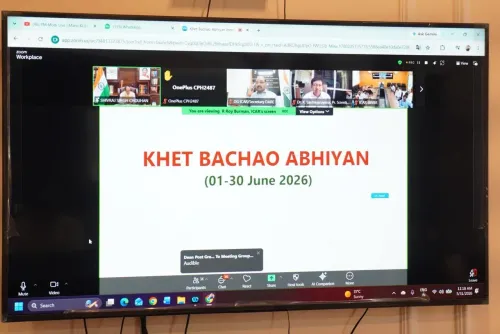
The visit was part of the Khet Bachao Abhiyan , a campaign aimed at direct farmer outreach to improve agricultural viability and incomes.
Chouhan heard farmers' experiences, gathered suggestions, and discussed measures to make farming more profitable.
Punjab faces specific agricultural pressures including groundwater depletion, crop-residue burning, and the need for crop diversification beyond wheat-rice.
The outreach aligns with the ministry's emphasis on ground-level feedback to refine central schemes such as PM-KISAN , launched in 2019 .
Subsequent campaign stops and any follow-up state-level coordination meetings will indicate the practical impact of the dialogue.
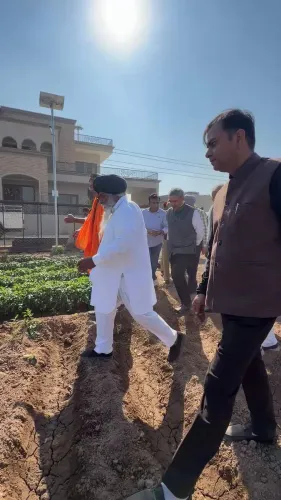
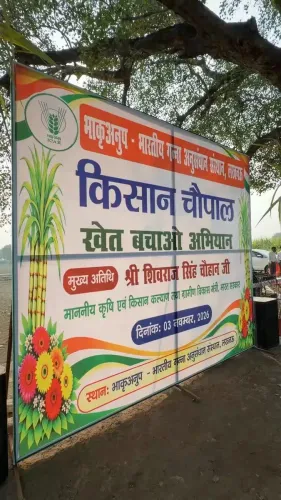
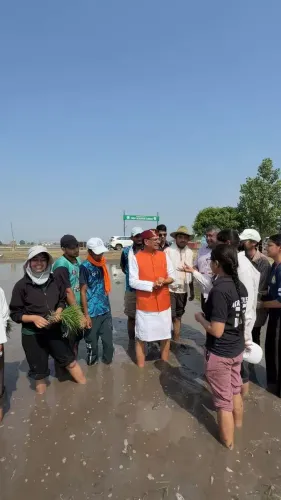
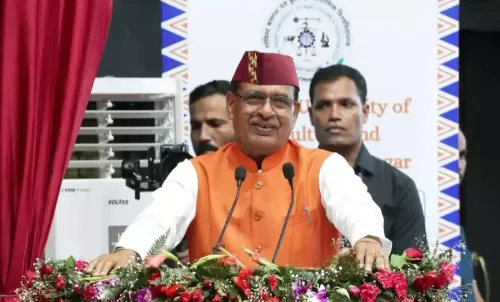
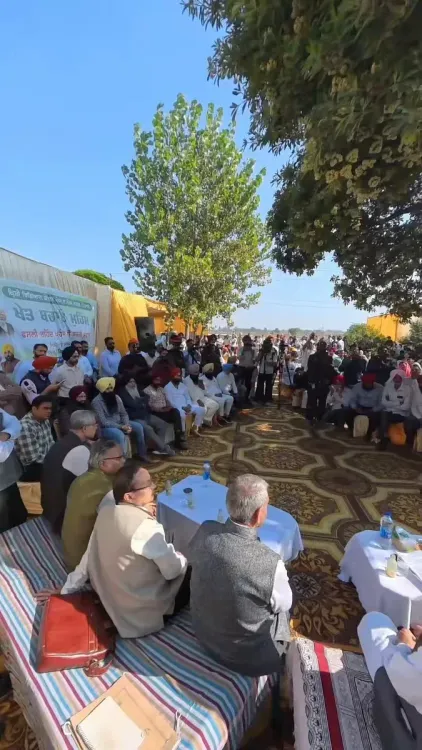
Straight from the fields of Punjab, Union Agriculture Minister Shivraj Singh Chouhan sat down with farmers in Badarpur, Sahibzada Ajit Singh Nagar district, on Tuesday, 17 November 2026 — listening, questioning, and mapping out ways to push agricultural incomes higher under the Khet Bachao Abhiyan.
Chouhan described the visit as an 'aatmiy samvaad' — a heartfelt dialogue — with farmer brothers and sisters, saying he heard their experiences, gathered their suggestions, and held detailed discussions on 'making farming better, more profitable and on ways to increase farmers' incomes'. The interaction in Badarpur is part of a wider campaign that takes Union ministry-level outreach directly to the farm gate.
Why Punjab, and Why Now
Punjab is not just any agricultural state — it is the heartland of India's wheat-rice belt, and also the epicentre of some of the country's most acute farm-sector pressures: groundwater depletion from paddy cultivation, the annual crisis of crop-residue burning, stagnant net incomes despite high yields, and a long-simmering demand for meaningful crop diversification. A Union minister arriving in a village in Mohali district to hear grievances in person carries real signal weight here.
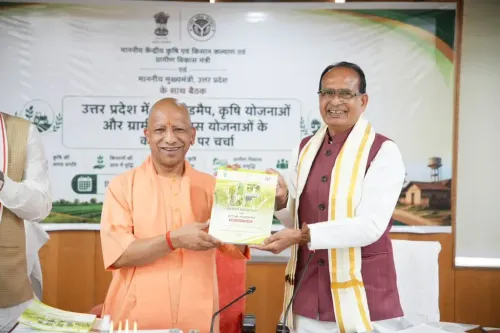
The Khet Bachao Abhiyan — loosely, 'Save the Farm Campaign' — frames the engagement as a two-way exercise: not just disseminating central schemes but actively collecting ground-level feedback that can feed back into policy refinement. That iterative loop is precisely what the ministry has been emphasising as it tries to tailor instruments like the PM-KISAN direct-income-transfer programme, launched in 2019, to varied regional realities.
Listening as a Policy Tool
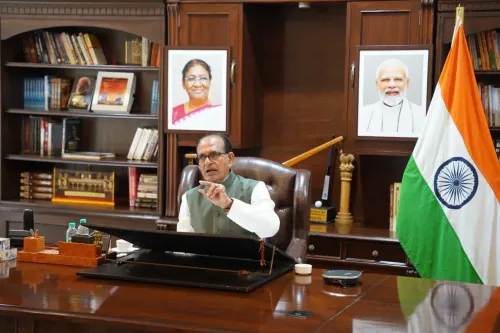
The model of Union agriculture ministers conducting state-level farmer dialogues is not new, but its recurrence under Chouhan — a politician who built his national reputation through grassroots mobilisation during four terms as Chief Minister of Madhya Pradesh — gives it a particular texture. He has consistently projected accessibility as a governing style, and visits like today's are designed to reinforce that image while generating actionable local input.
For Punjab's farming households, the questions on the table are urgent: how to reduce input costs, how to diversify beyond paddy and wheat without losing income security, and how central policy can better reach smallholders. Whether today's conversation in Badarpur moves any of those needles will depend on what emerges in subsequent coordination meetings between the Union ministry and the state government.
The campaign continues. The next stop — and what commitments, if any, travel home with the minister — will be the real measure of the exercise.
Point of View
Ground-level ministerial engagement to build political credibility with farmers — a constituency that has been deeply restive in recent years. For a minister who governed Madhya Pradesh four times on the back of grassroots outreach, the format is a natural extension of his political brand. Punjab is a high-stakes venue: a state with a non-BJP government, a history of large-scale farmer protests, and structural agricultural challenges that no single scheme has yet resolved. How the ministry translates dialogue into concrete state-specific action will determine whether these visits are substantive policy inputs or well-photographed optics.
NationPress
17 Nov 2026
Frequently Asked Questions
What is the Khet Bachao Abhiyan?
The Khet Bachao Abhiyan is a farmer outreach campaign run under the Union Ministry of Agriculture and Farmers Welfare, focused on direct dialogue with farming communities to improve agricultural profitability and incomes.
Where did Shivraj Singh Chouhan meet farmers in Punjab?
He met farmers in Badarpur village in Sahibzada Ajit Singh Nagar (Mohali) district of Punjab on 17 November 2026 .
What was discussed at the Badarpur farmer meeting?
Chouhan listened to farmers' experiences, gathered their suggestions, and held detailed discussions on making farming more profitable and increasing farmer incomes.
What are Punjab's key agricultural challenges?
Punjab faces serious issues including groundwater depletion from paddy cultivation, crop-residue burning, stagnant net farm incomes, and the need to diversify crops beyond the wheat-rice cycle.
What is PM-KISAN and how does it relate to this outreach?
PM-KISAN, launched in 2019 , is a central government scheme providing direct income support to farmers. The Khet Bachao Abhiyan dialogues are aimed at collecting ground-level feedback to refine such central schemes for different regional needs.