BRICS Chief Justices' Forum: CJI Surya Kant holds bilateral talks on AI, mediation
Synopsis
India's Supreme Court is hosting judicial leaders from over 15 nations for a landmark three-day BRICS Chief Justices' Forum — and the opening day bilateral talks between CJI Surya Kant and counterparts from Russia, China, UAE, and others signal a serious push to build a new multilateral judicial architecture, with AI in courts and a common arbitration platform among the boldest proposals on the table.
Key Takeaways
CJI Justice Surya Kant held bilateral meetings with judicial leaders from BRICS member states and partner countries on 4 September in New Delhi .
Discussions covered MoUs for judicial cooperation , mutual recognition of awards, and a proposed common arbitration and mediation platform .
The BRICS Chief Justices' Forum runs from 4 to 6 September , hosted by the Supreme Court of India .
Judicial leaders from 15+ countries are participating, including Russia, China, UAE, South Africa, and Uzbekistan.
The National Judicial Academy, Bhopal was proposed as a hub for professional exchange programmes among member judiciaries.
Day two will see heads of delegations address the Forum on justice delivery, technology, and sustainable development.
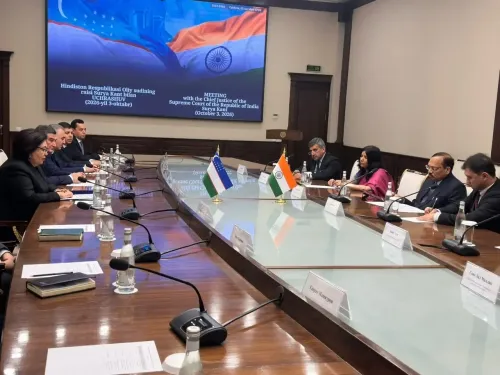
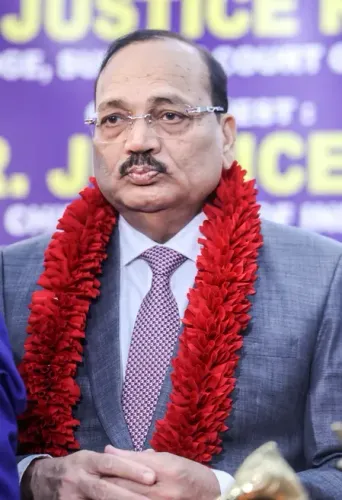
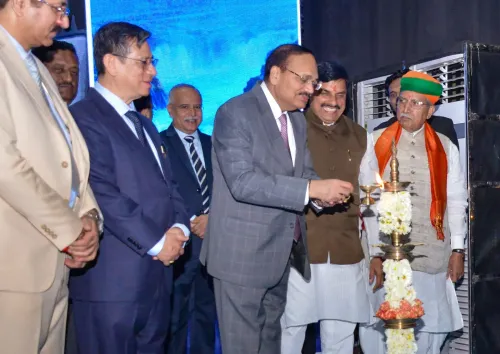
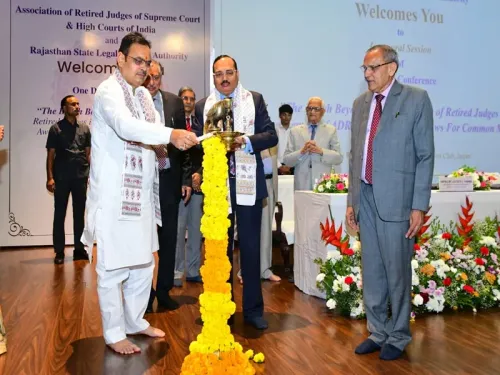
Chief Justice of India (CJI) Justice Surya Kant on Friday, 4 September opened a series of bilateral meetings with judicial leaders from BRICS member states and partner countries in New Delhi, as the Supreme Court of India launched the three-day BRICS Chief Justices' Forum. Discussions centred on judicial cooperation, mediation and arbitration, commercial courts, and the integration of artificial intelligence (AI) in justice delivery.
Key Agenda of the Bilateral Meetings
CJI Surya Kant explored the possibility of signing Memoranda of Understanding (MoUs) for judicial cooperation, mutual recognition of judicial awards and decrees, and the exchange of best legal practices across participating nations. The meetings also examined how mediation and arbitration can be leveraged to resolve business and corporate disputes more efficiently, fostering a more predictable environment for cross-border commercial activity.
The CJI underscored the need for efficient commercial courts to bolster the confidence of foreign investors, and raised the prospect of establishing a common platform for arbitration and mediation to handle international commercial disputes — a proposal that could have significant implications for India's standing as a dispute-resolution hub in the Global South.
Judicial Leaders Who Met CJI Surya Kant
The bilateral sessions brought together some of the most senior judicial figures across the BRICS grouping and its partner states. CJI Surya Kant met Igor Krasnov, Chief Justice of the Russian Supreme Court; Zhang Jun, Chief Justice and President of China's Supreme People's Court; Boulos Gahmy Iskander Boulos, Chief Justice of Egypt's Supreme Constitutional Court; Prof Dr Sunarto, Chief Justice of Indonesia's Supreme Court; and Ayatollah Gholam Hossein Mohseni-Eje'i, Chief Justice of Iran.
He also held separate sessions with Mohammed Hamad Al Badi Al Dhaheri, President of the UAE Federal Supreme Court; Andrei Shved, Chairman of Belarus's Supreme Court; Aslambek Mergaliyev, Chairman of Kazakhstan's Supreme Court; Mahube Betty Molemela, President of South Africa's Supreme Court of Appeal; and Malikakhon Kalandarova, Deputy Chairperson of Uzbekistan's Supreme Court.
Role of Institutions and People-to-People Ties
The meetings also highlighted the potential of institutions such as the National Judicial Academy, Bhopal, for professional exchange programmes and bilateral conferences on contemporary legal issues. CJI Surya Kant stressed that expeditious judicial processes are vital not only for investor confidence but also for strengthening people-to-people ties among participating nations.
Forum Scope and What Comes Next
The BRICS Chief Justices' Forum, running from 4 to 6 September, brings together Chief Justices, Supreme Court Presidents, and senior judicial leaders from member states — Brazil, China, Egypt, Ethiopia, Indonesia, Iran, Russia, South Africa, and the UAE — as well as partner countries including Belarus, Bolivia, Kazakhstan, Malaysia, Thailand, Uganda, and Uzbekistan. On the second day, heads of delegations are scheduled to address the Forum and share perspectives on justice delivery, international dispute resolution, technology, and sustainable development. The forum's outcomes could shape a new multilateral judicial architecture at a time when BRICS is rapidly expanding its institutional footprint.
Point of View
It could challenge London and Singapore's dominance in international commercial dispute resolution. Yet the gathering also surfaces a tension India rarely acknowledges openly — sitting across the table from judiciaries in Russia, Iran, and China, whose independence records draw sharp international scrutiny. How India navigates cooperation without appearing to validate those systems will define whether this forum produces durable architecture or ceremonial communiqués.
NationPress
20 Oct 2026
Frequently Asked Questions
What is the BRICS Chief Justices' Forum being held in New Delhi?
The BRICS Chief Justices' Forum is a three-day multilateral gathering hosted by the Supreme Court of India from 4 to 6 September in New Delhi, bringing together Chief Justices and senior judicial leaders from BRICS member states and partner countries. It provides a platform for dialogue on justice delivery, dispute resolution, technology, and sustainable development.
What did CJI Surya Kant discuss in the bilateral meetings?
CJI Surya Kant discussed signing MoUs for judicial cooperation, mutual recognition of judicial awards and decrees, the use of AI in justice delivery, and the creation of a common platform for arbitration and mediation. He also highlighted the role of efficient commercial courts in boosting foreign investor confidence.
Which countries are participating in the BRICS Chief Justices' Forum?
BRICS member states — Brazil, China, Egypt, Ethiopia, Indonesia, Iran, Russia, South Africa, and the UAE — are participating alongside partner countries including Belarus, Bolivia, Kazakhstan, Malaysia, Thailand, Uganda, and Uzbekistan.
Why is the proposal for a common arbitration platform significant?
A shared BRICS arbitration and mediation platform could offer an alternative to established Western-centric dispute resolution centres in London and Singapore, particularly for commercial disputes among member and partner states. If implemented, it would mark a significant expansion of India's role in international legal infrastructure.
What is scheduled for the remaining days of the forum?
On the second day, heads of delegations from BRICS member states and partner countries are scheduled to address the Forum and share perspectives on contemporary issues including justice delivery, international dispute resolution, technology, and sustainable development. The forum concludes on 6 September.