CM Bhajan Lal backs ₹10,000 Cr container manufacturing scheme
Synopsis
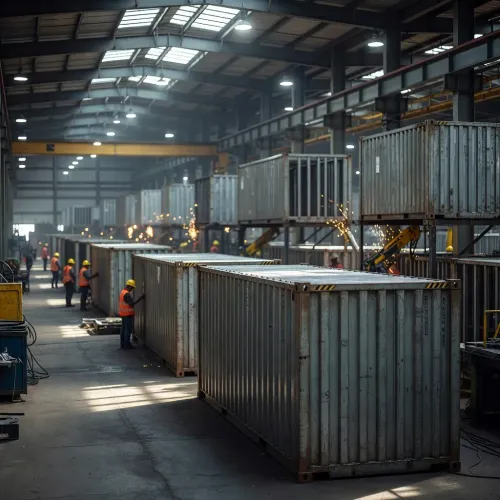
The Union Cabinet, under PM Narendra Modi, has approved the ₹10,000 crore Container Manufacturing Promotion Scheme (CMPS) running to FY 2039-40. Rajasthan CM Bhajan Lal Sharma backed the move as a step toward reducing import dependence and strengthening India's global manufacturing standing.
Key Takeaways
₹10,000 crore budgetary outlay approved by the Union Cabinet for the Container Manufacturing Promotion Scheme (CMPS).
The scheme is operational through fiscal year 2039–40 , providing a long-term policy horizon for investors.
CMPS aims to reduce India's dependence on imported containers, particularly from China , and strengthen supply-chain resilience.
Both new manufacturing unit establishment and expansion of existing units are eligible under the scheme.
The move extends India's PLI-style incentive model to a strategic intermediate good critical for export logistics.
Rajasthan CM Bhajan Lal Sharma linked the scheme to broader goals of industrial investment and global manufacturing competitiveness.
India's shipping and logistics backbone just got a major policy push. Rajasthan Chief Minister Bhajan Lal Sharma on Wednesday, 28 October 2026, welcomed the Union Cabinet's approval of the Container Manufacturing Promotion Scheme (CMPS) — a ₹10,000 crore budgetary outlay designed to make India a globally competitive producer of shipping containers.
What the Cabinet cleared — and why containers matter now
Sharma, posting on X in Hindi, described the decision as 'vishwa star par pratispardhi' (globally competitive) — a phrase that cuts to the heart of the scheme's ambition. The CMPS is set to remain operative through fiscal year 2039–40, giving manufacturers a long planning horizon to invest, expand, and scale. The scheme targets both the establishment of new manufacturing units and the expansion of existing ones.
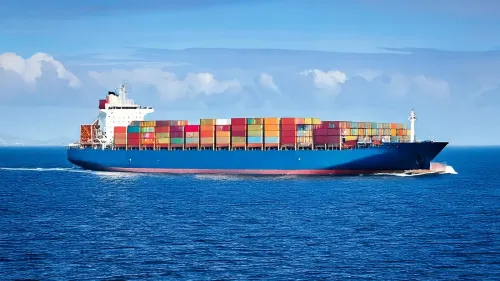
Shipping containers are one of those invisible pillars of global trade — the steel boxes that carry everything from textiles to electronics. India has historically relied heavily on imports of these containers, with a disproportionate share sourced from China. That dependency has repeatedly exposed Indian exporters to supply bottlenecks and price shocks, particularly during global disruptions.
CMPS as the next chapter in PLI-style incentive policy
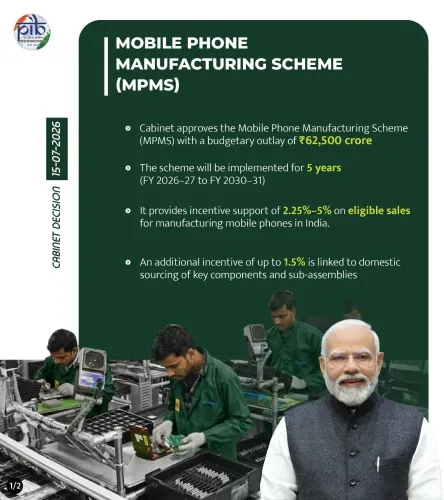
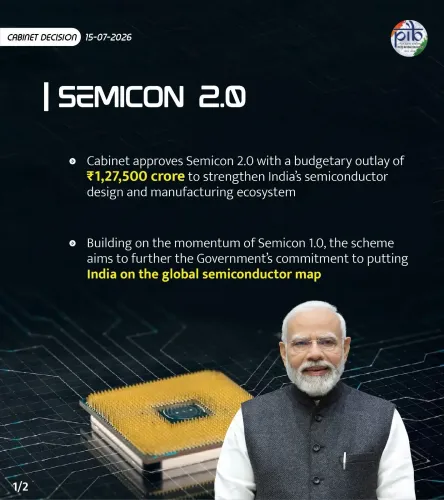
The CMPS fits squarely into a policy lineage that began with the Make in India campaign in September 2014 and accelerated through the Production Linked Incentive (PLI) schemes rolled out from 2020 onward across 14 sectors. Those schemes demonstrated that targeted fiscal incentives — tied to actual output — could shift investment patterns and reduce import dependence in sectors ranging from mobile phones to pharmaceuticals.
Containers represent a strategic intermediate good: every percentage point of domestic production gain reduces freight-cost volatility for Indian exporters and strengthens the country's logistics sovereignty. A ₹10,000 crore outlay sustained over more than a decade sends a clear signal to private capital that the state is committed for the long haul.
Sharma's read: supply chains and industrial investment
The Chief Minister highlighted three specific downstream effects he expects the scheme to deliver — reduced import dependence, a more resilient supply chain, and a stronger Indian footprint in global manufacturing. He also flagged the scheme's role in driving industrial investment, noting that new unit creation and capacity expansion would together deepen India's manufacturing base.
That framing echoes the broader Atmanirbhar Bharat doctrine that has guided central policy since 2020 — the idea that self-reliance in strategic sectors is not autarky but a precondition for durable global competitiveness.
What to watch as CMPS moves from approval to implementation
Cabinet approval is the starting gun, not the finish line. Detailed eligibility criteria, disbursement mechanisms, and nodal ministry guidelines will determine whether the scheme delivers on its ambition or gets caught in the implementation gaps that have occasionally hobbled earlier industrial programmes. State-level participation in container manufacturing clusters — where a state like Rajasthan with its rail and road connectivity could play a role — will also shape the scheme's geographic reach.
If the CMPS replicates even a fraction of the PLI success story in electronics, India's container yards could look very different well before 2039.
Point of View
000 crore over 14 years, the Centre is betting that durable fiscal certainty, not short-cycle subsidies, is what it takes to crowd in private capital in capital-intensive industries. For the BJP, framing this as 'Atmanirbhar' supply-chain sovereignty also carries a geopolitical subtext: reducing container import dependence on China is as much a strategic hedge as an industrial policy. The real test, as with PLI, will be whether disbursement design matches the scale of the announcement.
NationPress
28 Oct 2026
Frequently Asked Questions
What is the Container Manufacturing Promotion Scheme (CMPS)?
The CMPS is a central government scheme approved by the Union Cabinet with a ₹10,000 crore budgetary outlay to promote domestic manufacturing of shipping containers in India, valid through fiscal year 2039–40.
Why did India launch a container manufacturing scheme?
India has long depended on imported shipping containers, with a significant share sourced from China. The CMPS aims to boost domestic production, reduce that import dependence, and build a more resilient logistics supply chain for Indian exporters.
How does CMPS relate to PLI schemes?
CMPS follows the same philosophy as India's Production Linked Incentive (PLI) schemes — using targeted fiscal incentives to encourage domestic manufacturing and reduce imports — extending that model to containers, a strategic intermediate good for trade.
What did Rajasthan CM Bhajan Lal Sharma say about the CMPS?
CM Bhajan Lal Sharma welcomed the Cabinet decision on X, saying the scheme would make India's container manufacturing globally competitive, reduce import reliance, strengthen supply chains, and drive industrial investment in new and existing units.
How long will the Container Manufacturing Promotion Scheme last?
According to the Cabinet decision welcomed by CM Bhajan Lal Sharma, the CMPS is designed to remain in force through fiscal year 2039–40, giving manufacturers a long-term planning and investment horizon.