CM Bhajan Lal Backs ₹2,814 Cr Critical Minerals Push
Synopsis
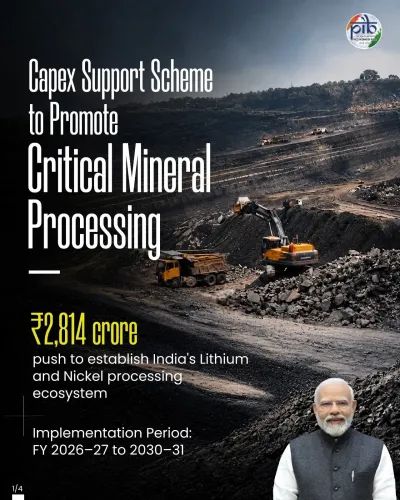
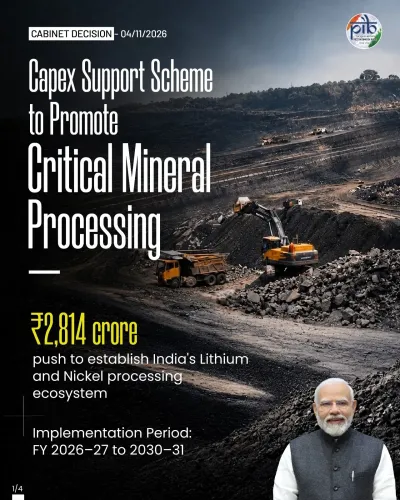
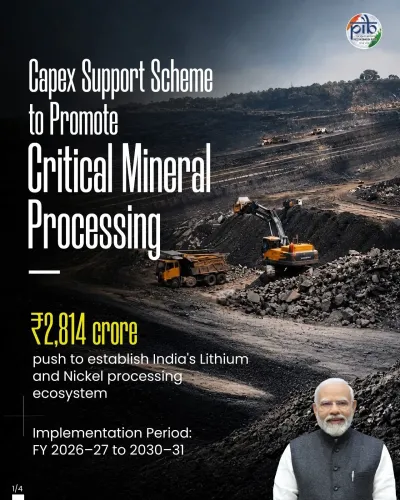
India's Cabinet approved a ₹2,814 crore capital expenditure support scheme to develop domestic critical-mineral processing over five years. Rajasthan CM Bhajan Lal Sharma backed the move as a strategic push toward self-reliance in clean energy, EVs, and advanced technology supply chains.
Key Takeaways
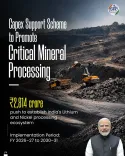
The Union Cabinet cleared a ₹2,814 crore capital expenditure support scheme for critical minerals processing.
The scheme runs for five years and aims to build modern domestic processing infrastructure.
It targets minerals such as lithium, cobalt, and rare earths used in EVs, clean energy, and defence.
The move extends the policy arc of the Mines and Minerals Amendment Act, 2023 , which notified 30 critical minerals and launched block auctions.
Rajasthan CM Bhajan Lal Sharma welcomed the Cabinet decision as a step toward reducing global supply-chain dependence.
The scheme fits the broader Atmanirbhar Bharat framework of building high-tech domestic value chains.
India's Cabinet has cleared a ₹2,814 crore capital expenditure support scheme to turbocharge domestic processing of critical minerals — and Rajasthan Chief Minister Bhajan Lal Sharma has welcomed the decision as a strategic leap toward self-reliance in sectors that power everything from electric vehicles to defence systems.
A ₹2,814 Crore Bet on Mineral Independence
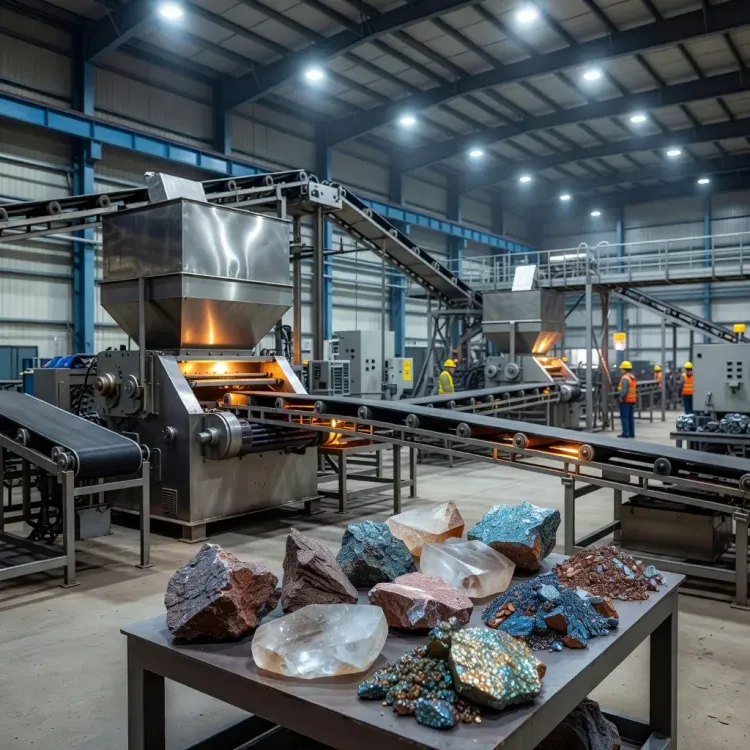
The five-year scheme, cleared by the Union Cabinet under Prime Minister Narendra Modi, is designed to build modern processing infrastructure for critical minerals domestically — reducing India's dependence on global supply chains for materials such as lithium, cobalt, and rare earth elements. CM Sharma called it a 'far-sighted decision in the national interest,' offering his gratitude to the Prime Minister and the Cabinet for the approval.
The timing is deliberate. India's EV transition, its renewable energy expansion, and its advanced electronics ambitions all hinge on a stable, affordable supply of these minerals — most of which India currently processes abroad or imports outright. Capital expenditure support directly targets that choke-point.
From Auction Blocks to Processing Capacity
The scheme builds on a policy arc that has been moving fast. The Mines and Minerals (Development and Regulation) Amendment Act, 2023 expanded India's official list of critical minerals and eased exploration rules. By 2023, the government had notified 30 critical minerals as priority targets and launched the first round of auctions for lithium and other blocks.
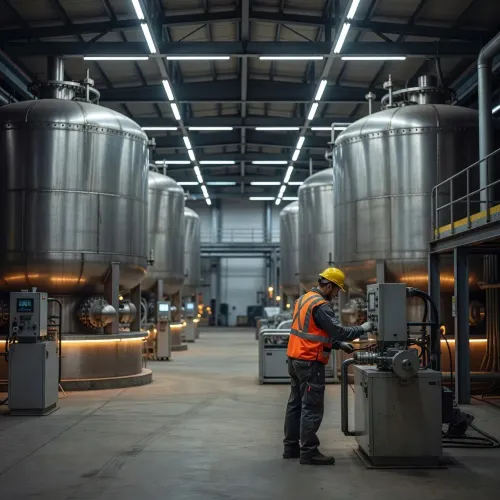
Winning those auctions was step one. Converting raw ore into battery-grade or electronics-grade material inside India — rather than shipping it overseas for value addition — has been the missing link. The new capex scheme is intended to close that gap by incentivising investors to build domestic refineries and processing plants.
What It Means for Rajasthan — and the Wider Economy
Rajasthan is not a passive bystander in this story. The state sits atop significant mineral deposits and has historically been a major contributor to India's mining output. As the Centre rolls out state-level implementation details, the scheme could unlock fresh investment in Rajasthan's mining belt, with CM Sharma well-positioned to pitch the state as a preferred destination for processing infrastructure.
More broadly, analysts tracking India's Atmanirbhar Bharat (self-reliant India) framework see critical minerals as the next frontier after semiconductors and defence manufacturing. Industries from EV makers to renewable energy developers — who today face volatile import costs — stand to benefit directly if domestic processing capacity scales up over the scheme's five-year window.
The Cabinet's approval transforms a declared ambition into a funded programme. Whether the ₹2,814 crore catalyses the private co-investment it is designed to attract will define whether India's critical-mineral story merely begins — or actually breaks through.
Point of View
The scheme reinforces the Atmanirbhar Bharat narrative ahead of a period in which EV and clean-energy policy will be intensely scrutinised. CM Sharma's endorsement also signals that mineral-rich states like Rajasthan intend to position themselves as active beneficiaries, not just passive observers, of the Centre's industrial strategy.
NationPress
4 Nov 2026
Frequently Asked Questions
What is the ₹2,814 crore critical minerals scheme approved by the Cabinet?
It is a five-year capital expenditure support scheme cleared by India's Union Cabinet to fund the development of domestic processing capacity for critical minerals such as lithium, cobalt, and rare earths, reducing reliance on imports and global supply chains.
Why are critical minerals important for India?
Critical minerals are essential inputs for electric vehicles, renewable energy systems, advanced electronics, and defence equipment. Building domestic processing capacity lowers costs, reduces import dependence, and strengthens India's strategic position in global supply chains.
What did Rajasthan CM Bhajan Lal Sharma say about the Cabinet decision?
CM Sharma welcomed the scheme as a 'far-sighted decision in the national interest,' saying it would reduce India's dependence on global supply chains and strengthen both economic and strategic capabilities.
How does this scheme connect to India's earlier critical minerals policy?
The scheme builds on the Mines and Minerals (Development and Regulation) Amendment Act, 2023, which expanded the official list of critical minerals to 30 and launched the first auction rounds for lithium and other blocks.
Which industries benefit from India's domestic critical-mineral processing push?
Electric vehicle manufacturers, renewable energy developers, electronics producers, and defence equipment makers are the primary beneficiaries, as all rely heavily on processed critical minerals currently imported or processed abroad.