CM Bhajan Lal backs Bharat Taxi cooperative service
Synopsis
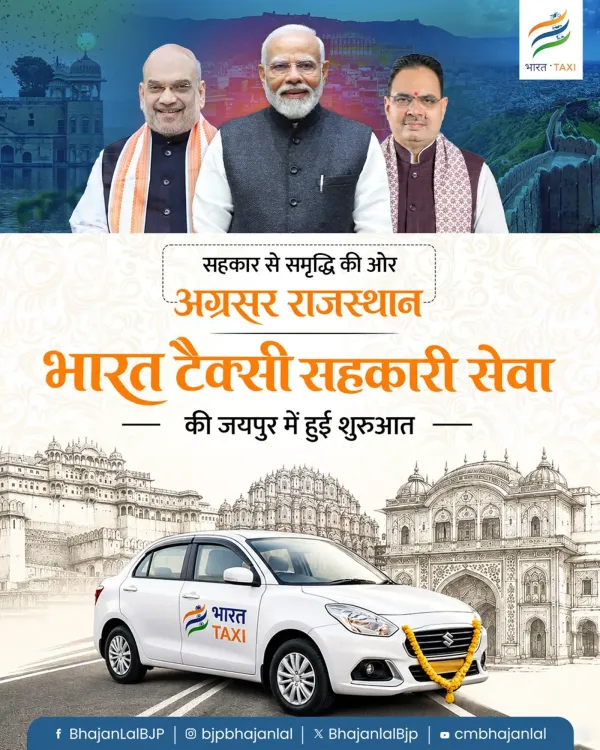
Rajasthan CM Bhajan Lal Sharma on 27 July 2026 hailed Bharat Taxi Sahakari Seva as a historic cooperative transport initiative rooted in PM Modi's 'Sahkar Se Samriddhi' vision, promising driver ownership, dignity, and affordable fares for passengers without surcharges.
Key Takeaways
Rajasthan CM Bhajan Lal Sharma publicly endorsed Bharat Taxi Sahakari Seva on 27 July 2026 .
The scheme is anchored in PM Narendra Modi 's 'Sahkar Se Samriddhi' vision and steered by Union Minister Amit Shah .
Drivers ( sarathis ) will gain employment, cooperative ownership, dignity, and self-reliance under the model.
Passengers are promised affordable, transparent, and safe transport without unnecessary surcharges.
The Ministry of Cooperation , established in July 2021 , underpins this expansion of cooperatives into urban transport.
Rajasthan's endorsement positions the state as a potential early implementation ground for the cooperative taxi model.
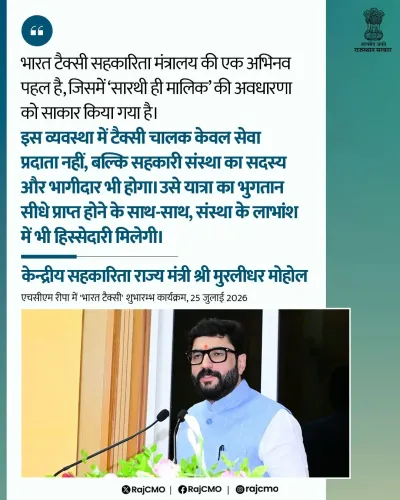
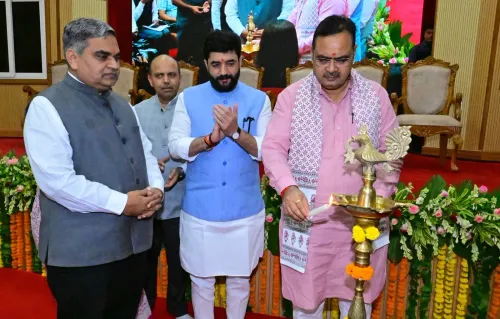
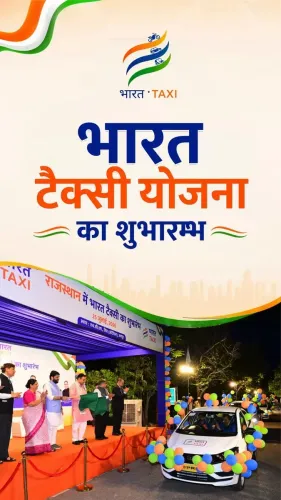
Rajasthan Chief Minister Bhajan Lal Sharma on Monday, 27 July 2026, praised the Bharat Taxi Sahakari Seva, calling it a historic initiative in cooperative-based modern transport, and credited the scheme to Prime Minister Narendra Modi's 'Sahkar Se Samriddhi' vision and the leadership of Union Minister Amit Shah.
Context
In his post, CM Sharma described the Bharat Taxi Sahakari Seva as 'ek aitihasik pehel' (a historic initiative) in cooperative-based modern transport. He said the scheme would give drivers — referred to as 'sarathis' — not just employment but ownership, dignity, and self-reliance. Passengers, he added, would receive accessible, safe, transparent, and affordable transport without unnecessary surcharges.
The post frames the initiative as embodying the spirit of a people-centric, trustworthy, and self-reliant India — directly invoking the Atmanirbhar Bharat ethos that has guided central policy since 2020.
Policy Backdrop
The Ministry of Cooperation was established in July 2021 — the first dedicated central ministry for the sector — to give focused policy attention to India's cooperative movement. Amit Shah, who holds the Cooperation portfolio alongside Home Affairs, has championed the expansion of the cooperative model from its traditional strongholds in dairy and agriculture into urban services and transport.
The 'Sahkar Se Samriddhi' ('Prosperity through Cooperation') vision articulated by PM Modi explicitly sought to replicate the success of models such as Amul in new sectors. Bharat Taxi Sahakari Seva is among the first large-scale applications of this idea to urban mobility, aiming to create driver-owned cooperative societies rather than platform-dependent gig arrangements.
The cooperative structure is designed to allow drivers to become stakeholders in the service they operate, distinguishing the model from conventional app-based aggregators where drivers bear costs but do not share ownership or profits.
Stakeholders and Impact
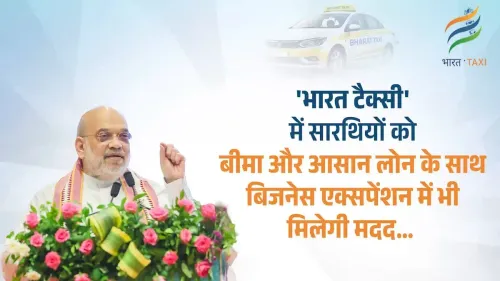
The scheme's two stated beneficiary groups are taxi drivers and urban commuters. For drivers, the cooperative framework promises a share in ownership and decision-making, moving them from wage or commission-based roles to co-owners of the service enterprise. For passengers, the absence of surge or unnecessary surcharges is positioned as a key differentiator from private aggregator platforms.
States, including Rajasthan, have been encouraged to align their transport policies with central cooperative guidelines since the ministry's formation. CM Sharma's endorsement signals the state's intent to support the rollout of cooperative taxi societies within Rajasthan.
What's Next
The immediate focus will be on the rollout of cooperative taxi societies across states, covering vehicle registration, onboarding of driver-members, and the formal launch of passenger services. Budget allocations and parliamentary discussions on scaling the model nationally will be closely watched as indicators of the scheme's pace and ambition.
With Rajasthan's political leadership publicly backing the initiative, the state could emerge as an early implementation ground for the cooperative taxi model, potentially setting a template for other BJP-governed states to follow.
Point of View
The BJP is positioning cooperatives as a political and economic counter-narrative to gig-economy criticism. For Rajasthan, early adoption could yield both grassroots political capital among the driver community and a tangible Atmanirbhar Bharat deliverable ahead of future electoral cycles. The scheme's real test will be operational execution: whether cooperative taxi societies can sustain themselves without the pricing flexibility and technology investment that private platforms command.
NationPress
27 Jul 2026
Frequently Asked Questions
What is Bharat Taxi Sahakari Seva?
Bharat Taxi Sahakari Seva is a central government cooperative taxi initiative that allows drivers to become co-owners of the service, offering passengers affordable and transparent transport without unnecessary surcharges, aligned with PM Modi's 'Sahkar Se Samriddhi' vision.
What does 'Sahkar Se Samriddhi' mean?
'Sahkar Se Samriddhi' translates to 'Prosperity through Cooperation' — a vision articulated by Prime Minister Narendra Modi to expand India's cooperative model from agriculture and dairy into new sectors including urban services and transport.
Who is in charge of the cooperative taxi scheme?
The scheme falls under the Ministry of Cooperation headed by Union Minister Amit Shah, who has overseen the expansion of cooperative frameworks into urban and service sectors since the ministry's creation in July 2021.
How is Bharat Taxi different from Ola or Uber?
Unlike private aggregator platforms where drivers work on commission, Bharat Taxi Sahakari Seva is structured as a cooperative, giving drivers ownership stakes and a share in decision-making, while also eliminating surge or unnecessary surcharges for passengers.
What is Rajasthan's role in the Bharat Taxi cooperative scheme?
Rajasthan CM Bhajan Lal Sharma has publicly backed the initiative, signalling the state's intent to support the rollout of cooperative taxi societies, potentially making Rajasthan one of the early states to implement the model.