CM Bhajan Lal hails end of Wangchuk's fast after minister talks
Synopsis
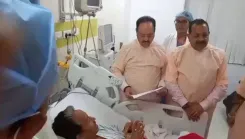
Rajasthan CM Bhajan Lal Sharma on 24 July 2026 hailed the end of Sonam Wangchuk's fast after Union Ministers JP Nadda and Jitendra Singh met him at Medanta Hospital, Gurugram, reaffirming the Modi government's commitment to exam reform and strict action on paper leaks.
Key Takeaways
Union Ministers JP Nadda and Dr.
Jitendra Singh met Sonam Wangchuk at Medanta Hospital, Gurugram to convey the government's position on student-related issues.
Sonam Wangchuk decided to end his hunger strike following what Sharma described as a 'positive dialogue.' The Modi government reiterated a commitment to the 'harshest action' against paper-leak offences under the Public Examinations (Prevention of Unfair Means) Act, 2024 .
The Centre has pledged to make the examination system 'more transparent and trustworthy' through effective reforms, including a structural review of the NTA .
Rajasthan CM Bhajan Lal Sharma amplified the development on 24 July 2026 , framing it as evidence of the Modi government's priority on youth welfare.
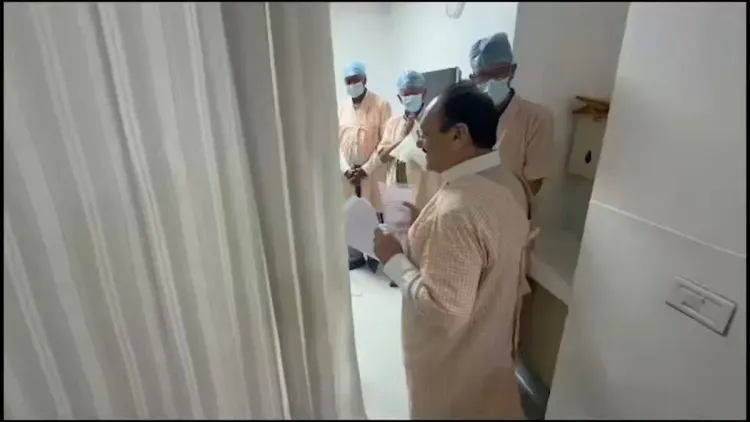
Rajasthan Chief Minister Bhajan Lal Sharma on Friday, 24 July 2026, welcomed the end of activist Sonam Wangchuk's hunger strike, saying that Union Ministers JP Nadda and Dr. Jitendra Singh met Wangchuk at Medanta Hospital, Gurugram, conveyed the government's position on student-related issues in detail, and reaffirmed the Centre's commitment to finding solutions.
Sharma's post, written in Hindi, states: 'Sakaratmak samvad ke baad Shri Wangchuk ji ne apna anshan samapt karne ka nirnay liya' — 'After a positive dialogue, Shri Wangchuk decided to end his fast.' The Chief Minister framed the breakthrough as a direct outcome of the Modi government's resolve not to compromise on the futures of young people.
Context
Sonam Wangchuk, the Ladakhi engineer-activist widely recognised for grassroots educational and environmental campaigns, had been on a hunger strike pressing the government on issues concerning students. The fast drew national attention and prompted a high-level ministerial response. JP Nadda, a senior Union Cabinet Minister, and Dr. Jitendra Singh, Minister of State who frequently represents the Centre in dialogues involving Jammu and Kashmir and Ladakh, travelled to Medanta Hospital to hold the talks in person.
Policy Backdrop
The government's outreach comes against the backdrop of sustained pressure on the Centre to overhaul its examination machinery following high-profile paper-leak controversies, including the NEET and UGC-NET scandals of 2024. Parliament enacted the Public Examinations (Prevention of Unfair Means) Act, 2024, which introduced significantly stricter penalties for paper leaks and malpractice in national recruitment tests. A high-level committee was also constituted to recommend structural reforms to the National Testing Agency (NTA).
Sharma's post explicitly invokes these commitments, stating that 'the harshest action against crimes such as question-paper leaks, effective reforms to make the examination system more transparent and trustworthy, and every necessary step to protect the interests of youth are being taken.' The language mirrors the Centre's broader campaign to restore credibility in competitive examinations.
Stakeholders and Impact
Millions of competitive examination aspirants across India stand as the primary stakeholders in any reform of the public examination system. Wangchuk's decision to end his fast following ministerial assurances signals, at minimum, a temporary de-escalation of one of the more visible protest campaigns linked to student grievances. The involvement of ministers of Nadda and Jitendra Singh's seniority underscores the political weight the Centre has attached to resolving the standoff.
Prime Minister Narendra Modi's government has consistently linked education integrity to its demographic dividend and youth employment agenda since 2014, making any perception of compromise on examination fairness a politically sensitive matter.
What's Next
Attention will now turn to whether the commitments conveyed during the Gurugram meeting translate into concrete policy action — particularly the implementation status of the exam reform committee's recommendations and any potential NTA overhaul announced in the next parliamentary session. Sharma's post signals that the ruling party intends to keep youth-welfare messaging at the centre of its political communication, with the Chief Minister of Rajasthan amplifying a national-level development that has resonance in his own state, home to lakhs of competitive exam aspirants.
Point of View
Particularly in the wake of the 2024 NEET and UGC-NET controversies that badly dented the government's credibility on examination integrity. By having a state chief minister amplify the resolution, the party is widening the political credit for the breakthrough beyond Delhi. The pattern of direct ministerial engagement followed by public commitment to legal reform is a well-worn BJP playbook, but its effectiveness will ultimately be judged by whether NTA reforms and stricter enforcement actually materialise before the next major examination cycle.
NationPress
24 Jul 2026
Frequently Asked Questions
Why did Sonam Wangchuk end his hunger strike in July 2026?
Sonam Wangchuk ended his hunger strike after Union Ministers JP Nadda and Dr. Jitendra Singh visited him at Medanta Hospital in Gurugram, conveyed the government's stance on student-related issues, and reaffirmed the Centre's commitment to finding solutions, according to a post by Rajasthan CM Bhajan Lal Sharma on 24 July 2026.
What did JP Nadda and Jitendra Singh discuss with Sonam Wangchuk?
According to Bhajan Lal Sharma's post, the two ministers discussed issues related to students, explained the government's position in detail, and pledged strict action on paper leaks and reforms to make the examination system more transparent and trustworthy.
What is the Public Examinations (Prevention of Unfair Means) Act, 2024?
It is a central law enacted in 2024 that introduced significantly stricter penalties for paper leaks and other malpractices in national public examinations, passed in response to widespread exam-integrity controversies including the NEET and UGC-NET scandals.
What reforms is the Modi government promising for India's examination system?
The government has committed to the harshest action against paper-leak offences, structural reforms to the National Testing Agency, and measures to make competitive examinations more transparent — commitments reiterated during the ministerial meeting with Sonam Wangchuk on 24 July 2026.
Where did the ministers meet Sonam Wangchuk?
The meeting took place at Medanta Hospital in Gurugram, Haryana, where Sonam Wangchuk was present during his hunger strike.