CM Bhajan Lal Hails Return of 11th-12th Century Artifacts from Australia
Synopsis
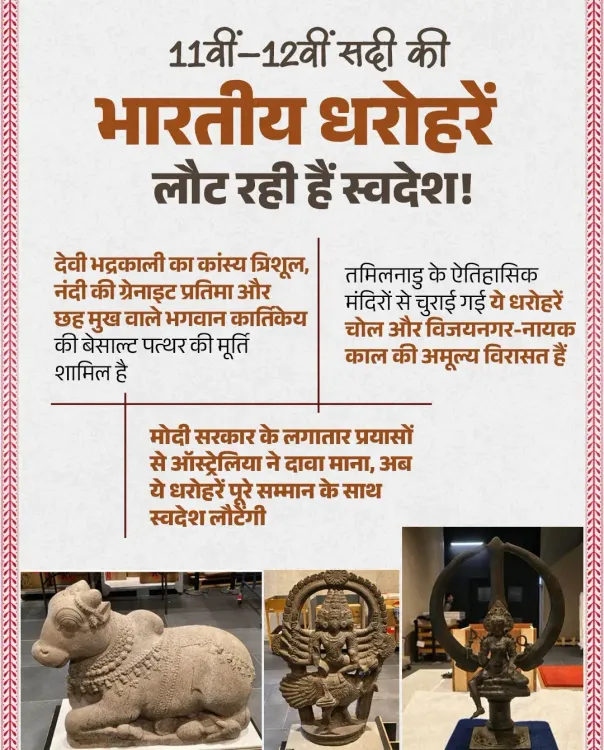
Rajasthan Chief Minister Bhajan Lal Sharma has hailed the return of 11th-12th century Indian artifacts from Australia as a moment of national pride, crediting Prime Minister Narendra Modi's diplomatic leadership for the repatriation under India's sustained cultural heritage recovery drive.
Key Takeaways
Rajasthan CM Bhajan Lal Sharma publicly celebrated the repatriation of ancient Indian artifacts from Australia on 10 July 2026 .
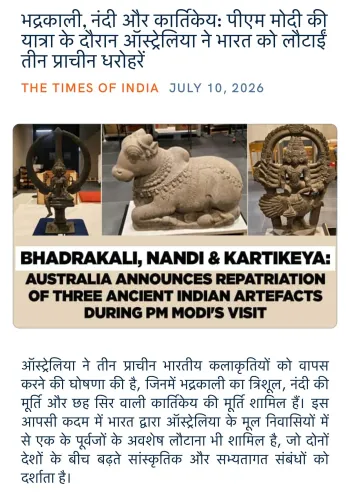
The artifacts being returned are dated to the 11th and 12th centuries , making them among the most historically significant objects repatriated in recent years.
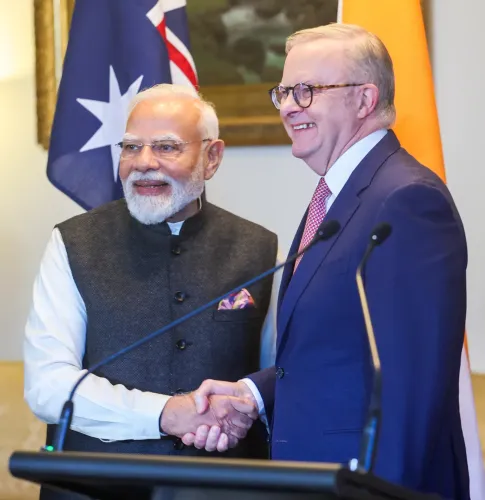
CM Sharma credited Prime Minister Narendra Modi for leading the diplomatic effort that secured the return.
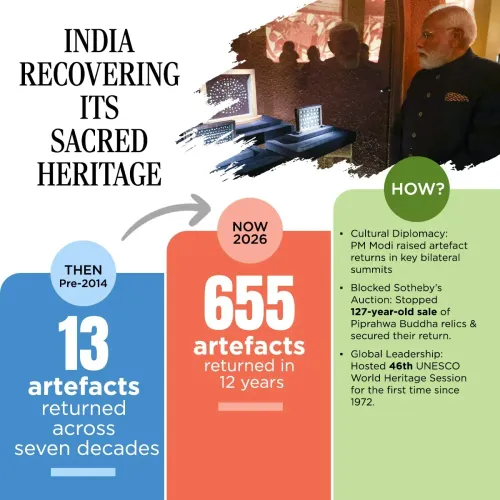
India has been pursuing systematic repatriation of antiquities since 2014 , with returns from the United States , United Kingdom , and now Australia .
Each repatriation is framed by the government as an assertion of cultural sovereignty, not merely a diplomatic transaction.
Heritage conservationists and the broader Indian public are key stakeholders, with national museums expected to house the returned objects.
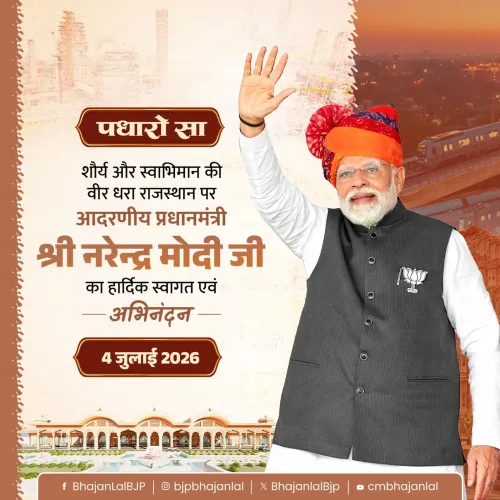
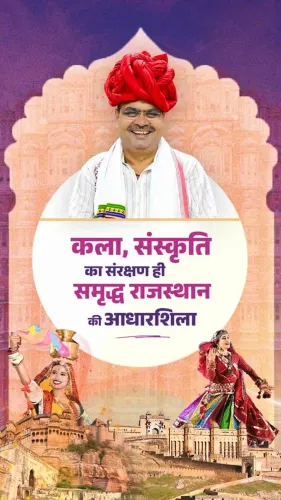
Rajasthan Chief Minister Bhajan Lal Sharma on Friday, 10 July 2026, celebrated the repatriation of ancient Indian artifacts from Australia, calling the return a moment of restored national pride and cultural sovereignty under the leadership of Prime Minister Narendra Modi.
Posting in Hindi on X, CM Sharma wrote: 'जब अपनी विरासत लौटती है, तो केवल धरोहरें नहीं, बल्कि राष्ट्र का स्वाभिमान भी लौटता है' — 'When our heritage returns, it is not just monuments that come back, but the self-respect of the nation.' He described the homecoming of these objects as a 'glorious moment of re-establishment of our culture, faith, and national pride for every citizen of the country.'
Context
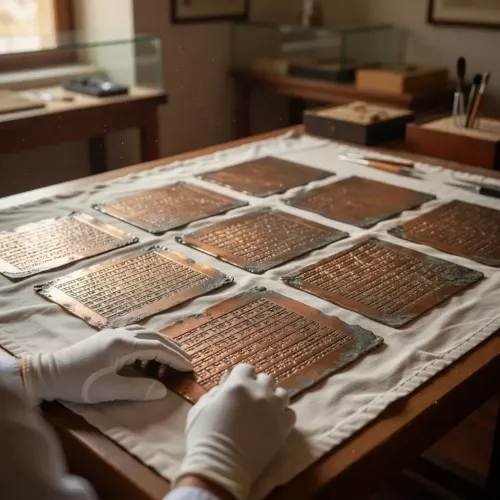
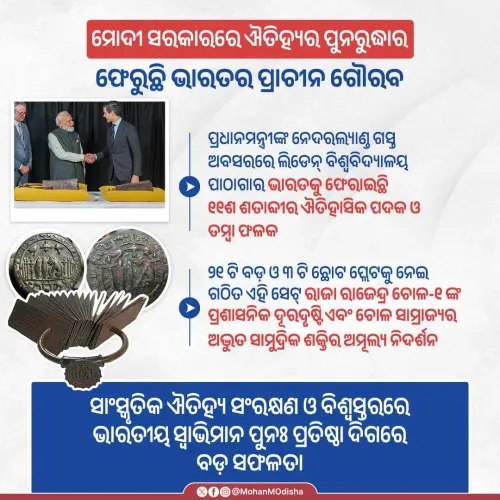
The artifacts making their way back to India are dated to the 11th and 12th centuries, placing them among the most historically significant objects to be repatriated in recent years. Australia is returning the antiquities as part of the growing bilateral cultural cooperation between the two nations. CM Sharma credited Prime Minister Narendra Modi personally for steering the diplomatic effort that made the return possible.
Policy Backdrop
Since 2014, the Government of India has systematically intensified diplomatic outreach to recover antiquities removed from the country through colonial-era displacement and illicit trade. The United States and the United Kingdom have also participated in earlier repatriations under this sustained campaign. India has framed each such return not merely as a diplomatic achievement but as an assertion of cultural sovereignty — a narrative that resonates strongly with the ruling Bharatiya Janata Party's broader civilisational discourse.
The Australia repatriation follows a well-established pattern: quiet back-channel negotiations between heritage officials and law-enforcement agencies, culminating in high-visibility public handovers that are then amplified through official government communication. Heritage conservationists have broadly welcomed this approach, noting that it has yielded a growing catalogue of returned objects without protracted legal disputes.
Stakeholders and Impact
For heritage conservationists and museum professionals across India, the return of 11th–12th century objects represents both scholarly and symbolic value — these pieces can illuminate medieval Indian artistic traditions when placed in public collections. For the Indian public, particularly communities whose regional cultural identity is tied to such objects, the repatriation carries emotional weight beyond mere museum acquisition. Rajasthan, as a state with an exceptionally rich medieval heritage, has a direct stake in how such returned artifacts are eventually documented, displayed, and interpreted.
CM Sharma's post also signals the political importance of the repatriation narrative at the state level, with BJP leaders across the country amplifying the central government's cultural diplomacy as a point of governance achievement ahead of ongoing political cycles.
What's Next
Attention will now turn to the formal reception and eventual placement of the returned artifacts, with national museums expected to be primary custodians. Further repatriation announcements from additional countries remain likely, given the momentum of India's ongoing heritage recovery diplomacy. Any planned public exhibitions of the returned objects would offer citizens a tangible encounter with the medieval heritage that CM Sharma described as a living symbol of national self-respect.
Point of View
Turning heritage recovery into a visible instrument of soft power and national identity. By amplifying the moment, CM Bhajan Lal Sharma is aligning Rajasthan — a state whose medieval history is among the richest in the country — with a central government narrative that resonates deeply with the BJP's core voter base. The framing of artifact returns as restoration of 'national self-respect' elevates what is, in part, a technical heritage process into a politically potent civilisational statement. As India's repatriation pipeline grows, the political dividend from each new return is likely to compound, making cultural sovereignty an increasingly durable theme in BJP electoral communication.
NationPress
10 Jul 2026
Frequently Asked Questions
Which artifacts is Australia returning to India?
Australia is returning ancient Indian artifacts dated to the 11th and 12th centuries . The exact identities and provenance details of the specific objects have not been officially confirmed in public disclosures cited here.
What did Rajasthan CM Bhajan Lal Sharma say about the artifact return?
CM Bhajan Lal Sharma said that when heritage returns, it is not just monuments but the nation's self-respect that comes home, and described the repatriation as a glorious moment of re-establishment of India's culture, faith, and national pride.
How many artifacts has India repatriated under PM Modi?
Since 2014 , India has secured the return of a significant and growing number of antiquities from multiple countries including the United States , United Kingdom , and now Australia , though a precise cumulative count requires official government figures.
What is India's policy on repatriation of cultural artifacts?
India has pursued systematic diplomatic efforts since 2014 to recover antiquities removed through colonial displacement or illicit trade, framing each return as an assertion of cultural sovereignty rather than a purely legal or diplomatic matter.
Where will the artifacts returned from Australia be kept?
The returned objects are expected to be housed in national museums, though specific custodianship arrangements and any planned public exhibitions have not yet been officially announced.