CM Bhajan Lal Highlights India's Role as Global Generic Medicine Hub
Synopsis
Rajasthan CM Bhajan Lal Sharma shared PM Modi's quote linking India's inclusive development philosophy to its pharmaceutical muscle — citing that 1 in every 5 generic medicines supplied globally originates in India, underscoring the country's enduring 'pharmacy of the world' stature.
Key Takeaways
Rajasthan CM Bhajan Lal Sharma posted a quote from PM Narendra Modi on October 13, 2026 , spotlighting India's generic medicine exports.
The quoted figure states 1 in every 5 generic medicines needed globally is supplied by India.
India's pharma standing is underpinned by intellectual-property frameworks favouring generics and a robust bulk-drug manufacturing ecosystem.
The Pradhan Mantri Bhartiya Janaushadhi Pariyojana (2015) channels the same manufacturing base to deliver affordable medicines domestically through Jan Aushadhi Kendras.
Rajasthan is home to an emerging pharmaceutical manufacturing corridor, giving CM Sharma a regional stake in this national narrative.
Growing global demand for affordable generics — driven by ageing populations and post-pandemic health budgets — positions India's pharma role to expand further.
Every fifth affordable medicine that reaches a patient somewhere in the world — from a clinic in sub-Saharan Africa to a pharmacy in Southeast Asia — originates in India. Rajasthan Chief Minister Bhajan Lal Sharma underscored that remarkable fact on Tuesday, October 13, sharing a quote from Prime Minister Narendra Modi that frames India's pharmaceutical dominance as the living proof of its inclusive development philosophy.
Modi's Words, Sharma's Amplification
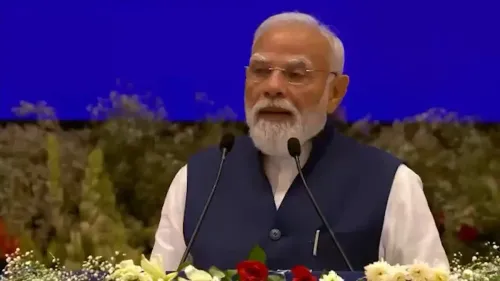
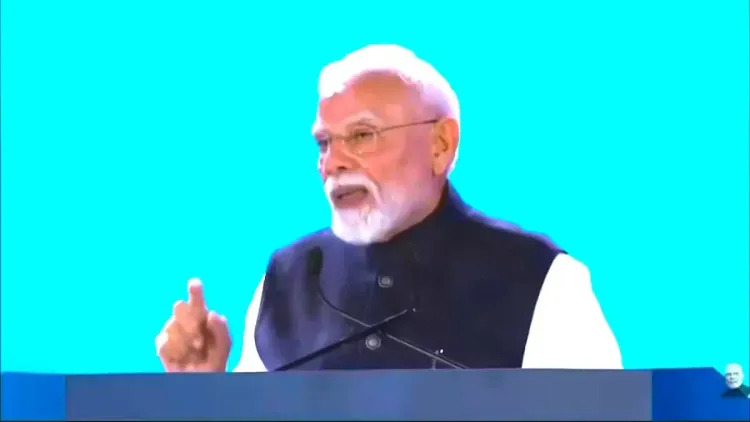
The post carries a direct quote attributed to PM Modi: 'Bharat ki pragati sabke saath milkar, sabko saath lekar aage badhne ki kahani hai' — 'India's progress is the story of moving forward together, taking everyone along.' Anchored to that philosophy is a concrete claim: 1 in every 5 generic medicines supplied globally comes from India. CM Sharma's decision to spotlight this figure reflects the BJP's consistent effort to translate national economic data into a moral narrative about shared prosperity.
India's 'Pharmacy of the World' Standing
The label is not new, but the scale keeps expanding. India's generic drug manufacturing base — built over decades through intellectual-property frameworks that favour off-patent molecules, bulk-drug production clusters, and export incentives — has made it the default supplier for developing nations and international health programmes alike. When the global health system needs to stretch a budget, it looks to Indian manufacturers.
A cornerstone of domestic policy is the Pradhan Mantri Bhartiya Janaushadhi Pariyojana, launched in 2015, which has expanded a network of Jan Aushadhi Kendras across the country to dispense quality generic medicines at sharply reduced prices. The scheme demonstrates that the same supply chain serving overseas patients is simultaneously being harnessed to bring affordable medicines to rural and low-income Indians — the 'sabka saath' promise made tangible.
Why Rajasthan's CM Is Telling This Story
Chief Ministers amplifying central government statistics is a well-worn genre in Indian political communication, but the choice of pharma as the vehicle is pointed. Rajasthan is home to a growing pharmaceutical manufacturing corridor, and the state government has positioned itself as a partner in expanding bulk-drug and formulation capacity. Sharma's post is simultaneously a pat on the back for New Delhi and a quiet signal about where his state fits in the national industrial map.
Global demand for affordable generics is not easing — ageing populations, post-pandemic health-budget pressures, and the rise of chronic disease in low-income countries all ensure that India's pharmacy role will only grow. Whether the government announces fresh export targets or new Jan Aushadhi expansions in upcoming health-ministry statements will determine how this narrative evolves from rhetoric into policy milestone.
Point of View
CM Sharma is doing double duty — reinforcing the BJP's 'Sabka Saath, Sabka Vikas' brand at the state level while anchoring Rajasthan's identity to a high-value industrial sector. The '1-in-5' framing is a powerful shorthand for India's soft-power argument at multilateral health forums, where New Delhi routinely positions itself as the developing world's pharmaceutical lifeline. It also reflects a broader pattern of BJP-governed states cross-promoting central industrial achievements as part of a unified communication strategy ahead of policy cycles. The next test is whether these narrative claims translate into measurable targets — export volumes, Jan Aushadhi store counts, or bulk-drug park capacity — that voters and investors can actually track.
NationPress
13 Oct 2026
Frequently Asked Questions
Why is India called the pharmacy of the world?
India produces a large share of the world's generic medicines at low cost, making it the default supplier for developing nations and international health programmes. Its intellectual-property framework, bulk-drug clusters, and export infrastructure have built this reputation over decades.
What is the Pradhan Mantri Bhartiya Janaushadhi Pariyojana?
It is a central government scheme launched in 2015 that operates Jan Aushadhi Kendras across India, selling quality generic medicines at significantly reduced prices to make healthcare affordable for low-income citizens.
What did CM Bhajan Lal Sharma post about medicines?
CM Sharma shared a quote from PM Modi stating that India's progress is inclusive and that 1 in every 5 generic medicines needed globally comes from India, highlighting the country's pharmaceutical exports.
How much of the world's generic medicines does India supply?
According to the figure cited by PM Modi and shared by CM Sharma, India supplies 1 in every 5 generic medicines consumed globally, underlining its dominant position in affordable pharmaceutical manufacturing.
What is Rajasthan's role in India's pharmaceutical sector?
Rajasthan has an emerging pharmaceutical manufacturing corridor and has positioned itself as a partner in the national push to expand bulk-drug and formulation production capacity under central government incentive programmes.