CM Bhajan Lal Launches Jaipur Metro Phase-2 at Sitapura
Synopsis
Rajasthan CM Bhajan Lal Sharma broke ground for Jaipur Metro Phase-2 at Sitapura on 22 July 2026. The 41-km-plus corridor, costing over ₹13,000 crore, aims to modernise the capital's public transport and serve millions of daily commuters.
Key Takeaways
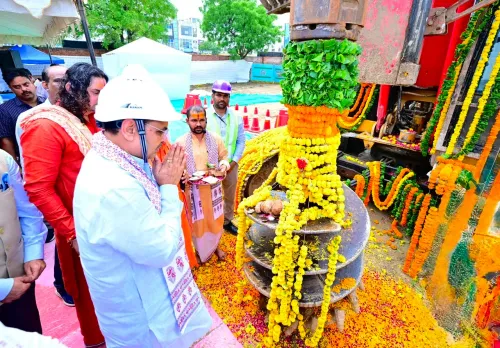
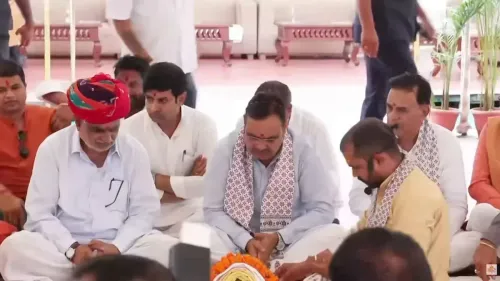
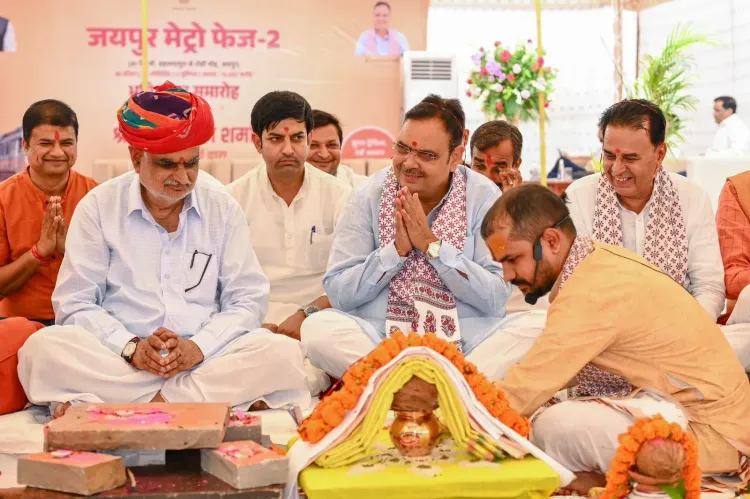
Bhoomi pujan for Jaipur Metro Phase-2 was performed by CM Bhajan Lal Sharma at the Sitapura Metro Depot site on 22 July 2026 .
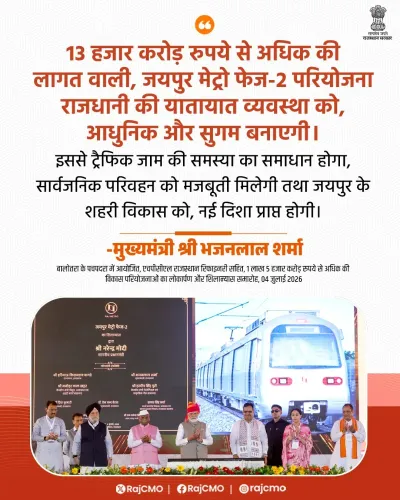
The project will cover more than 41 kilometres at an estimated cost of over ₹13,000 crore .
The corridor is intended to serve students, employees, traders and families with faster, safer public transport in Jaipur .
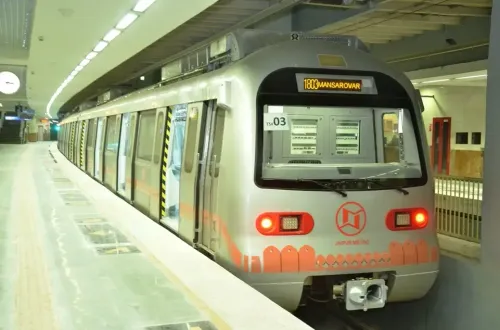
Jaipur Metro Phase-1 (Mansarovar–Chandpole) has been operational since June 2015 ; Phase-2 will extend that network significantly.
The project is framed as part of the 'double engine government' vision linking PM Narendra Modi's Viksit Bharat agenda with state-level execution.
Cabinet ministers Jogaram Patel and the Urban Development Minister of State were present at the ceremony.
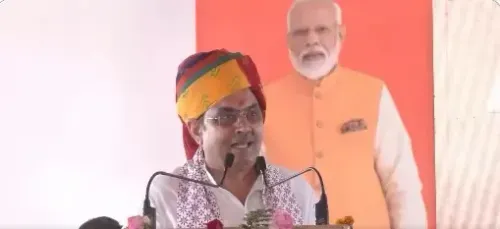
Rajasthan Chief Minister Bhajan Lal Sharma performed the ground-breaking ceremony (bhoomi pujan) for Jaipur Metro Phase-2 at the Metro Depot site in Sitapura, Jaipur, on Wednesday, 22 July 2026, formally launching the expansion of the capital's modern urban transport network.
What Was Announced
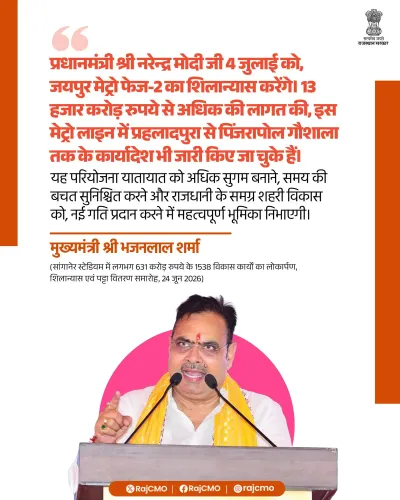
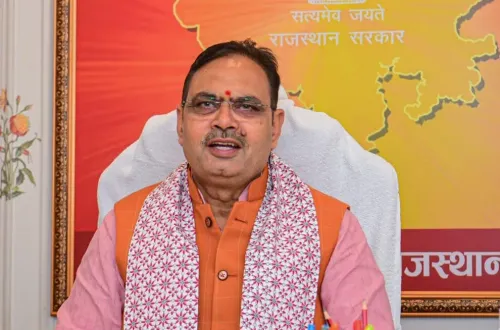
Sharma announced that the project will span more than 41 kilometres and is estimated to cost over ₹13,000 crore. In his post, he described the corridor as a new foundation for 'fast, safe, convenient and time-bound commuting' for millions of students, employees, traders and families across the city.
Quoting the thrust of his statement: the project, he said, 'will provide new strength to the public transport system of the capital and will prove to be a strong foundation for the Jaipur of the future.'
Context
Jaipur Metro Phase-1, connecting Mansarovar to Chandpole, became operational in June 2015, giving the city its first rapid transit corridor. Phase-2 is conceived as a significant extension of that network, aimed at bringing a far larger portion of the city under metro coverage.
The bhoomi pujan at Sitapura — an industrial and commercial zone on Jaipur's southern fringe — signals that the new corridor is intended to link areas currently underserved by rapid transit, potentially connecting peripheral growth centres to the city core.
Policy Backdrop
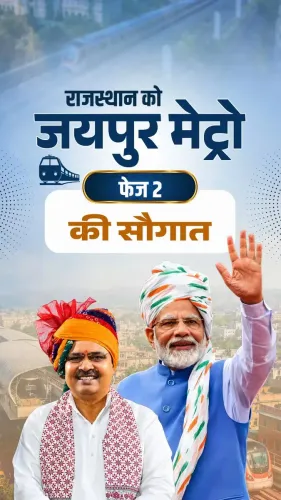
Sharma credited the project to the 'visionary leadership' of Prime Minister Narendra Modi, framing it within the 'double engine government' narrative — the BJP's political shorthand for coordinated central and state administrations pursuing aligned development goals.
The project is positioned as a concrete step toward what the ruling party calls 'Viksit Rajasthan' and 'Viksit Bharat' — developed Rajasthan and developed India — a vision centred on modern infrastructure as an economic multiplier. Indian states have increasingly pursued successive metro phases under central urban infrastructure schemes to address congestion and promote sustainable mobility.
Stakeholders and Impact
The primary beneficiaries identified by the Chief Minister are the city's daily commuters: students travelling to colleges and coaching centres, government and private sector employees, traders, and families. A metro network of this scale, if completed as planned, would substantially reduce dependence on private vehicles and intermediate public transport in Jaipur.
Present at the ceremony were Parliamentary Affairs, Law and Justice Minister Jogaram Patel and Urban Development and Local Self-Government Minister of State (referred to in the post by his handle @officialkharra), along with other elected representatives.
What's Next
Key milestones to watch include the progress of land acquisition, tendering of civil contracts, and integration planning with the existing Phase-1 corridor. Central funding disbursements and inclusion in forthcoming state budget allocations will be critical indicators of execution pace.
If the project proceeds on schedule, it has the potential to reshape Jaipur's socio-economic geography — drawing investment toward new metro-adjacent zones and easing the mobility burden on one of India's fastest-growing state capitals.
Point of View
It offers a high-visibility deliverable that reinforces the 'double engine' narrative ahead of future electoral cycles. By anchoring the project to PM Modi's Viksit Bharat vision, the BJP simultaneously localises a national brand and claims credit for central-state coordination. The ₹13,000-crore scale places this among Rajasthan's largest urban infrastructure bets, and execution speed will determine whether it becomes a governance asset or a liability. Land acquisition and funding timelines, historically the chokepoints for Indian metro projects, will be the real test of the political will on display today.
NationPress
22 Jul 2026
Frequently Asked Questions
What is Jaipur Metro Phase-2 and where will it run?
Jaipur Metro Phase-2 is a planned extension of the city's metro network, spanning more than 41 kilometres, with its ground-breaking held at the Sitapura Metro Depot site. The corridor is designed to expand rapid transit coverage beyond the existing Phase-1 line that runs between Mansarovar and Chandpole.
What is the cost of Jaipur Metro Phase-2?
The project is estimated to cost over ₹13,000 crore, as stated by Chief Minister Bhajan Lal Sharma at the bhoomi pujan ceremony on 22 July 2026.
When was the bhoomi pujan of Jaipur Metro Phase-2?
The ground-breaking ceremony was held on Wednesday, 22 July 2026, at the Metro Depot site in Sitapura, Jaipur, and was performed by Rajasthan Chief Minister Bhajan Lal Sharma.
When did Jaipur Metro Phase-1 start operations?
Jaipur Metro Phase-1, connecting Mansarovar to Chandpole, became operational in June 2015 and forms the base network that Phase-2 is set to extend.
Who attended the Jaipur Metro Phase-2 launch event?
Parliamentary Affairs, Law and Justice Minister Jogaram Patel and the Urban Development and Local Self-Government Minister of State were present at the ceremony along with other elected representatives.