CM Bhajan Lal leads tree plantation drive under Vande Ganga campaign
Synopsis
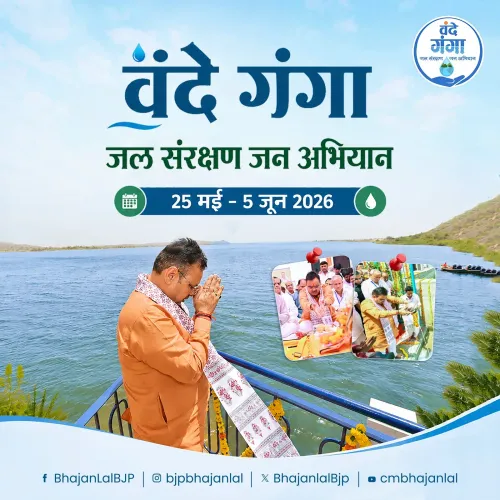
Rajasthan CM Bhajan Lal Sharma participated in tree plantation, shramdaan and an eco trail inauguration at Neendad forest on 29 May 2026 under the Vande Ganga Jal Sanrakshan Jan Abhiyan 2026, calling on citizens to build a green and water-rich Rajasthan.
Key Takeaways
CM Bhajan Lal Sharma participated in the Vande Ganga Jal Sanrakshan Jan Abhiyan 2026 event at Neendad forest area on 29 May 2026 .
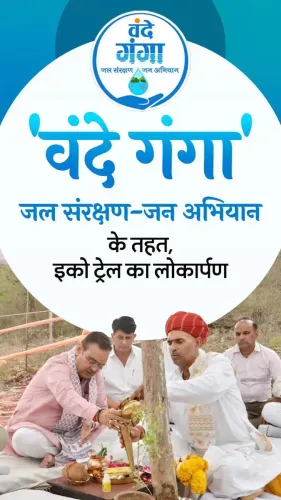
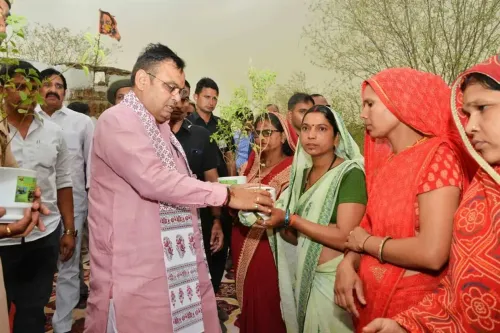
Activities included worship of Lord Mahadev and the sacred peepal tree, tree plantation and community shramdaan .
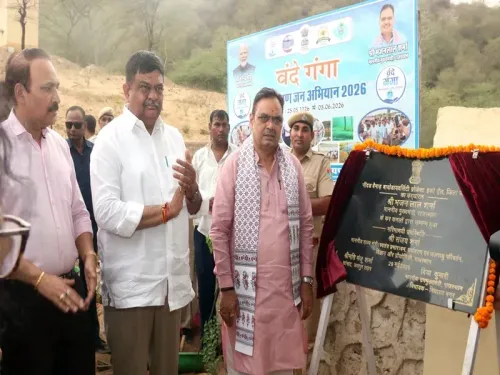
An eco trail was inaugurated and traditional water vessels ( parinde ) were installed for birds as part of the campaign's biodiversity component.
The campaign builds on Rajasthan's long history of state-led water conservation drives, including the Mukhya Mantri Jal Swavalamban Abhiyan of 2016.
The Chief Minister called for collective action to build a 'green, prosperous and water-rich Rajasthan.'
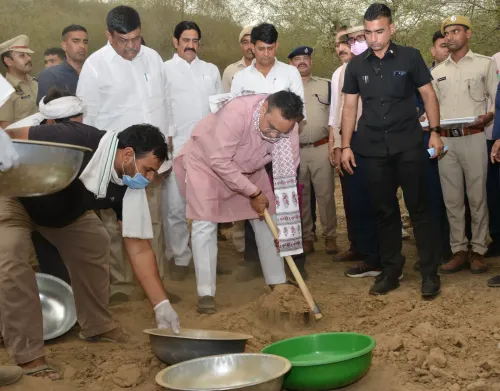
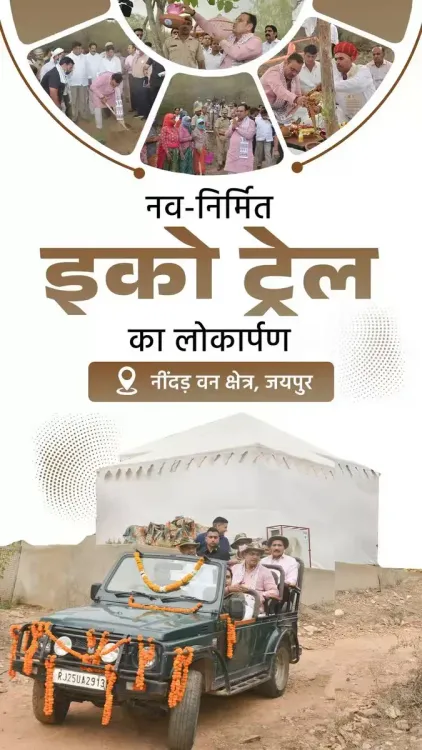
Rajasthan Chief Minister Bhajan Lal Sharma on Friday, 29 May 2026, participated in a tree plantation and community labour drive at the Neendad forest area under the Vande Ganga Jal Sanrakshan Jan Abhiyan 2026, performing a ritual worship of Lord Mahadev and the sacred peepal tree before planting saplings. The Chief Minister also inaugurated an eco trail and installed water vessels for birds during the event.
Context
Posting on X, CM Sharma described the activities in Hindi: 'वंदे गंगा जल संरक्षण जन अभियान 2026 के अंतर्गत आज नींदड़ वन क्षेत्र में भगवान महादेव एवं पुण्य पीपल का पूजन कर पौधारोपण एवं श्रमदान किया' ['Under the Vande Ganga Jal Sanrakshan Jan Abhiyan 2026, today in the Neendad forest area, worship of Lord Mahadev and the sacred peepal was performed, followed by tree plantation and shramdaan']. He added that water vessels for birds were installed and an eco trail was inaugurated. The Chief Minister closed with a call to action: 'आइए, मिलकर हरित, समृद्ध और जल-संपन्न राजस्थान का निर्माण करें' ['Let us together build a green, prosperous and water-rich Rajasthan'].
The Vande Ganga Jal Sanrakshan Jan Abhiyan is a community-driven water conservation and afforestation campaign that blends public participation with cultural and religious rituals. The campaign's 2026 edition is ongoing across Rajasthan, with district-level events mobilising residents, forest communities and local administrations.
Policy Backdrop
Rajasthan is one of India's most water-stressed states, with large arid and semi-arid tracts facing chronic groundwater depletion and desertification. Successive state governments have addressed this through large-scale conservation programmes, most notably the Mukhya Mantri Jal Swavalamban Abhiyan launched in 2016, which constructed rainwater harvesting structures in villages through community participation.
At the national level, the Jal Jeevan Mission, launched in 2019, set ambitious targets for household tap water connections in Rajasthan and other states. The Vande Ganga campaign builds on this lineage, adding afforestation and biodiversity measures — such as eco trails and bird feeders — to the traditional focus on water harvesting structures. BJP administrations in the state have consistently framed such drives as both developmental and cultural imperatives, linking religious observance with ecological action.
Stakeholders and Impact
The primary beneficiaries of the Vande Ganga Abhiyan are rural communities, farmers and forest dwellers who depend directly on groundwater and forest ecosystems for their livelihoods. Eco trail infrastructure also opens opportunities for nature-based tourism and environmental education in forest areas such as Neendad.
The installation of parinde — traditional clay or earthen water pots for birds — reflects the campaign's biodiversity dimension, acknowledging the role of avian species in forest health. By combining shramdaan (voluntary community labour) with ritual worship, the campaign draws on deep-rooted social traditions to encourage sustained public participation beyond government-led initiatives.
What's Next
District-level participation data and mid-term progress reports under the Vande Ganga Jal Sanrakshan Jan Abhiyan 2026 are expected to emerge over the coming months as the campaign continues through the year. Observers will watch for any supplementary budget allocations to support eco trail expansion and additional water conservation infrastructure across the state.
With Rajasthan's pre-monsoon season underway, the momentum of community-driven plantation and water conservation drives in May–June 2026 will be a key indicator of whether the state can meaningfully reverse groundwater decline in its most vulnerable districts.
Point of View
Shramdaan and eco infrastructure — is consistent with the BJP's strategy of embedding environmental messaging within cultural frameworks to maximise grassroots resonance. The Vande Ganga Abhiyan serves a dual purpose: it advances the state's genuine water-stress agenda while generating visible, symbol-rich imagery ahead of a year when district-level governance performance will matter. Linking peepal worship and bird feeders to a formal water conservation campaign reflects a broader pattern across BJP-governed states of weaving ecological policy into the language of dharma and community duty. Whether the campaign translates into measurable groundwater recovery will depend on the scale and consistency of implementation beyond headline events.
NationPress
22 Sept 2026
Frequently Asked Questions
What is the Vande Ganga Jal Sanrakshan Jan Abhiyan?
The Vande Ganga Jal Sanrakshan Jan Abhiyan is a community-driven water conservation and afforestation campaign run by the Rajasthan government that combines public participation, shramdaan, tree plantation and cultural rituals to address the state's chronic water scarcity.
What did CM Bhajan Lal Sharma do at Neendad forest on 29 May 2026?
CM Bhajan Lal Sharma performed worship of Lord Mahadev and the sacred peepal tree, participated in tree plantation and shramdaan, installed water vessels for birds, and inaugurated an eco trail at the Neendad forest area under the Vande Ganga Jal Sanrakshan Jan Abhiyan 2026.
What is shramdaan and why is it used in Rajasthan conservation drives?
Shramdaan refers to voluntary community labour contributed without monetary compensation. Rajasthan conservation campaigns use shramdaan to foster community ownership of local water and forest resources and to mobilise large numbers of participants beyond government machinery.
What is Rajasthan's history with water conservation campaigns?
Rajasthan has a long history of state-led water conservation programmes, including the Mukhya Mantri Jal Swavalamban Abhiyan launched in 2016 to build rainwater harvesting structures in villages, and the national Jal Jeevan Mission from 2019 aimed at expanding household tap water connections.
Why does Rajasthan face such severe water scarcity?
Rajasthan is one of India's most arid states, with large desert and semi-arid tracts, low and erratic rainfall, and decades of groundwater over-extraction for agriculture, making it chronically vulnerable to water stress and desertification.