CM Bhajanlal inaugurates Neendad-Bainad Eco Trail in Jaipur
Synopsis
Chief Minister Bhajanlal Sharma inaugurated the Neendad-Bainad Biodiversity Project Eco Trail in Jaipur on 29 May 2026, performed shramdaan at an anicut under the Vande Ganga water conservation campaign, and conducted peepal pujan and sapling plantation to promote environmental protection and community participation.
Key Takeaways
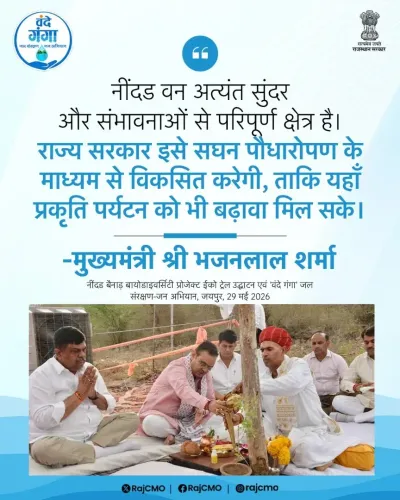
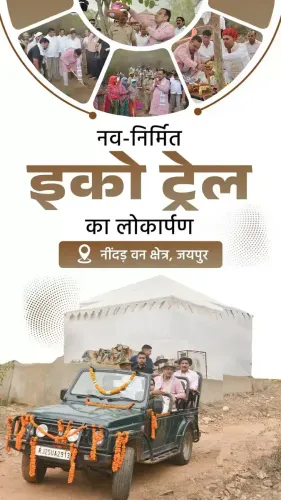
Chief Minister Bhajanlal Sharma inaugurated the Neendad-Bainad Biodiversity Project Eco Trail in the Neendad forest area, Jaipur on 29 May 2026 .
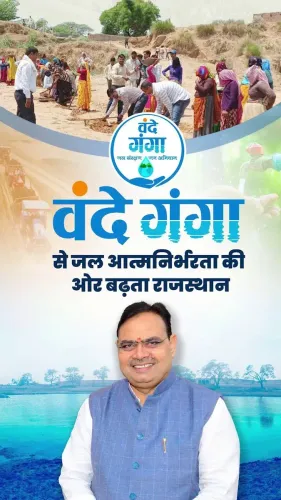
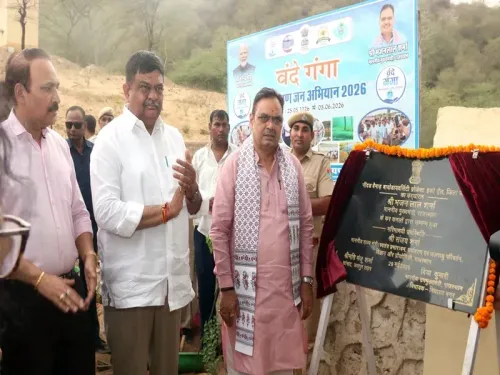
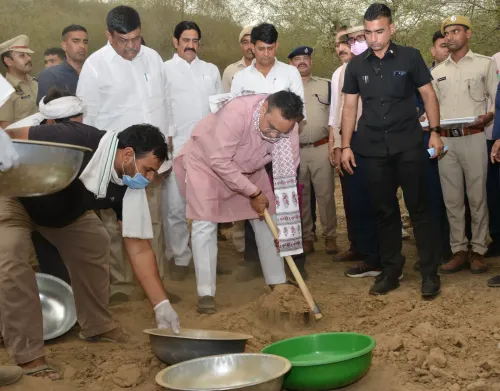
The event included shramdaan (voluntary community labour) at an anicut under the Vande Ganga Jal Sanrakshan Jan Abhiyan .
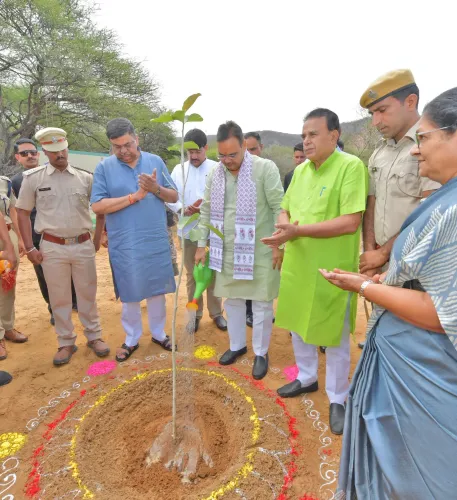
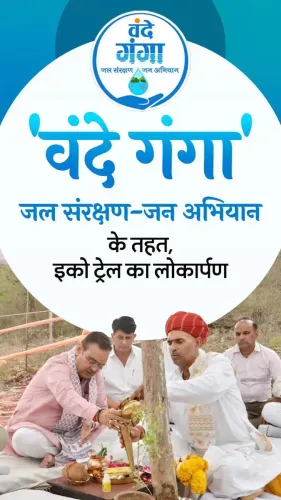
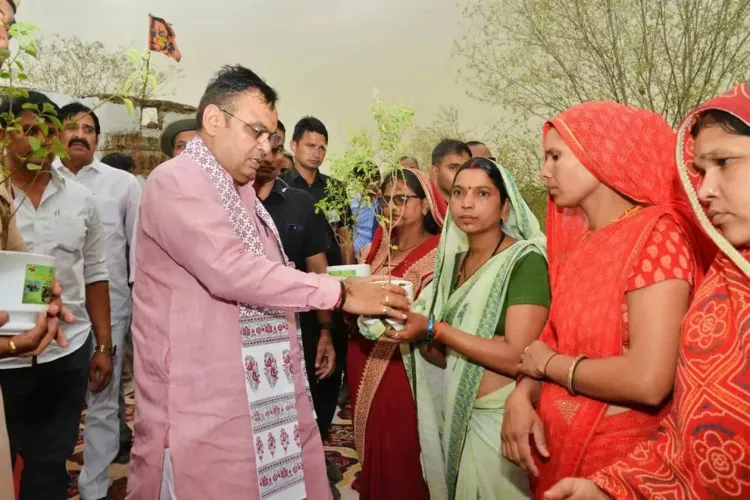
Sharma performed peepal pujan , sapling plantation, and tied bird water-feeders to trees as a call for public participation in conservation.
The Vande Ganga campaign builds on Rajasthan's earlier water-harvesting policy lineage, including the Mukhya Mantri Jal Swavalamban Abhiyan of 2016 .
The initiative aligns with the National Biodiversity Action Plan and India's climate resilience goals.
Expansion of similar eco-trails and anicut restoration work to other Rajasthan districts is anticipated under the campaign.
The Chief Minister's Office of Rajasthan announced on Friday, 29 May 2026 that Chief Minister Bhajanlal Sharma inaugurated the Neendad-Bainad Biodiversity Project Eco Trail in the Neendad forest area of Jaipur, combining the launch with water-conservation and plantation activities under the state's ongoing environmental campaigns.
Context
The Chief Minister inaugurated the eco trail in the Neendad forest zone, a biodiversity-rich area on the outskirts of Jaipur. The event also served as a platform for symbolic and participatory environmental acts: Sharma performed peepal pujan (worship of the sacred fig tree), carried out paudharopan (sapling plantation), and tied parinde (bird water-feeders) to trees — a traditional gesture of care for wildlife. The CMO described these acts as a call for environmental protection and public participation.
Policy Backdrop
The water-conservation segment of the event was conducted under the Vande Ganga Jal Sanrakshan Jan Abhiyan — a state-level public campaign promoting community-driven conservation of water sources across Rajasthan. At an anicut (a small check dam used for water harvesting), the Chief Minister participated in shramdaan — voluntary community labour — to reinforce the message of protecting and augmenting local water sources. Rajasthan's arid geography has historically made such water-harvesting structures critical to rural livelihoods.
The state has a long lineage of community water-conservation policy, including the Mukhya Mantri Jal Swavalamban Abhiyan launched in 2016, which promoted anicut construction and upkeep through public participation. The Vande Ganga campaign builds on this tradition, extending it into a broader public movement.
Stakeholders and Impact
Local communities living adjacent to the Neendad forest stand to benefit directly from both the eco trail — which can generate eco-tourism activity and awareness — and the anicut restoration work, which supports groundwater recharge. Environmental groups have consistently advocated for integrated approaches that link biodiversity corridors with traditional water-harvesting infrastructure in arid zones.
The activities align with national frameworks including the National Biodiversity Action Plan and India's broader climate resilience commitments. The hashtag #AapnoAgraneeRajasthan ('Our Pioneering Rajasthan') used in the official post signals the government's intent to brand these efforts as part of a larger development identity for the state.
What's Next
The Vande Ganga campaign is expected to expand anicut conservation and water-source restoration work to other districts of Rajasthan in the coming months. Similar eco-trail projects modelled on the Neendad-Bainad initiative could be replicated in other forest zones as the state looks to integrate eco-tourism with conservation goals. Any related budget allocations or district-level rollout timelines are likely to be signalled in the next state assembly session.
Point of View
A format the Bhajanlal government has used repeatedly to project grassroots connect. The Vande Ganga campaign's framing as a 'jan abhiyan' (people's movement) mirrors the communication strategy of national schemes like the Jal Jeevan Mission, suggesting the state is deliberately aligning its branding with the Centre's development narrative. For a desert state perennially vulnerable to drought, linking eco-tourism infrastructure with anicut conservation is substantively sound policy — but the real test will be whether the campaign generates measurable improvements in water-table levels and forest cover beyond the inauguration optics. Watchers should track whether district-level rollouts receive dedicated budget lines in the next assembly session.
NationPress
13 Oct 2026
Frequently Asked Questions
What is the Neendad-Bainad Biodiversity Project Eco Trail?
The Neendad-Bainad Biodiversity Project Eco Trail is a newly inaugurated eco-tourism and conservation trail located in the Neendad forest area of Jaipur, Rajasthan. It was inaugurated by Chief Minister Bhajanlal Sharma on 29 May 2026 as part of integrated biodiversity and environment initiatives in the region.
What is the Vande Ganga Jal Sanrakshan Abhiyan in Rajasthan?
The Vande Ganga Jal Sanrakshan Jan Abhiyan is a state-level public campaign by the Rajasthan government aimed at promoting community participation in the conservation and enhancement of water sources, including traditional structures such as anicuts. It builds on the state's earlier water-harvesting initiatives.
What is shramdaan and why did CM Bhajanlal do it at an anicut?
Shramdaan refers to the voluntary offering of physical labour for a community cause. Chief Minister Bhajanlal Sharma participated in shramdaan at an anicut — a small check dam used for water harvesting — to symbolically reinforce the Vande Ganga campaign's message of community-driven water source conservation.
Where is the Neendad forest area in Rajasthan?
The Neendad forest area is located in Jaipur district, the capital of Rajasthan. It is a biodiversity-significant forest zone that has been chosen for eco-trail development and conservation activities by the state government.
What is the significance of peepal pujan and parinde banding in the event?
Peepal pujan (worship of the sacred fig tree) and tying parinde (traditional bird water-feeders) to trees are culturally rooted practices in Rajasthan that signify reverence for nature and care for wildlife. Chief Minister Sharma performed these acts to invoke traditional environmental ethics and encourage public participation in conservation.