CM Bhajanlal flags Parwan Project as lifeline for Kota, Baran, Jhalawar
Synopsis
The Rajasthan Chief Minister's Office on 25 July 2026 declared the Parwan Multipurpose Irrigation Project a lifeline for Kota, Baran, and Jhalawar, reinforcing the BJP government's focus on water infrastructure in the water-scarce Hadoti region of southeastern Rajasthan.
Key Takeaways
The Chief Minister's Office of Rajasthan on 25 July 2026 described the Parwan Multipurpose Irrigation Project as a 'lifeline' for three southeastern Rajasthan districts.
The project is intended to serve Kota , Baran , and Jhalawar districts with both agricultural irrigation and drinking water supply.
Chief Minister Bhajanlal Sharma was tagged in the post, signalling the administration's ownership of the project as a flagship development initiative.
The project aligns with the central government's Pradhan Mantri Krishi Sinchayee Yojana , which has supported Rajasthan's irrigation push since 2015 .
The Hadoti region has historically faced water scarcity, making assured irrigation critical for its agrarian communities.
Budget allocations, construction progress, and environmental clearances remain key milestones to watch in the project's rollout.
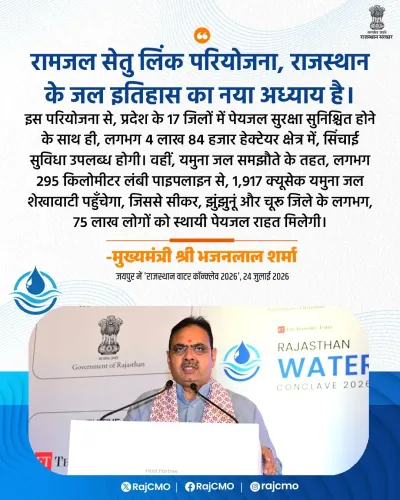
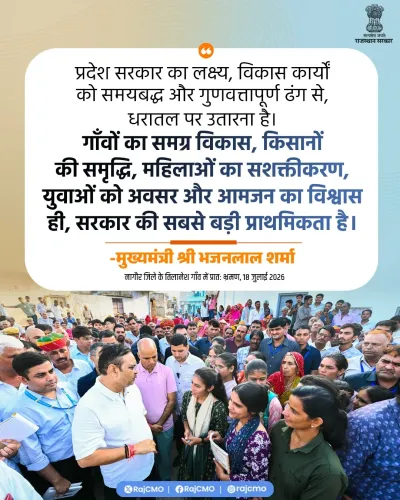
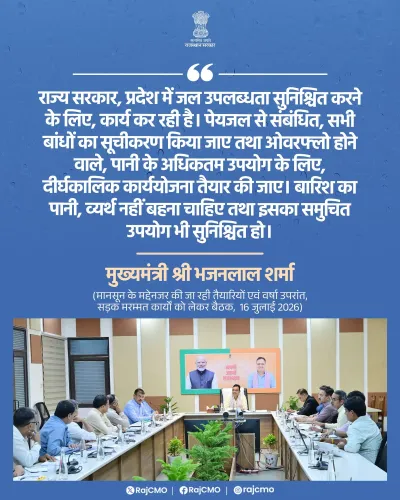
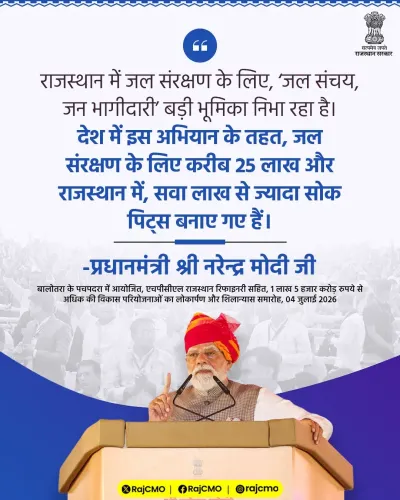
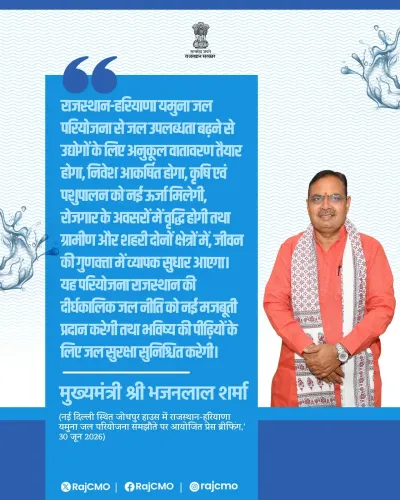
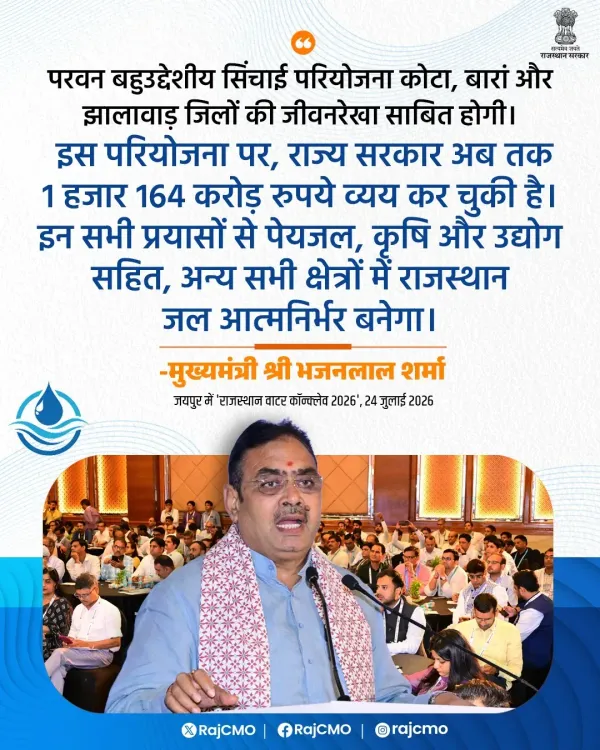
The Chief Minister's Office of Rajasthan on Saturday, 25 July 2026 declared that the Parwan Multipurpose Irrigation Project will prove to be a lifeline for the districts of Kota, Baran, and Jhalawar in southeastern Rajasthan, tagging Chief Minister Bhajanlal Sharma in the post shared on the official CMO handle.
The post, written in Hindi, states: 'Parwan bahuddesheey sinchai pariyojana Kota, Baran aur Jhalawar jilon ki jeevanrekha sabit hogi' — meaning 'The Parwan Multipurpose Irrigation Project will prove to be the lifeline of Kota, Baran and Jhalawar districts.' The message was accompanied by the hashtag #AapnoAgraneeRajasthan ('Our Leading Rajasthan'), a recurring campaign tag used by the BJP-led state government.
Context
The Parwan Multipurpose Irrigation Project is designed to serve the water and irrigation needs of the Hadoti region — a cluster of southeastern Rajasthan districts that includes Kota, Baran, and Jhalawar. The region has historically faced water scarcity, and its agrarian communities have long depended on monsoon-fed agriculture with limited assured irrigation cover.
The project is conceived as a multipurpose intervention, targeting both agricultural irrigation and drinking water supply for rural households across the three districts. Farmers and rural communities in this belt stand as the primary intended beneficiaries.
Policy Backdrop
Rajasthan's push for irrigation infrastructure in its eastern and southeastern districts has been a consistent policy thread across successive governments. Since 2015, state irrigation initiatives in the Hadoti region have been pursued in alignment with the central government's Pradhan Mantri Krishi Sinchayee Yojana (PMKSY), which channels funding toward assured irrigation coverage and water-use efficiency.
The BJP-led administration under Chief Minister Bhajanlal Sharma has made development messaging around water infrastructure a visible part of its governance narrative, particularly in districts where agrarian distress and water scarcity intersect. The #AapnoAgraneeRajasthan campaign frames such projects as markers of a 'leading' or 'progressive' Rajasthan under the current dispensation.
Stakeholders and Impact
The districts of Kota, Baran, and Jhalawar together constitute a significant agricultural zone in southeastern Rajasthan. Farmers in this region cultivate crops including soybean, wheat, and mustard, and the availability of assured irrigation water is expected to reduce dependence on erratic monsoon patterns.
Rural households in these districts would additionally benefit from the project's drinking water supply component, addressing a longstanding gap in piped water access in interior villages. The project, if executed as envisioned, could meaningfully alter the agricultural economy of the Hadoti belt.
What's Next
Key indicators to watch include state budget allocations earmarked for the Parwan project in upcoming legislative sessions, progress on construction milestones, and any environmental or funding clearances that may be required. The pace at which the project moves from announcement to ground-level implementation will determine whether it delivers on its stated promise as a lifeline for the three districts.
The government's ability to mobilise both state funds and central scheme support under PMKSY will be critical to sustaining momentum, particularly given the scale of infrastructure required to serve three large districts simultaneously.
Point of View
Lending it emotional weight ahead of any forthcoming budget or election cycle. The BJP administration's consistent use of the #AapnoAgraneeRajasthan hashtag signals a deliberate branding effort to associate large-scale development with the current dispensation. Irrigation projects in the Hadoti belt have historically been politically significant given the region's agrarian base and vulnerability to drought. Whether the announcement translates to accelerated on-ground progress will be the real test of this governance narrative.
NationPress
25 Jul 2026
Frequently Asked Questions
What is the Parwan Multipurpose Irrigation Project in Rajasthan?
The Parwan Multipurpose Irrigation Project is a state infrastructure initiative designed to provide agricultural irrigation and drinking water supply to the districts of Kota, Baran, and Jhalawar in southeastern Rajasthan's Hadoti region.
Which districts will benefit from the Parwan irrigation project?
The districts of Kota, Baran, and Jhalawar in southeastern Rajasthan are the primary beneficiaries of the Parwan Multipurpose Irrigation Project, covering both farming communities and rural households.
What did the Rajasthan CMO say about the Parwan project?
The Chief Minister's Office of Rajasthan on 25 July 2026 stated that the Parwan Multipurpose Irrigation Project 'will prove to be the lifeline' of Kota, Baran, and Jhalawar districts, tagging Chief Minister Bhajanlal Sharma in the post.
Is the Parwan project linked to any central government scheme?
Yes, Rajasthan's irrigation initiatives in the Hadoti region, including projects like Parwan, have been pursued in alignment with the central government's Pradhan Mantri Krishi Sinchayee Yojana since 2015.
What is the current status of the Parwan Multipurpose Irrigation Project?
The project's current construction status, completion timeline, and latest funding details have not been officially confirmed in the 25 July 2026 post; key milestones including budget allocations and clearances remain to be watched.