CM Bhajanlal hails Ramjal Setu Link Project as new chapter in Rajasthan water history
Synopsis
The Chief Minister's Office of Rajasthan on 25 July 2026 declared the Ramjal Setu Link Project a new chapter in the state's water history, crediting CM Bhajanlal Sharma with the initiative aimed at addressing chronic water scarcity in one of India's most arid states.
Key Takeaways
The Chief Minister's Office of Rajasthan announced the Ramjal Setu Link Project on 25 July 2026 , calling it a new chapter in the state's water history.
Chief Minister Bhajanlal Sharma , who has led Rajasthan since December 2023 , was directly credited in the announcement.
The project follows a long tradition of large-scale water infrastructure in Rajasthan, including the Indira Gandhi Nahar Project launched in the late 1950s .
Primary beneficiaries are expected to be farmers and rural communities in the state's arid and semi-arid western districts.
State budget allocations and central government clearances will be critical to the project's progress and are expected to be tracked in upcoming assembly sessions.
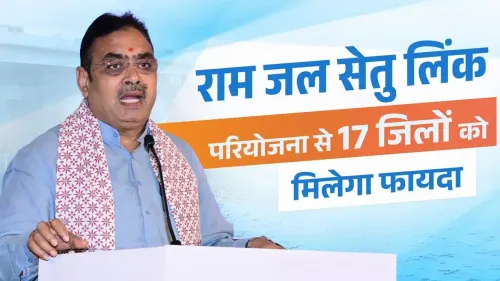
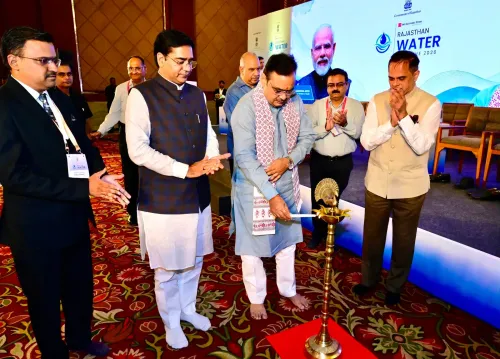
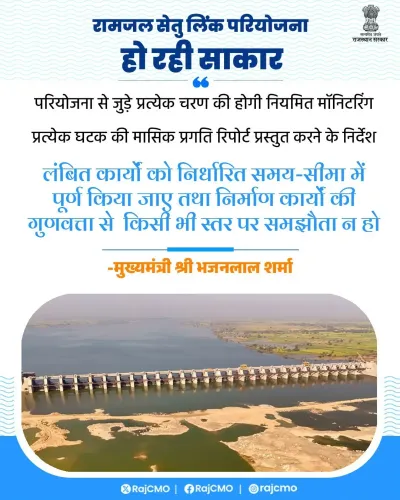
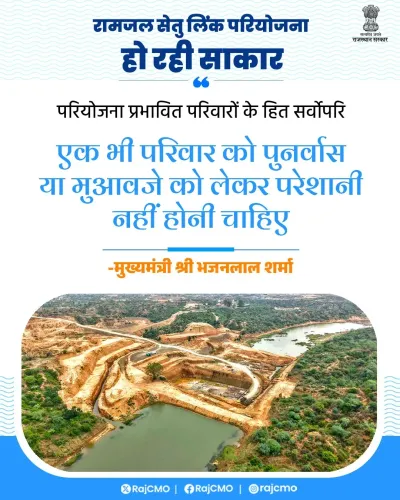
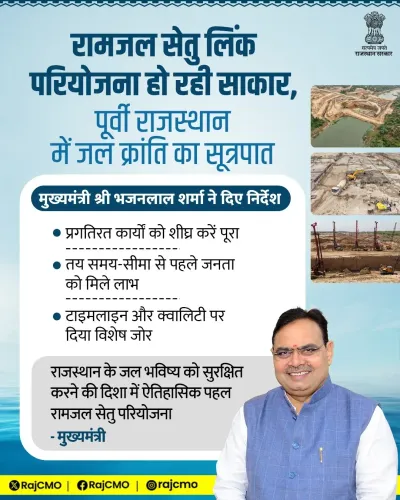
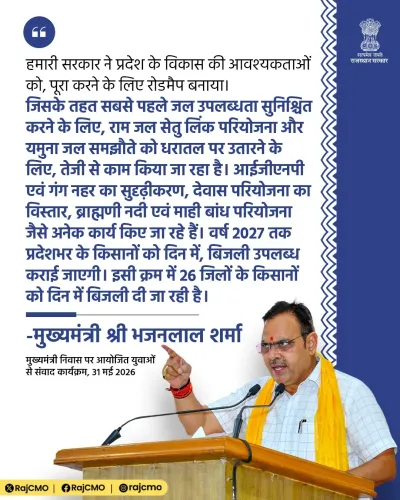
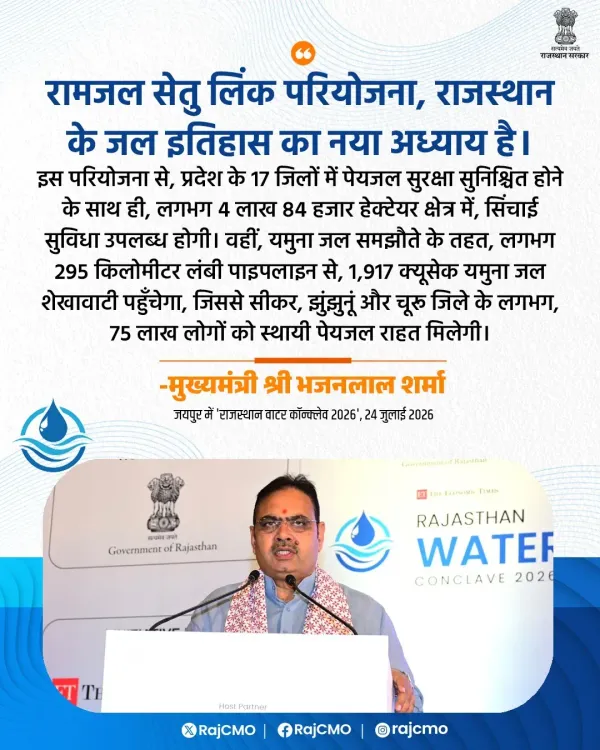
The Chief Minister's Office of Rajasthan on Saturday, 25 July 2026, declared the Ramjal Setu Link Project a landmark moment in the state's water history, with the post directly crediting Chief Minister Bhajanlal Sharma for the initiative. The announcement, made via the official CMO account on X, was accompanied by the hashtag #आपणो_अग्रणी_राजस्थान ('Our Leading Rajasthan'), signalling the project's positioning as a flagship achievement of the current state government.
Context
The post's Hindi text translates as: 'The Ramjal Setu Link Project is a new chapter in the water history of Rajasthan.' The brevity of the announcement is deliberate — the CMO framed the project not as a routine infrastructure update but as a historic inflection point for a state that has long battled acute water scarcity. Rajasthan, which covers much of the Thar Desert, is among India's most water-stressed states, making large-scale water infrastructure projects politically and administratively significant.
The hashtag #आपणो_अग्रणी_राजस्थान is part of the Bhajanlal Sharma government's broader communications strategy, used consistently to brand major policy announcements as evidence of Rajasthan's forward momentum under its current leadership.
Policy Backdrop
Rajasthan's pursuit of large-scale water infrastructure stretches back decades. The Indira Gandhi Nahar Project, initiated in the late 1950s and expanded through the 1980s, remains the most significant canal project in the state's history, channelling water from the Sutlej-Beas river system into the western districts of Barmer, Jaisalmer, and Bikaner. The Ramjal Setu Link Project appears to follow this established pattern of inter-basin water transfer, aimed at expanding irrigation reach into arid zones.
Successive state governments — regardless of political affiliation — have sought central government support and environmental clearances for river-linking proposals, many of which trace their conceptual origins to national river-linking discussions that gained momentum in the early 2000s. The current government's decision to brand this project as a 'new chapter' suggests it views the initiative as comparable in ambition to those earlier landmark schemes.
Stakeholders and Impact
The primary beneficiaries of any expanded water infrastructure in Rajasthan are farmers in the arid and semi-arid districts of the state, who depend on canal and groundwater systems for irrigation in a region where rainfall is sparse and unpredictable. Reliable water access directly affects crop cycles, livestock survival, and rural livelihoods across western Rajasthan.
Beyond agriculture, municipal water supply in smaller towns and the broader goal of reducing distress migration from water-scarce villages are also at stake. If the project delivers on its framing as a historic undertaking, it could benefit millions of residents across the state's drought-prone belt. State budget allocations and pending central clearances will be closely watched in upcoming assembly sessions to gauge the project's pace and scale.
What's Next
The announcement sets expectations for detailed project disclosures — including funding breakdowns, timelines, district coverage, and central government approvals — in the near term. The Rajasthan state assembly and water resource ministry are likely to face questions on the project's current stage, whether land acquisition has begun, and what inter-state or inter-ministry coordination is required.
As Rajasthan approaches future budget cycles, the Ramjal Setu Link Project is expected to feature prominently in the government's infrastructure narrative. How quickly the administration moves from announcement to ground-level execution will determine whether this 'new chapter' translates into measurable relief for the state's water-stressed communities.
Point of View
Positioning the Bhajanlal Sharma government within Rajasthan's long lineage of water-infrastructure builders — a lineage that carries deep emotional resonance in an arid state. By invoking historical weight rather than technical specifics, the announcement prioritises narrative over detail, a common pattern ahead of budget cycles or election seasons. The project's success will ultimately hinge on central clearances and funding, making it as much a test of the state government's negotiating capacity in Delhi as of its administrative execution at home. Rajasthan's voters, particularly in the agrarian west, will measure this 'new chapter' by water in their fields, not words on a screen.
NationPress
25 Jul 2026
Frequently Asked Questions
What is the Ramjal Setu Link Project in Rajasthan?
The Ramjal Setu Link Project is a water infrastructure initiative announced by the Rajasthan government under Chief Minister Bhajanlal Sharma, described as a landmark development in the state's water history. Detailed technical specifications have not yet been publicly released.
Who announced the Ramjal Setu Link Project?
The announcement was made by the Chief Minister's Office of Rajasthan on 25 July 2026 via an official post on X, directly crediting Chief Minister Bhajanlal Sharma.
How does the Ramjal Setu Link Project relate to past Rajasthan water schemes?
It follows a long tradition of large-scale canal and river-link projects in Rajasthan, most notably the Indira Gandhi Nahar Project initiated in the late 1950s, which brought water to western districts including Barmer, Jaisalmer, and Bikaner.
Who will benefit from the Ramjal Setu Link Project?
The primary beneficiaries are expected to be farmers and rural communities in Rajasthan's arid and semi-arid western districts, where water scarcity significantly affects agriculture and daily life.
What are the next steps for the Ramjal Setu Link Project?
Key milestones to watch include state budget allocations, central government clearances, land acquisition proceedings, and formal project disclosures covering timelines and district coverage in upcoming Rajasthan assembly sessions.