CM Bhajanlal launches ₹924 Cr projects, 'Adiparag' honey in Pratapgarh
Synopsis
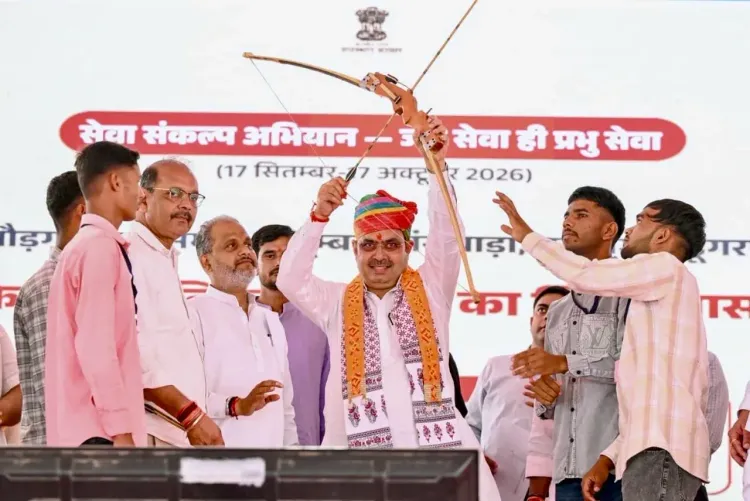
Chief Minister Bhajanlal Sharma laid the foundation and inaugurated 1,452 development works worth over ₹924 crore across seven districts of Udaipur division at Pratapgarh, while also launching 'Adiparag' wild forest honey under the 'Vangiri' brand and signing a RAJSANGH–CONFED MoU to boost tribal forest-produce marketing.
Key Takeaways
1,452 development projects worth more than ₹924 crore were inaugurated or foundation-laid across seven districts of Udaipur division. 'Adiparag' wild forest honey was launched as the first product under the Vangiri brand by RAJSANGH to market tribal minor forest produce.
A RAJSANGH–CONFED MoU was signed to expand marketing and sales of Van Dhan Vikas Kendra products across Rajasthan.
CM Sharma performed panchamrit abhishek at the Deepeshwar Mahadev temple in Pratapgarh before the ceremony.
He was welcomed with the traditional Gair folk dance , reflecting the cultural significance of the tribal-majority region.
The event targets Scheduled Tribe communities in southern Rajasthan, combining physical infrastructure with cooperative livelihood initiatives.
A tribal honey brand, over a thousand development works, and a cooperative pact — Chief Minister Bhajanlal Sharma packed all of it into a single ceremony at Pratapgarh on Sunday, 27 September 2026, making the southern Rajasthan town the centrepiece of the state government's most visible tribal-welfare push in recent memory.
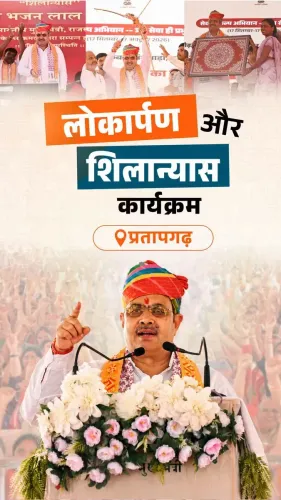
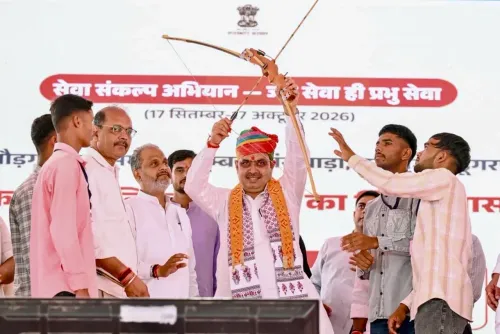
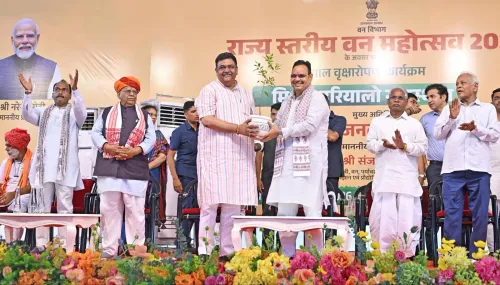
Sharma addressed the inauguration and foundation-laying ceremony for development works across the Udaipur division, covering seven districts. According to the Chief Minister's Office, he inaugurated and laid the foundation stones for 1,452 development projects worth more than ₹924 crore — a scale that signals the administration's intent to accelerate infrastructure delivery in one of Rajasthan's most tribal-concentrated regions.
The 'Adiparag' launch: wild forest honey goes to market
The ceremony's most distinctive moment came with the launch of 'Adiparag' — billed as wild forest honey and marketed as the first product under the 'Vangiri' brand. The brand is being rolled out by Rajasthan Janjatiya Kshetra Vikas Sahakari Sangh Limited (RAJSANGH), the state's apex cooperative body for tribal-area development, specifically to promote the collection, value-addition, and marketing of minor forest produce from tribal belts.
For forest-produce collectors in Udaipur division's tribal villages, this matters beyond symbolism. Southern Rajasthan districts have long had the raw material — honey, herbs, bamboo, tendu leaves — but consistent, organised market access has historically been the missing link. Branding that raw produce and routing it through a cooperative channel is a direct attempt to plug that gap and lift incomes at the source.
RAJSANGH–CONFED MoU: a marketing pipeline for Van Dhan centres
Alongside the product launch, a Memorandum of Understanding (MoU) was exchanged between RAJSANGH and CONFED — the Rajasthan State Co-operative Consumers Federation Limited. The agreement is designed to widen the sales and marketing network for goods manufactured by the state's Van Dhan Vikas Kendras (forest-wealth development centres), which process raw forest produce into finished products at the village level.
The RAJSANGH–CONFED tie-up essentially attaches a distribution backbone to the tribal cooperative ecosystem — linking production clusters to CONFED's consumer network across the state. Whether procurement volumes and margins will translate into meaningful income gains for collectors is the metric to watch as the MoU moves from signing to implementation.
Temple visit and a traditional welcome in Pratapgarh
Before the main event, Sharma visited the Deepeshwar Mahadev temple in Pratapgarh, performing panchamrit abhishek (ritual anointing with five sacred offerings) and praying for the prosperity and well-being of the state. On arrival, he was received with a performance of the traditional Gair dance — a folk art form integral to the cultural identity of Rajasthan's tribal communities, setting the register for a ceremony that was as much cultural affirmation as policy delivery.
Governments across Rajasthan's political spectrum have used district-level minor forest produce programmes to signal solidarity with Scheduled Tribe populations, but the combination of large-scale infrastructure commitment, a consumer-facing brand launch, and a cooperative marketing agreement in a single event reflects a sharper convergence of livelihood and branding strategy. The real test will be in the utilisation certificates filed and the honey jars actually sold.
Point of View
This is an opportunity to build a distinct welfare narrative in southern Rajasthan's tribal belt ahead of any political cycle, distinguishing itself through branding and cooperative tie-ups rather than cash transfers alone. The RAJSANGH–CONFED MoU is the structural bet: if CONFED's distribution reach can actually move Adiparag honey and Van Dhan products at volumes that lift collector incomes, it becomes a replicable template. If it stalls at the signing stage — as many such MoUs have — the ceremony becomes a photo opportunity without lasting footprint.
NationPress
27 Sept 2026
Frequently Asked Questions
What is the Adiparag honey product launched in Rajasthan?
'Adiparag' is wild forest honey launched by RAJSANGH as the first product under the 'Vangiri' brand, aimed at marketing minor forest produce collected by tribal communities in Rajasthan's Udaipur division.
How many projects did CM Bhajanlal inaugurate in Udaipur division?
CM Bhajanlal Sharma inaugurated and laid foundation stones for 1,452 development projects worth more than ₹924 crore across seven districts of Udaipur division at the Pratapgarh ceremony on 27 September 2026.
What is RAJSANGH in Rajasthan?
RAJSANGH — Rajasthan Janjatiya Kshetra Vikas Sahakari Sangh Limited — is the state's apex cooperative body for tribal-area development, responsible for collecting, value-adding, and marketing minor forest produce from tribal belts.
What is the RAJSANGH–CONFED MoU about?
The MoU between RAJSANGH and CONFED (Rajasthan State Co-operative Consumers Federation Limited) is designed to boost the marketing and sale of products made by Van Dhan Vikas Kendras, giving tribal forest-produce goods wider distribution access across Rajasthan.
What is the Vangiri brand launched by the Rajasthan government?
Vangiri is a consumer brand launched by RAJSANGH to market value-added minor forest produce — starting with 'Adiparag' wild forest honey — sourced from tribal communities in Rajasthan's southern districts.