CM Bhajanlal Sharma Flags Rajasthan School Reforms Since Dec 2023
Synopsis
The Rajasthan Chief Minister's Office says CM Bhajanlal Sharma's BJP government has achieved notable progress in teacher management, enrollment, girls' education, digital learning, inclusion, and school infrastructure since taking office on 15 December 2023.
Key Takeaways
The Chief Minister's Office of Rajasthan posted a comprehensive account of school reforms on 17 November 2026 .
The reform period runs from 15 December 2023 — the date CM Bhajanlal Sharma assumed office — to the present.
Seven domains are highlighted: teacher-personnel management, enrollment, exam results, girls' education, digital learning, inclusive education, and school infrastructure.
Quality, equal opportunity, safety, and modern facilities are described as the government's 'highest priorities' in education.
Girls' education receives explicit, standalone mention, reflecting the state's historical challenge with female dropout rates.
Progress claims are as yet backed only by the government's own communication; independent data verification is pending.
When Bhajanlal Sharma took the oath as Rajasthan's Chief Minister on 15 December 2023, his government placed education at the centre of its governance agenda — and on 17 November 2026, the Chief Minister's Office of Rajasthan posted a sweeping account of what that commitment has looked like in practice across the state's public school system.
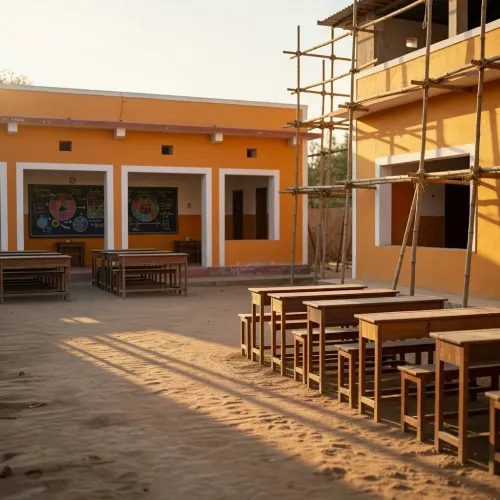
The post, tagged with the campaign hashtag #आपणो_अग्रणी_राजस्थान ('Our Pioneering Rajasthan'), describes education as the 'foundation of the state's social and economic future' — and lists seven specific domains where the government says it has recorded 'notable progress': teacher-personnel management, enrollment, examination results, girls' education, digital learning, inclusive education, and school infrastructure.
Seven Fronts, One Push: What the Government Is Claiming
The CMO's framing is deliberate and wide. By naming every major lever of a school system in a single communication — from how teachers are managed to how classrooms are built — the government is signalling a whole-of-system approach rather than a point intervention. Quality, equal opportunity, safety, and modern facilities are described as the 'highest priorities' of the reforms.
Notably, girls' education gets its own explicit mention alongside broader inclusion goals. This emphasis echoes a long-standing national challenge: Rajasthan has historically grappled with female dropout rates and gender gaps in secondary schooling, making any sustained policy attention to baalika shiksha (girls' education) a politically and socially significant signal.
Rajasthan's Reforms Within the National Picture
Rajasthan's post-2023 school reform push sits within a recognisable pattern across Indian states. The National Education Policy 2020 nudged every state government toward revamping curriculum design, expanding digital tools, and strengthening inclusive practices for children with disabilities or from marginalised communities. Rajasthan has aligned its stated agenda with these national objectives.
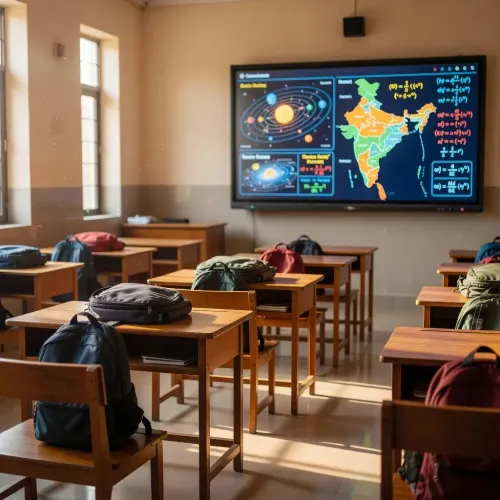
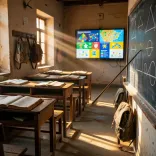
Digital learning — a priority named explicitly in the post — became a flashpoint of urgency after pandemic-era learning losses exposed the gap between students with device access and those without. States that moved quickly to equip government classrooms with smart boards, tablets, and internet connectivity found measurable gains in attendance and engagement. Whether Rajasthan's efforts have translated into such outcomes at scale remains for independently verified data to confirm.
What Comes Next for Rajasthan's Schools
The state's annual education outcome reports and upcoming budget allocations will be the real scorecard. Enrollment numbers, board examination pass rates, and infrastructure completion figures — when made public — will put specific numbers behind the broad claims made in today's communication. With the academic calendar already in its second half, any enrollment drives or infrastructure rollouts announced before year-end will be watched closely by education observers across the region.
Rajasthan has roughly 65,000 government schools and one of India's largest student populations in the public system — the stakes of getting school reform right here are, by any measure, enormous.
Point of View
The government invites a verifiable before-after comparison, a double-edged move. Rajasthan's education record has long been a political battleground; the explicit mention of girls' education and digital learning signals an attempt to capture both social-equity and modernisation credibility simultaneously, two registers that resonate strongly with both urban middle-class and rural electorates.
NationPress
17 Nov 2026
Frequently Asked Questions
What education reforms has CM Bhajanlal Sharma introduced in Rajasthan?
Since taking office on 15 December 2023 , the Bhajanlal Sharma government has stated it is pursuing reforms across teacher management, student enrollment, examination outcomes, girls' education, digital learning, inclusive education, and school infrastructure in government schools.
When did Bhajanlal Sharma become Chief Minister of Rajasthan?
Bhajanlal Sharma was sworn in as Chief Minister of Rajasthan on 15 December 2023 after the BJP's victory in the state assembly elections.
What is the '#आपणो_अग्रणी_राजस्थान' campaign?
#आपणो_अग्रणी_राजस्थान translates as 'Our Pioneering Rajasthan' and is the Rajasthan government's social media campaign highlighting development work and policy achievements under CM Bhajanlal Sharma.
How many government schools are there in Rajasthan?
Rajasthan has approximately 65,000 government schools , making it one of India's largest public education systems and giving any state-level school reform significant scale and impact.
How does Rajasthan's school reform relate to the National Education Policy 2020?
Rajasthan's stated priorities — digital learning, inclusive education, and curriculum quality — align with the National Education Policy 2020 , which provides the national framework guiding state-level changes in public schooling across India.