CM Bhupendra Patel hails ₹14,500 cr Cabinet nod for 92 GWh storage
Synopsis
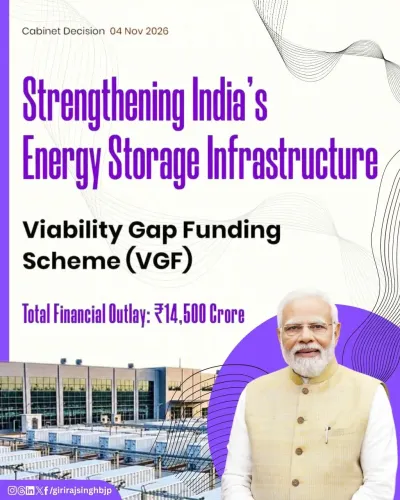
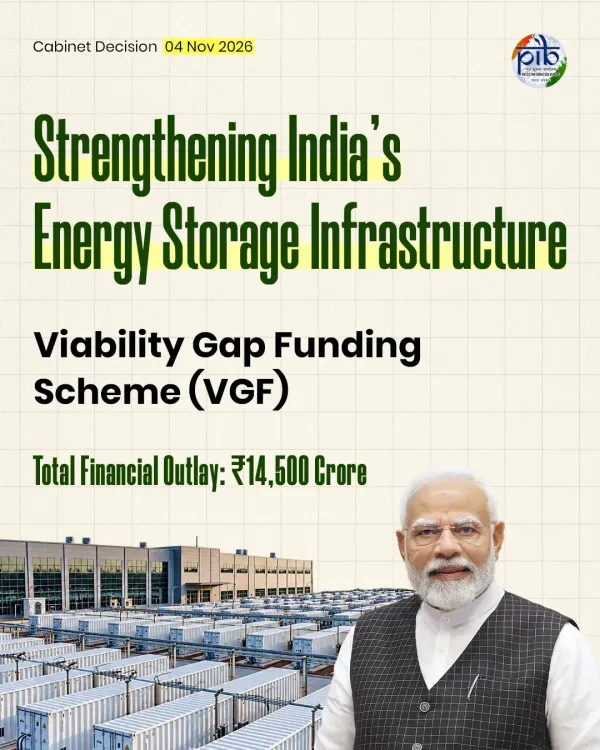
The Union Cabinet has approved ₹14,500 crore in Viability Gap Funding for 92 GWh of grid-scale battery and pumped storage, with a domestic battery manufacturing mandate. Gujarat CM Bhupendra Patel called it a bridge to reliable round-the-clock green power and a boost for India's battery industry.
Key Takeaways
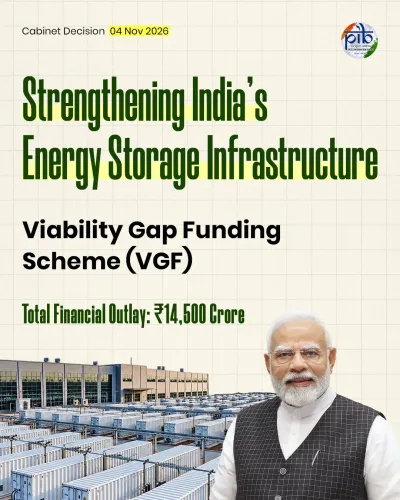
The Union Cabinet , chaired by PM Narendra Modi , approved ₹14,500 crore in Viability Gap Funding on 4 November 2026 .
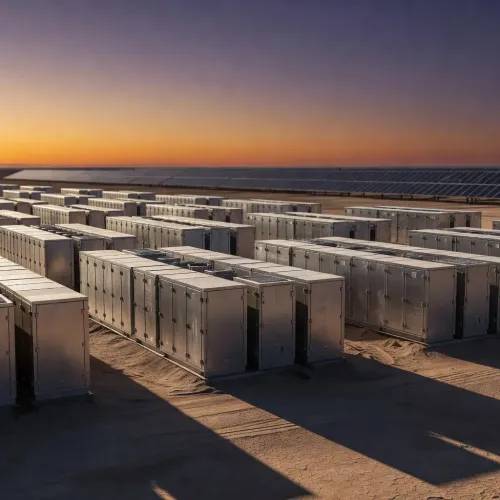
The funding covers 92 GWh of grid-scale energy storage, encompassing both battery and pumped-storage technologies.
The scheme includes an explicit push for made-in-India batteries , building on the 2021 PLI scheme for Advanced Chemistry Cells.
Gujarat CM Bhupendra Patel highlighted the decision as critical for converting the state's surplus solar and wind generation into reliable, round-the-clock supply.
The move supports India's pledge of 500 GW non-fossil fuel capacity by 2030 made at COP26.
Next steps include issuance of detailed scheme guidelines, state-level project bids, and commissioning of new domestic battery manufacturing facilities.
India's clean-energy grid just got a crucial missing piece. The Union Cabinet, chaired by Prime Minister Narendra Modi, has approved ₹14,500 crore in Viability Gap Funding to build 92 GWh of grid-scale energy storage — covering both battery and pumped-storage systems — with an explicit push for made-in-India batteries. Gujarat Chief Minister Bhupendra Patel welcomed the decision on Wednesday, 4 November 2026, calling it a 'bridge between abundant green power and reliable round-the-clock supply.'
Why storage is the missing link in Gujarat's solar surge
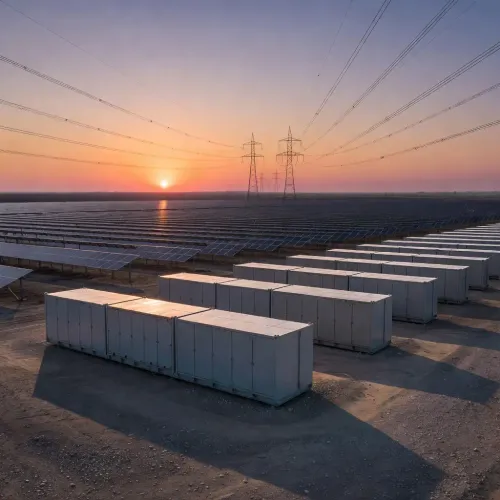
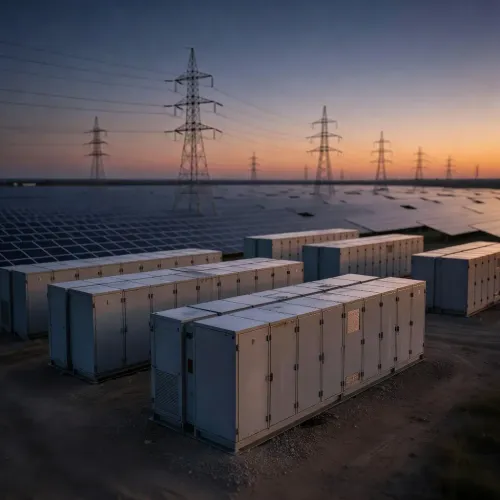
Gujarat ranks among India's top states for installed solar and wind capacity, but variable generation has long been the Achilles' heel of renewable power. The sun doesn't shine at midnight; the wind doesn't always blow at peak demand. Grid-scale storage — batteries and pumped hydro — absorbs surplus generation and releases it on cue, turning intermittent renewables into dispatchable, round-the-clock electricity. For Gujarat's grid operators and consumers, that shift is transformative.
CM Patel underscored exactly this logic in his post, noting that the Cabinet's move 'will add new strength to our clean energy journey and open fresh avenues for battery manufacturing.' The dual benefit — grid reliability and industrial opportunity — is what makes this announcement land harder than a routine subsidy.
₹14,500 crore VGF and the Atmanirbhar battery push
Viability Gap Funding is the government's proven lever for infrastructure projects that are economically worthwhile but not yet commercially self-sustaining. By bridging the financial gap for 92 GWh of storage capacity, the Cabinet is effectively de-risking large-scale deployment at a moment when battery costs, while falling globally, still need policy support to pencil out at Indian tariff levels.
The 'made-in-India batteries' rider is equally significant. India's Production Linked Incentive scheme for Advanced Chemistry Cells, approved in 2021, laid the groundwork for domestic battery manufacturing. This fresh VGF tranche creates a demand anchor — a guaranteed pipeline of storage projects — that gives cell manufacturers the market visibility they need to invest in local production lines. That is Atmanirbhar Bharat translated into gigawatt-hours.
India's 500 GW non-fossil target and the storage imperative
At COP26 in 2021, India pledged to reach 500 GW of non-fossil fuel power capacity by 2030. That target is ambitious; hitting it without solving the intermittency problem would leave the grid increasingly fragile as solar and wind shares climb. Grid-scale storage — in sufficient volume — is the structural answer. The 92 GWh tranche approved by the Cabinet is a meaningful step toward the storage depth that a 500 GW renewable grid demands.
Renewable energy developers gain bankable storage projects. Battery manufacturers gain a home market large enough to justify scale. And electricity consumers — in Gujarat and across India — gain the prospect of clean power that, as CM Patel put it, 'never sleeps.'
What comes next: bids, guidelines, and factory floors
The Cabinet approval is the starting gun, not the finish line. Detailed scheme guidelines must be issued, state-level project bids floated, and new battery manufacturing facilities commissioned — a pipeline that will play out over the next several years. Gujarat, already a frontrunner in renewable capacity, is well-positioned to be an early bidder for storage projects and a potential host for the battery factories this policy is designed to catalyse.
India has repeatedly shown it can set renewable records when policy, finance, and manufacturing align. The question now is execution speed — and whether the domestic battery industry can scale fast enough to match the ambition on paper.
Point of View
500 crore VGF for grid-scale storage is a structurally significant policy move, not a routine subsidy — it addresses the core intermittency flaw that caps how much solar and wind can safely enter India's grid. By coupling storage deployment with a domestic battery manufacturing mandate, New Delhi is attempting to replicate the demand-anchor logic that worked in solar panels: use public procurement to birth a home industry. For Gujarat, which has raced ahead on generation capacity, the storage push converts a potential grid-management liability into a commercial and industrial opportunity. The real test will be execution — whether scheme guidelines, bids, and factory investments move fast enough to matter before 2030.
NationPress
4 Nov 2026
Frequently Asked Questions
What is the Union Cabinet's ₹14,500 crore energy storage approval about?
The Union Cabinet has approved ₹14,500 crore in Viability Gap Funding to develop 92 GWh of grid-scale energy storage in India, covering battery and pumped-storage systems, with a requirement to use domestically manufactured batteries.
What is Viability Gap Funding and how does it work for energy storage?
Viability Gap Funding is a central government grant mechanism that bridges the financial gap in infrastructure projects that are economically beneficial but not yet commercially profitable on their own, making large-scale storage projects bankable for private developers.
Why does Gujarat need grid-scale energy storage?
Gujarat is a leading solar and wind power state, but these sources generate power intermittently. Grid-scale storage allows surplus renewable electricity to be stored and dispatched on demand, enabling reliable round-the-clock clean power supply.
How does this decision support India's 500 GW renewable energy target?
India committed to 500 GW of non-fossil fuel capacity by 2030 at COP26. Grid-scale storage is essential to that goal because it stabilises a grid increasingly dominated by variable solar and wind generation, preventing reliability problems as renewables expand.
What does the made-in-India battery push mean for Indian manufacturers?
By mandating domestic batteries in VGF-backed projects, the government creates a large, guaranteed home market for Indian battery manufacturers, giving them the demand certainty needed to invest in local production facilities — building on the 2021 PLI scheme for Advanced Chemistry Cells.