CM Bhupendra Patel Hails India's 300 GW Renewable Energy Leap
Synopsis
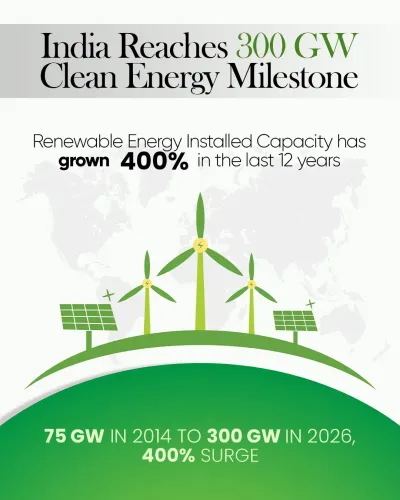
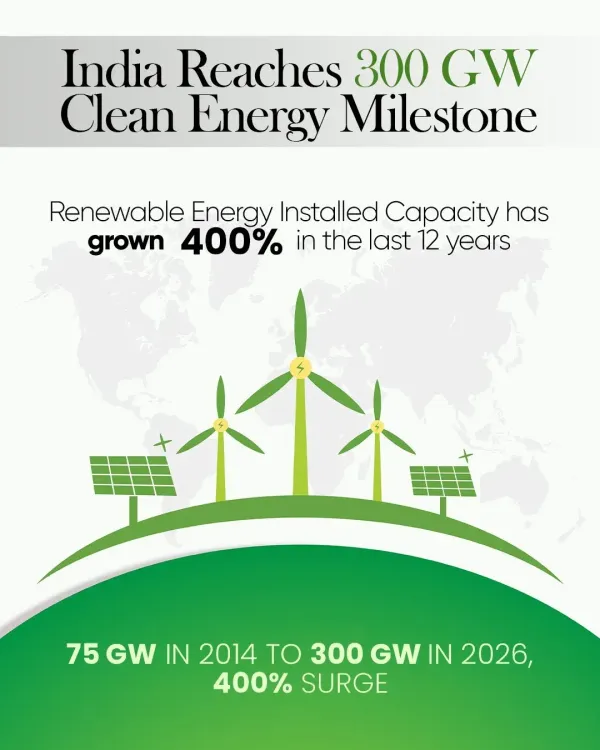
Gujarat Chief Minister Bhupendra Patel celebrated India crossing 300 GW of renewable energy installed capacity — a near four-fold rise since 2014 — crediting PM Modi's push toward a 500 GW non-fossil target by 2030 under India's Paris Agreement commitments.
Key Takeaways
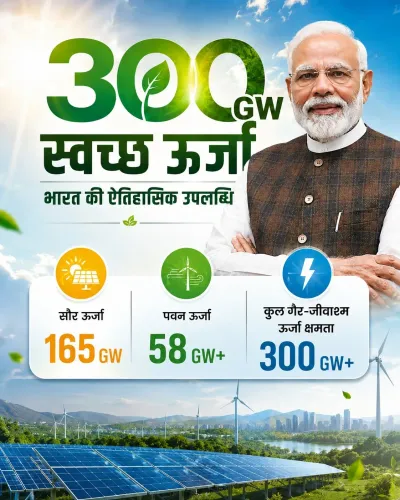
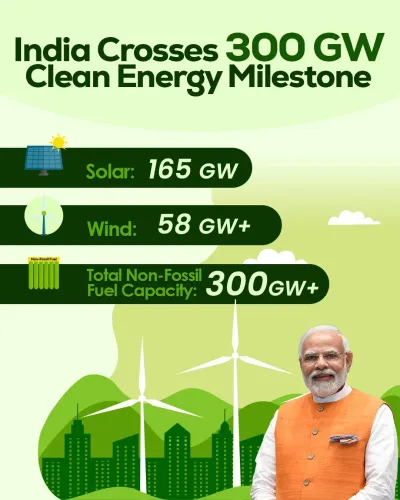
India's renewable energy installed capacity has crossed 300 GW , nearly four times the level recorded in 2014 .
Gujarat CM Bhupendra Patel highlighted the milestone on 8 August 2026 , attributing it to PM Narendra Modi's leadership.
India's updated Paris Agreement target calls for 500 GW of non-fossil capacity by 2030 , making 300 GW a halfway marker.
India originally pledged 175 GW of renewables by 2022 at the 2015 Paris Climate Conference — a target it has since surpassed.
The International Solar Alliance , co-launched by India and France in 2015, has underpinned India's global solar leadership push.
India, the world's third-largest greenhouse gas emitter , has committed to net-zero by 2070 .
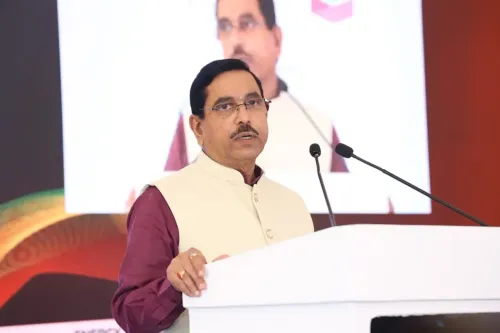
Three hundred gigawatts. That number — now crossed by India's renewable energy installed capacity — represents one of the most dramatic clean-energy pivots any major economy has executed in a single decade. Gujarat Chief Minister Bhupendra Patel marked the milestone on Saturday, 8 August 2026, calling it 'a proud milestone in India's clean energy journey' and crediting Prime Minister Narendra Modi's leadership for the nearly four-fold surge since 2014.
From 175 GW to 300 GW — The Target That Kept Moving Up
When India stood at the 2015 Paris Climate Conference and pledged 175 GW of renewable capacity by 2022, the ambition seemed steep. The country blew past it. Updated Nationally Determined Contributions under the Paris Agreement then raised the bar to 500 GW of non-fossil capacity by 2030 — and the 300 GW crossing now places India more than halfway there with four years to go.
The acceleration has been driven by a sustained pipeline of competitive auctions, production-linked incentives for solar manufacturing, and the International Solar Alliance — launched jointly by India and France in 2015 — which helped anchor India's identity as a global solar champion. Renewable energy developers and power distribution companies have been the engine room of this build-out, absorbing successive tranches of capacity across solar, wind, and hybrid projects.
Why Gujarat's CM Is Amplifying This Number
Gujarat has been among the frontline states in India's renewable push — an early mover on solar parks and wind corridors along its coastline. For CM Patel, a BJP leader, flagging a national clean-energy record is also a moment to reinforce the party's governance narrative ahead of future electoral cycles. His post frames the milestone squarely as a product of 'visionary leadership' — language that ties state-level pride to the central government's policy arc.
India is the world's third-largest greenhouse gas emitter and has committed to net-zero emissions by 2070. Every gigawatt added to the renewable roster chips away at the credibility gap critics point to between India's climate pledges and its continued dependence on coal for baseload power.
The 500 GW Clock Is Now Ticking Louder
Crossing 300 GW is a cause for celebration — but it also resets the pressure. Reaching 500 GW of non-fossil capacity by 2030 means adding another 200 GW in roughly four years, a pace that will demand grid upgrades, storage deployment, and state-level policy alignment at a scale India has not yet demonstrated. The next COP cycle will sharpen international scrutiny of whether the trajectory holds.
India's clean-energy story is no longer about potential. It is about execution — and the 300 GW number just raised the stakes for everything that follows.
Point of View
But it arrives alongside a steeper challenge: the remaining 200 GW needed for the 2030 non-fossil target will require grid modernisation and storage investment at a pace that has so far lagged capacity addition. CM Patel's post reflects the BJP's deliberate strategy of framing clean-energy records as proof of governance competence — a narrative that will face its sharpest test as coal still dominates India's baseload mix. Internationally, the milestone strengthens India's hand in climate negotiations, but scrutiny of the coal phase-down timeline will intensify at future COP summits.
NationPress
8 Aug 2026
Frequently Asked Questions
Has India really crossed 300 GW of renewable energy capacity?
According to Gujarat CM Bhupendra Patel's post on 8 August 2026, India's renewable energy installed capacity has crossed the 300 GW mark, representing a nearly four-fold rise since 2014. The exact figure cited in the post has not been independently verified by NationPress from official government data.
What is India's renewable energy target for 2030?
India's updated Nationally Determined Contributions under the Paris Agreement set a target of 500 GW of non-fossil fuel-based electricity capacity by 2030. The 300 GW milestone places India past the halfway point with four years remaining.
What was India's original renewable energy target at the Paris Agreement?
At the 2015 Paris Climate Conference, India pledged to achieve 175 GW of renewable energy capacity by 2022. India surpassed that target, after which the government raised its ambition to 500 GW of non-fossil capacity by 2030.
What is the International Solar Alliance and what role has India played?
The International Solar Alliance was co-launched by India and France in 2015 to promote solar energy deployment globally. It has been a cornerstone of India's effort to position itself as a leader in the global clean energy transition.
When has India committed to reaching net-zero emissions?
India has committed to achieving net-zero carbon emissions by 2070, making it one of the later net-zero deadlines among major economies, though the country argues its per-capita emissions remain far below developed-nation levels.