CM Bhupendra Patel Hails Kalpasar MoU With Dutch Experts
Synopsis
Gujarat CM Bhupendra Patel hails a tripartite MoU signed between the Central Water Commission, Gujarat government, and Dutch institutions Deltares and TU Delft to accelerate the long-planned Kalpasar dam across the Gulf of Khambhat, promising drinking water, irrigation, clean energy and connectivity for millions.
Key Takeaways
A tripartite MoU was signed between the Central Water Commission , the Gujarat government , Deltares , and TU Delft to advance the Kalpasar Project.
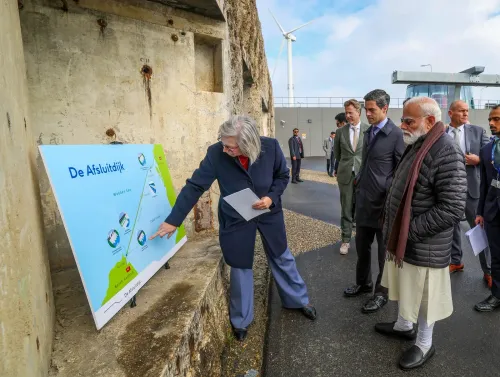
The agreement builds on preliminary understandings reached during PM Modi's visit to the Netherlands , where the Afsluitdijk dam was studied as a reference model.
The MoU was signed in the presence of Union Jal Shakti Minister C.R.
Paatil , underlining central government support.
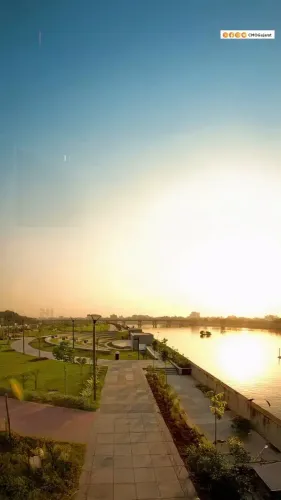
The Kalpasar Project aims to create a large freshwater reservoir in the Gulf of Khambhat , serving drinking water and irrigation needs across Gujarat, particularly Saurashtra and South Gujarat .
The project also promises coastal erosion control , groundwater recharge , clean energy generation , and improved connectivity between Saurashtra and South Gujarat.
The concept has been in development since the 1980s ; the MoU marks a significant step toward implementation.
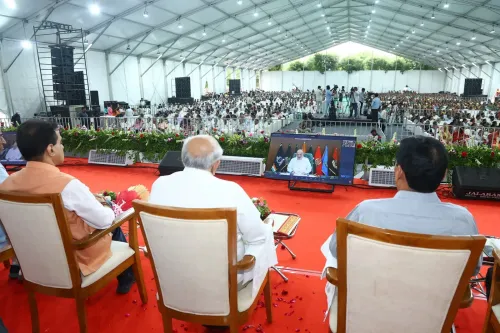
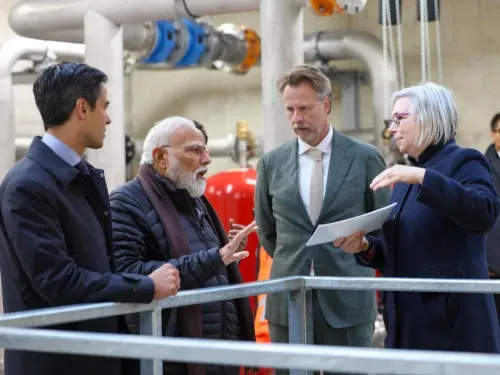
A decades-old dream for Gujarat just found a powerful new partner. Gujarat Chief Minister Bhupendra Patel announced on Friday, 25 September 2026 that a landmark tripartite MoU has been signed between the Central Water Commission, the Gujarat government, and two of the Netherlands' most respected water institutions — Deltares and TU Delft — to accelerate the state's ambitious Kalpasar Project.
From Afsluitdijk to the Gulf of Khambhat
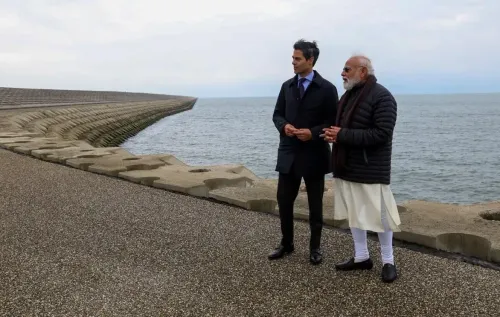
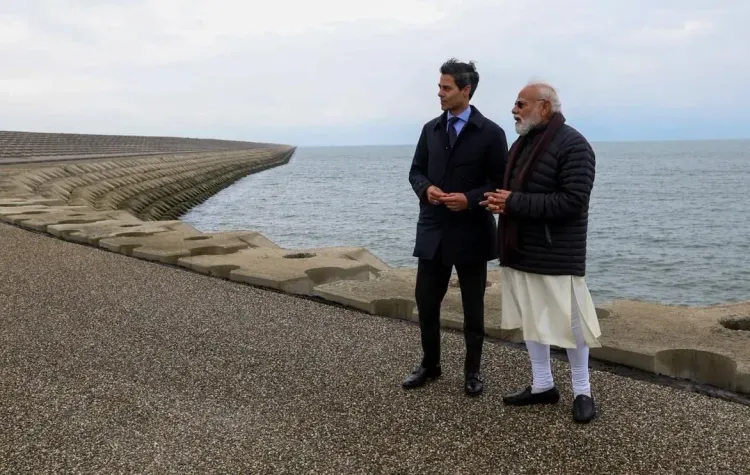
The MoU did not emerge from thin air. CM Patel noted that the agreement builds directly on preliminary understandings reached during Prime Minister Narendra Modi's visit to the Netherlands, during which the world-famous Afsluitdijk dam — a 32-kilometre enclosure dam that transformed the North Sea coastline of the Netherlands — was studied in the context of what Gujarat hopes to replicate in the Gulf of Khambhat. The signing took place in the presence of Union Jal Shakti Minister C.R. Paatil, signalling strong central backing for the initiative.
The Afsluitdijk is more than a landmark — it is a proof of concept. Built in the 1930s, it turned a turbulent tidal inlet into the freshwater IJsselmeer lake, reclaimed land, and protected millions from flooding. Gujarat is betting that the same philosophy, applied to Khambhat, can be transformative at scale.
What the Kalpasar Project Promises
The Kalpasar Project concept dates back to the 1980s, when the Gujarat government first commissioned feasibility studies for a dam across the Gulf of Khambhat. The idea: seal the gulf, capture monsoon runoff, and create a vast freshwater reservoir that could supply drinking water and irrigation to large parts of Saurashtra and South Gujarat — two regions that have historically battled seasonal water scarcity.
CM Patel laid out a sweeping vision: the reservoir would deliver pure drinking water across a vast stretch of the state, provide uninterrupted irrigation for agriculture, check coastal erosion, recharge depleted groundwater tables, generate clean energy, and — significantly — create a connectivity corridor between Saurashtra and South Gujarat, cutting travel distances that currently require long inland detours.
Centuries of Dutch Expertise, Directly Applied
Deltares is an applied research institute globally recognised for delta management, subsurface engineering, and sustainable water infrastructure. TU Delft, one of Europe's foremost technical universities, has produced some of the world's leading hydraulic engineers. Together, they bring a depth of expertise in sea-dam construction and reservoir management that few institutions anywhere can match.
For Gujarat, the partnership is about knowledge transfer as much as engineering. India and the Netherlands have collaborated on water management for several decades, but formalising that relationship through a Central Water Commission framework — with two elite Dutch institutions — gives the Kalpasar Project a level of international technical credibility it has never had before.
CM Patel's Gratitude, and the Road the Project Must Still Travel
'जल-समृद्ध गुजरात के संकल्प को साकार करने की दिशा में जुड़ा महत्वपूर्ण अध्याय' [A vital chapter added toward realising the resolve of a water-prosperous Gujarat], CM Patel wrote, thanking PM Modi and the Jal Shakti Ministry for pushing the process forward with urgency.
The next milestones will be equally demanding: detailed project reports, environmental clearances, and a funding architecture for one of India's most complex infrastructure undertakings. The Central Water Commission's role as a signatory suggests the Union government intends to stay closely involved — a prerequisite for a project of this scale to move from MoU to foundation stone.
Gujarat's water ambition has a Dutch blueprint now. Whether it holds depends on what happens next.
Point of View
The Union government is effectively co-owning the project's credibility, which has historically suffered from decades of feasibility limbo. For CM Bhupendra Patel, the timing matters: positioning Kalpasar as an actively progressing Modi-era legacy project strengthens the BJP's narrative of transformative infrastructure delivery in Gujarat. The Dutch angle is strategically astute — Deltares and TU Delft carry global prestige that can smooth both environmental scrutiny and international financing conversations. The real test, however, will come with detailed project reports and clearances, where India's large dam projects have historically stalled.
NationPress
25 Sept 2026
Frequently Asked Questions
What is the Kalpasar Project in Gujarat?
The Kalpasar Project is a long-planned infrastructure initiative to build a dam across the Gulf of Khambhat in Gujarat, creating a large freshwater reservoir to supply drinking water and irrigation to Saurashtra and South Gujarat. The concept has been under study since the 1980s.
What was signed in the Kalpasar MoU with the Netherlands?
A tripartite MoU was signed between the Central Water Commission, the Gujarat government, and Dutch institutions Deltares and TU Delft to bring Dutch expertise in sea-dam construction, hydraulic engineering and sustainable water management to the Kalpasar Project.
What is the Afsluitdijk dam and why is it relevant to Kalpasar?
The Afsluitdijk is a 32-kilometre enclosure dam in the Netherlands built in the 1930s that converted a tidal sea inlet into the freshwater IJsselmeer lake. It is studied as a reference model for the Kalpasar dam, which aims to do something similar in the Gulf of Khambhat.
Who signed the Kalpasar MoU and who was present?
The MoU was signed between the Central Water Commission, the Gujarat government, Deltares, and TU Delft. Union Jal Shakti Minister C.R. Paatil was present at the signing ceremony.
What are the benefits of the Kalpasar Project for Gujarat?
The Kalpasar Project is designed to provide drinking water and agricultural irrigation to large parts of Gujarat, check coastal erosion, recharge groundwater, generate clean energy, and create a road connectivity corridor between Saurashtra and South Gujarat.