CM Bhupendra Patel Launches Viksit Gujarat 2047 Roadmap
Synopsis
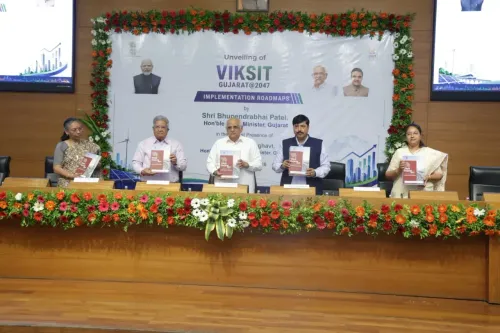
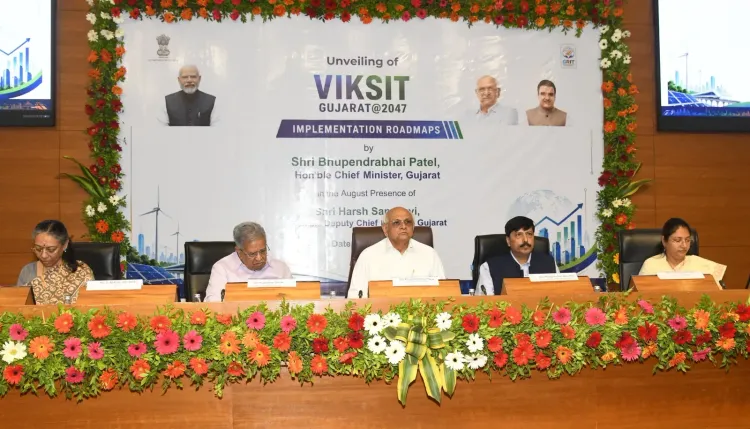
Chief Minister Bhupendra Patel launched the 'Viksit Gujarat @ 2047' Implementation Road Map at Gandhinagar on 1 July 2026, with Finance Minister Kanubhai Desai and senior officials present. The GRIT-led blueprint aligns Gujarat's long-term development goals with PM Modi's Viksit Bharat 2047 national vision.
Key Takeaways
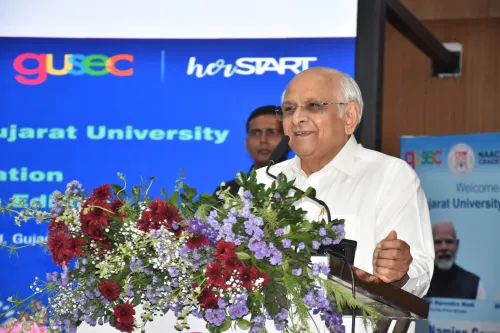
Chief Minister Bhupendra Patel unveiled the 'Viksit Gujarat @ 2047' Implementation Road Map at Gandhinagar on 1 July 2026 .
The roadmap was released jointly by GRIT (Gujarat State Institute for Transformation) and the General Administration Department .
Finance Minister Kanubhai Desai , Chief Secretary M.K.
Das , and Chief Advisor Dr.
Hasmukh Adhia were present at the launch.
The roadmap is explicitly aligned with Prime Minister Narendra Modi 's Viksit Bharat 2047 national development vision.
CM Patel described the document as a 'decisive milestone' and said it will guide implementation of the state's 'Earning Well, Living Well' welfare concept.
GRIT will anchor cross-departmental execution, with the senior bureaucracy coordinating implementation through 2047 .
The Chief Minister's Office of Gujarat announced on Wednesday, 1 July 2026 that Chief Minister Bhupendra Patel unveiled the 'Viksit Gujarat @ 2047' Implementation Road Map at Gandhinagar, released jointly by the Gujarat State Institute for Transformation (GRIT) and the General Administration Department.
Context
The roadmap was released in the presence of Finance Minister Kanubhai Desai, several state cabinet ministers, Chief Secretary M.K. Das, and Chief Advisor to the Chief Minister Dr. Hasmukh Adhia, alongside senior secretaries of the state government. The ceremony marks the formal adoption of a long-term state development blueprint aligned with the national 'Viksit Bharat 2047' ('Developed India 2047') vision.
Chief Minister Patel described the roadmap as 'a decisive milestone in the state's development journey,' directly linking it to Prime Minister Narendra Modi's overarching national vision. He cited the Prime Minister's guiding principle of 'Sabka Saath, Sabka Vikas, Sabka Vishwas, Sabka Prayas' — meaning 'Collective effort, inclusive growth, mutual trust, and everyone's participation' — as the philosophical foundation for the document.
Policy Backdrop
Prime Minister Modi first articulated the Viksit Bharat 2047 vision in his 2022 Independence Day address, setting a target for India to become a fully developed nation by 2047, the centenary of independence. Gujarat's new roadmap is among the state-level instruments designed to translate that national ambition into concrete, sub-national action plans with departmental accountability.
GRIT, the Gujarat State Institute for Transformation, is the state body mandated for policy innovation, research, and implementation support. Its involvement signals that the roadmap is intended not merely as a policy declaration but as an administratively anchored execution framework, coordinated across departments through the Chief Secretary's office.
Gujarat has a long history of aligning state planning with national frameworks, including the Vibrant Gujarat Summits held periodically since 2003, which positioned the state as a destination for investment and governance reform. The Viksit Gujarat @ 2047 roadmap extends that tradition into the domain of long-horizon development planning.
Stakeholders and Impact
Chief Minister Patel highlighted the state government's concept of 'Earning Well, Living Well' — a framework aimed at strengthening the economic foundation and overall well-being of ordinary citizens. He stated that the GRIT roadmap's implementation would serve as a 'guiding light' in fulfilling this concept.
The roadmap is expected to shape priorities across Gujarat's state government departments, influence annual budget allocations under Finance Minister Desai, and signal long-term policy direction to private investors and development partners. Citizens across the state stand as the primary intended beneficiaries, particularly in areas of economic opportunity and quality of life.
The presence of Dr. Hasmukh Adhia — a former Union Revenue Secretary with deep expertise in economic policy — alongside the Chief Secretary underscores the administration's intent to embed fiscal rigour and senior bureaucratic coordination into the roadmap's execution from the outset.
What's Next
The release of the roadmap is the beginning, not the end, of the process. Progress will hinge on how specific sectoral targets are defined and tracked, how annual state budgets incorporate roadmap priorities, and whether periodic review mechanisms are established to measure milestones on the path to 2047. Gujarat's approach — channelling implementation through GRIT with active involvement of the senior bureaucracy — will be closely watched as a model that other states may adapt as they build their own sub-national responses to the Viksit Bharat framework.
Point of View
Positioning Gujarat as a proactive partner in the Centre's Viksit Bharat 2047 agenda at a time when cooperative federalism is a central plank of the ruling party's governance narrative. By institutionalising the roadmap through GRIT and anchoring it to the Chief Secretary's office, the Bhupendra Patel administration is signalling that this is an executive commitment rather than a ceremonial declaration. The involvement of Dr. Hasmukh Adhia — a technocrat with national credibility — lends the exercise fiscal and policy gravitas. Whether the roadmap translates into measurable outcomes will depend on how tightly it is wired into annual budget cycles and departmental performance frameworks in the years ahead.
NationPress
1 Jul 2026
Frequently Asked Questions
What is the Viksit Gujarat 2047 roadmap?
The 'Viksit Gujarat @ 2047' Implementation Road Map is a long-term state development blueprint released by the Gujarat government on 1 July 2026, designed to align Gujarat's growth targets with Prime Minister Narendra Modi's national Viksit Bharat 2047 vision for a developed India by the centenary of independence.
Who launched the Viksit Gujarat 2047 roadmap?
Chief Minister Bhupendra Patel launched the roadmap at Gandhinagar, in the presence of Finance Minister Kanubhai Desai, Chief Secretary M.K. Das, Chief Advisor Dr. Hasmukh Adhia, and other senior ministers and secretaries.
What is GRIT in Gujarat?
GRIT stands for the Gujarat State Institute for Transformation, a state government body responsible for policy innovation, research, and implementation support for long-term development goals. It co-released the Viksit Gujarat 2047 roadmap along with the General Administration Department.
How does Viksit Gujarat 2047 relate to Viksit Bharat 2047?
Viksit Gujarat 2047 is Gujarat's sub-national response to Prime Minister Modi's Viksit Bharat 2047 vision, which was first announced in his 2022 Independence Day address. The state roadmap operationalises the national vision through localised targets and administrative mechanisms at the Gujarat level.
What is the 'Earning Well, Living Well' concept mentioned by CM Patel?
'Earning Well, Living Well' is a policy concept adopted by the Gujarat state government aimed at strengthening the economic base and overall well-being of ordinary citizens. CM Patel stated that the GRIT roadmap's implementation would guide and support the fulfilment of this concept.