Khattar: Cabinet Clears 8.1 km Dwarka-Vasant Kunj Tunnel
Synopsis
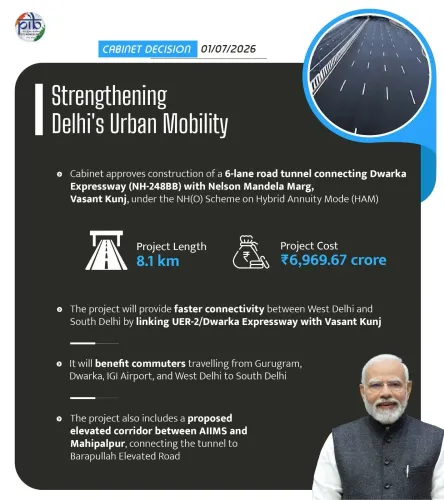
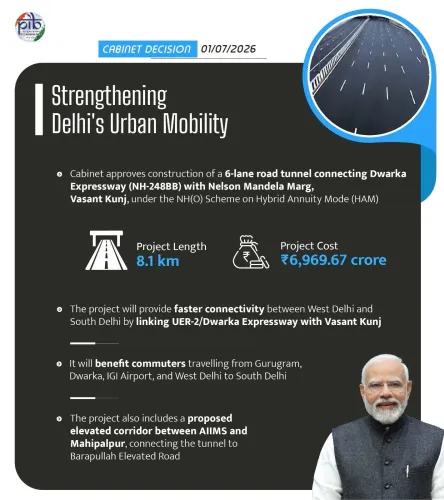
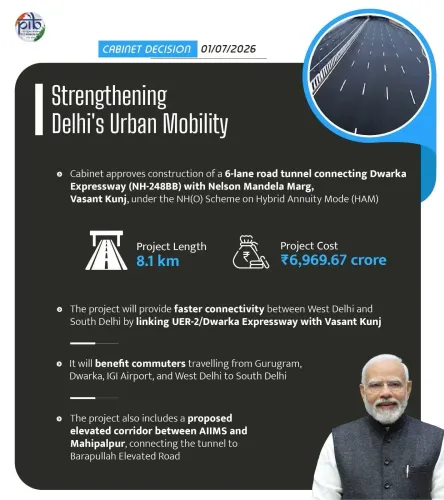
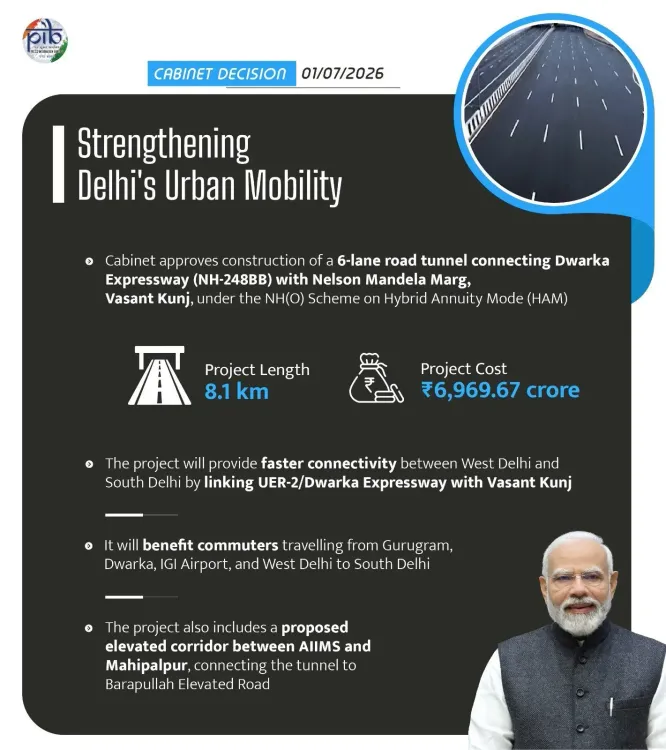
The Union Cabinet has approved an 8.1 km, 6-lane tunnel on NH-148AE connecting the Dwarka Expressway to Nelson Mandela Marg, Vasant Kunj under the Hybrid Annuity Model, promising faster links between Dwarka, South Delhi, Noida, Faridabad and Ghaziabad.
Key Takeaways
The Union Cabinet , chaired by PM Narendra Modi , approved an 8.1 km, 6-lane tunnel on 1 July 2026 .
The tunnel runs on NH-148AE , connecting the Dwarka Expressway to Nelson Mandela Marg, Vasant Kunj .
The project will be built under the Hybrid Annuity Model (HAM) , where the government funds 40 per cent of costs upfront.
It will improve access to Noida , Faridabad , Ghaziabad and East Delhi , reducing commute times across the NCR .
The project extends the infrastructure spine established by the Bharatmala Pariyojana and earlier Dwarka Expressway approvals.
Next steps include NHAI tendering , land acquisition and announcement of an official construction timeline.
Union Power Minister Manohar Lal Khattar on Wednesday, 1 July 2026 announced that the Union Cabinet, chaired by Prime Minister Narendra Modi, has approved the construction of an 8.1 km, 6-lane tunnel on NH-148AE connecting the Dwarka Expressway with Nelson Mandela Marg, Vasant Kunj in the National Capital Region. The project will be executed under the Hybrid Annuity Model (HAM) and is aimed at decongesting key arterial routes between Dwarka and South Delhi.
Context
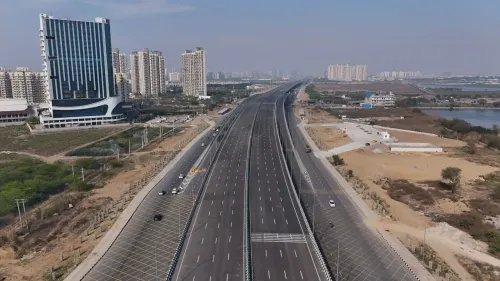
Khattar described the approval as 'a major boost to seamless mobility and future-ready infrastructure in the National Capital Region.' The tunnel on NH-148AE will directly link the Dwarka Expressway — a major corridor connecting Delhi to Gurugram — with Nelson Mandela Marg in Vasant Kunj, one of South Delhi's busiest transit junctions. The Cabinet approval was communicated through an official Press Information Bureau release on the same day.
According to the announcement, the project will provide faster access to Noida, Faridabad, Ghaziabad and East Delhi, significantly reducing daily travel time and improving commuter safety across the region.
Policy Backdrop
The tunnel project sits within the broader Bharatmala Pariyojana, launched in 2015 as the central government's flagship expressway and corridor development programme. The Hybrid Annuity Model, formally adopted in 2016, governs the financing structure: the government bears 40 per cent of construction costs upfront while the private developer finances the remainder and recovers it through annuity payments, sharing construction and traffic risk with the state.
The Dwarka Expressway itself received Cabinet clearance in 2018 and was developed under the National Highways Authority of India (NHAI). The latest tunnel approval extends that connectivity spine deeper into South Delhi, addressing a longstanding gap in the radial network linking Delhi's western suburbs to its southern and eastern corridors.
Stakeholders and Impact
The primary beneficiaries are the millions of daily commuters in the NCR — particularly residents of Dwarka, Gurugram, Vasant Kunj and satellite cities including Noida, Faridabad and Ghaziabad — who currently navigate chronic congestion on surface roads. The grade-separated tunnel is expected to eliminate signal-level delays on one of the region's most heavily trafficked corridors.
NHAI contractors and private developers operating under the HAM framework stand to participate in the tendering process. The project also carries significance for the NCR Transport Plan, which has set multimodal connectivity targets linking Delhi with its satellite cities, and may eventually be integrated with upcoming metro and Regional Rapid Transit System (RRTS) corridors in the region.
What's Next
The immediate milestones to watch are the NHAI tendering process, land acquisition status and the official construction start and completion timeline for the 8.1 km tunnel. Parallel policy watchers will track whether additional spurs or connector projects on NH-148AE are announced alongside this approval.
The consistent application of the Hybrid Annuity Model across successive NCR highway approvals signals that performance-linked private participation will remain the central government's preferred instrument for urban expressway financing in the near term. How quickly the project moves from Cabinet approval to ground-breaking will be a key indicator of the government's infrastructure execution pace ahead of the next electoral cycle.
Point of View
Rather than relying solely on surface road widening. Routing the project through the Hybrid Annuity Model reflects a deliberate policy choice to keep private capital engaged in urban highway construction while limiting fiscal exposure. For Minister Khattar, who oversaw NCR-adjacent infrastructure as Haryana Chief Minister, the announcement reinforces his portfolio's relevance to urban mobility — a domain that straddles his Housing and Urban Affairs mandate. The real test will be execution speed: Cabinet approvals in this corridor have historically faced delays in land acquisition and environmental clearances.
NationPress
1 Jul 2026
Frequently Asked Questions
What is the Dwarka Expressway Vasant Kunj tunnel project?
It is an 8.1 km, 6-lane tunnel approved by the Union Cabinet on 1 July 2026 on NH-148AE , designed to connect the Dwarka Expressway with Nelson Mandela Marg, Vasant Kunj in South Delhi to ease congestion and reduce travel time across the NCR.
What is the Hybrid Annuity Model used for this tunnel?
The Hybrid Annuity Model (HAM) is a public-private partnership framework adopted in 2016 under which the government pays 40 per cent of construction costs upfront and the private developer finances the rest, recovering it through annuity payments over the project's operational life.
Which cities will benefit from the NH-148AE tunnel?
The tunnel will improve connectivity between Dwarka , South Delhi , Noida , Faridabad , Ghaziabad and East Delhi , significantly reducing daily commute times for NCR residents.
Who announced the Dwarka Vasant Kunj tunnel approval?
Union Minister Manohar Lal Khattar announced the Cabinet approval on 1 July 2026 via a post on X, citing an official Press Information Bureau release.
What is Bharatmala Pariyojana and how does this tunnel fit in?
Bharatmala Pariyojana , launched in 2015 , is the central government's flagship national highway and expressway development programme. The NH-148AE tunnel is part of this broader initiative to build grade-separated corridors that integrate Delhi with its satellite cities.