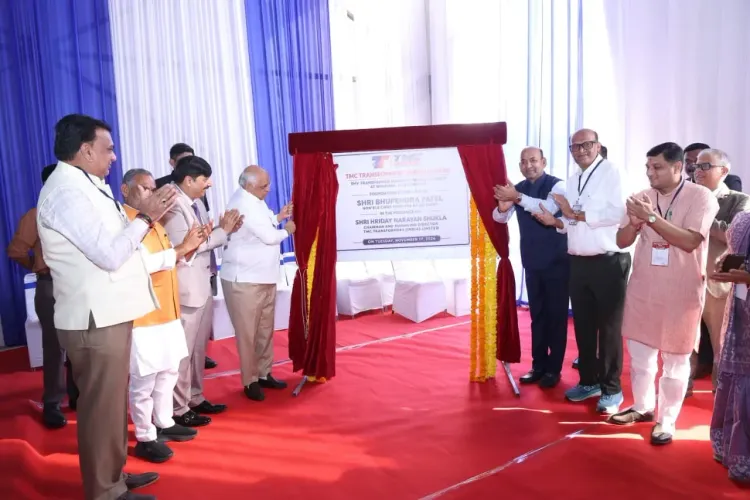
CM Bhupendra Patel lays foundation of Asia's largest transformer plant at Halol
Synopsis
Gujarat CM Bhupendra Patel laid the foundation stone of TMC Transformers' ₹2,000 crore manufacturing facility at Halol in Panchmahal — described as Asia's largest single-roof transformer plant — connecting the state's Jyotigram legacy to its renewable energy future anchored by the Khavda megapark.
Key Takeaways
TMC Transformers will set up a new manufacturing plant at Halol, Panchmahal , with an investment of approximately ₹2,000 crore .
The facility is described as Asia's largest single-roof transformer manufacturing plant .
CM Bhupendra Patel laid the foundation stone on 17 November 2026 .
Jyotigram Yojana (2003-2005) delivered 24-hour rural power across Gujarat and set the region's energy transformation in motion.
The plant is strategically aligned with the Khavda renewable energy park in Kutch, one of the world's largest wind and solar projects.
CM Patel highlighted job opportunities for the tribal youth of Panchmahal as a key social outcome of the investment.
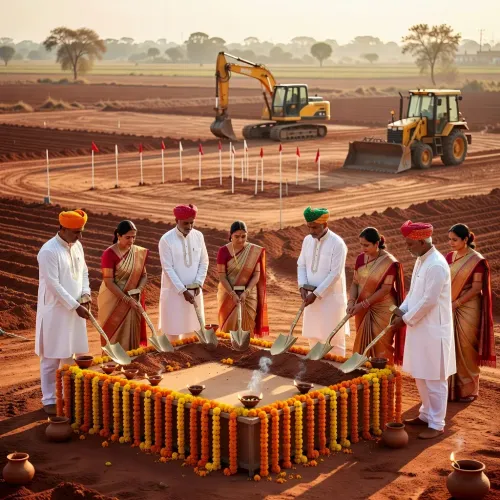
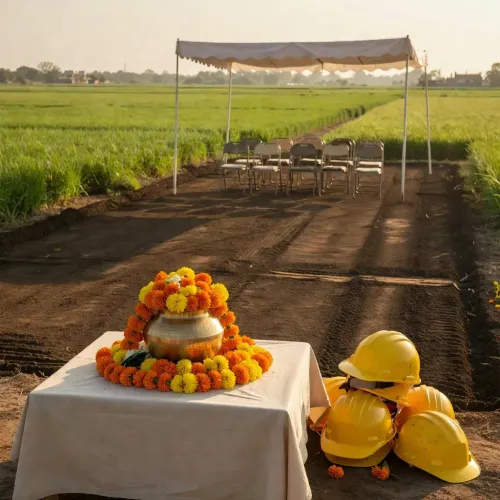
Twenty years after Jyotigram Yojana lit up Gujarat's villages with round-the-clock electricity, the land that powered that transformation is now set to manufacture the very backbone of India's energy grid. Gujarat Chief Minister Bhupendra Patel on Tuesday, 17 November 2026, laid the foundation stone of TMC Transformers' new manufacturing facility at Halol in Panchmahal district — a facility billed as Asia's largest single-roof transformer plant, backed by an investment of approximately ₹2,000 crore.
From Jyotigram to Asia's largest transformer plant — Panchmahal's energy arc
Jyotigram Yojana, implemented between 2003 and 2005, was a defining moment in Gujarat's rural development story — it separated agricultural and domestic power feeders, delivering 24-hour electricity to villages that had long lived on erratic supply. That reform built not just grid reliability but also investor confidence in the state as an energy-ready destination. The Halol facility, located in the same Panchmahal region, is the latest chapter in that two-decade arc.
Transformers are, as CM Patel described them, 'the backbone of development' — the critical hardware that steps voltage up or down to carry power from generation points to homes, farms, and factories. As India races to meet surging electricity demand, domestic manufacturing capacity for this equipment has become a strategic priority.
Why Khavda's renewable megapark makes this facility urgent
The timing is not coincidental. The Khavda renewable energy park in Kutch district — one of the largest wind and solar projects in the world — is taking shape along Gujarat's western frontier. A project of that scale demands enormous volumes of transmission equipment, particularly transformers, to evacuate power and feed it into the national grid. A large domestic manufacturing base in Gujarat shortens supply chains and reduces import dependence at exactly the moment national demand is peaking.
CM Patel, posting on X, explicitly linked the new facility to Prime Minister Narendra Modi's manufacturing-led growth vision — the same framework that underpins the Make in India initiative. 'Guided by Hon'ble PM Shri Narendra Modi ji's vision, which places manufacturing at the heart of growth, this unit will add strength to India's energy security and open new doors of opportunity for the youth of this tribal region,' he wrote.
Jobs in a tribal belt, and what to watch next
Panchmahal is a predominantly tribal district, and the CM's specific mention of 'the youth of this tribal region' signals the facility's intended social footprint alongside its industrial one. Whether formal employment commitments and supplier linkage programmes are announced during the construction phase will be a key indicator of how those benefits materialise.
Watchers should track the construction and commissioning timeline of the Halol plant and whether its transformer output is formally tied to the Khavda park's rollout schedule. If those two threads connect on time, Gujarat's claim to being India's energy capital will carry considerably more weight.
A region that once waited for a bulb to stay lit is now building the hardware that keeps a nation's lights on. That is a story worth watching to its end.
Point of View
The facility also serves a dual political narrative: reinforcing PM Modi's Make in India credentials on home turf while targeting welfare optics in a tribal constituency ahead of future electoral cycles. The Khavda linkage is the more consequential long-term thread — if domestic transformer supply chains mature in step with India's renewable buildout, it reduces a critical hardware bottleneck that could otherwise slow grid integration of gigawatt-scale clean energy.
NationPress
17 Nov 2026
Frequently Asked Questions
What is the TMC Transformers plant being built at Halol?
TMC Transformers is setting up a new transformer manufacturing facility at Halol in Panchmahal district, Gujarat, with an investment of approximately ₹2,000 crore. It is described as Asia's largest single-roof plant of its kind.
What is Jyotigram Yojana and why is it significant?
Jyotigram Yojana was a Gujarat government scheme implemented between 2003 and 2005 that separated agricultural and domestic power feeders to deliver 24-hour electricity to rural villages. It is widely credited with transforming Gujarat's rural power supply and boosting investor confidence in the state.
What is the Khavda renewable energy park in Gujarat?
The Khavda renewable energy park is a large-scale solar and wind power project located in Kutch district, Gujarat. It is one of the largest renewable energy developments in the world and is central to Gujarat's and India's clean energy expansion plans.
Where is Halol located and why was it chosen for this plant?
Halol is an industrial town in Panchmahal district of Gujarat, with an established manufacturing ecosystem. Its location in a tribal region of central Gujarat also aligns with the state's focus on industrial development in underserved areas.
How does the Halol transformer plant support India's energy security?
Transformers are essential hardware for transmitting electricity from generation points to end consumers. A large domestic manufacturing facility reduces India's dependence on imported power equipment and supports the grid integration of large renewable projects like Khavda.