CM Bhupendra Patel Reviews South Gujarat Flood Crisis from Gandhinagar
Synopsis
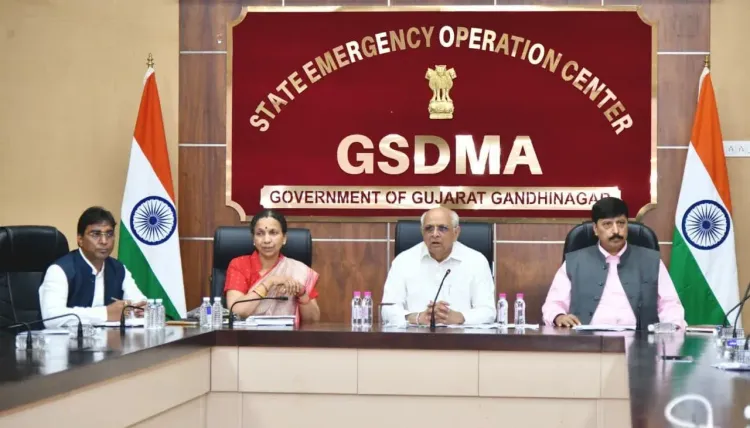
Gujarat Chief Minister Bhupendra Patel visited the State Emergency Operation Centre in Gandhinagar on 23 July 2026 to review heavy-rain flooding in South Gujarat. He spoke directly with the Valsad, Surat and Navsari collectors, ordered evacuations from waterlogged areas, and assured additional NDRF teams for Valsad if needed.
Key Takeaways
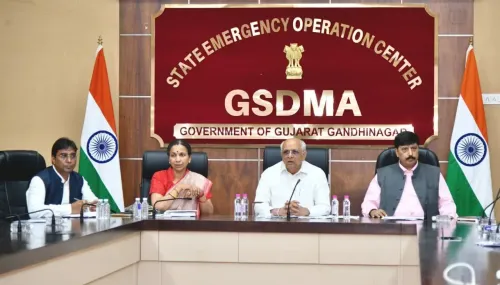
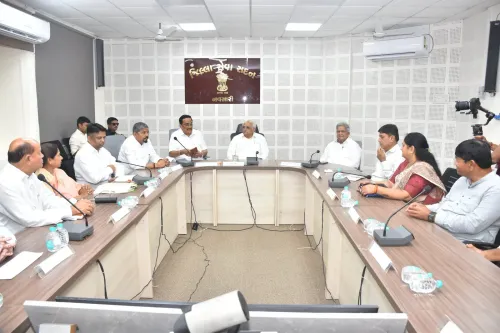
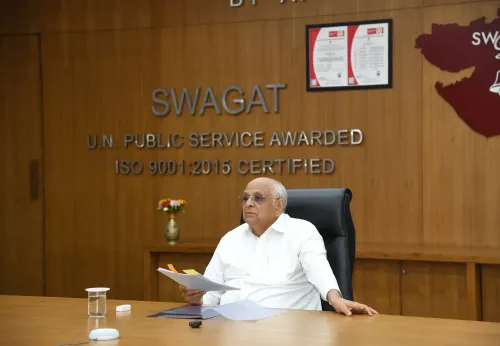
CM Bhupendra Patel conducted an in-person review at the State Emergency Operation Centre, Gandhinagar on 23 July 2026 .
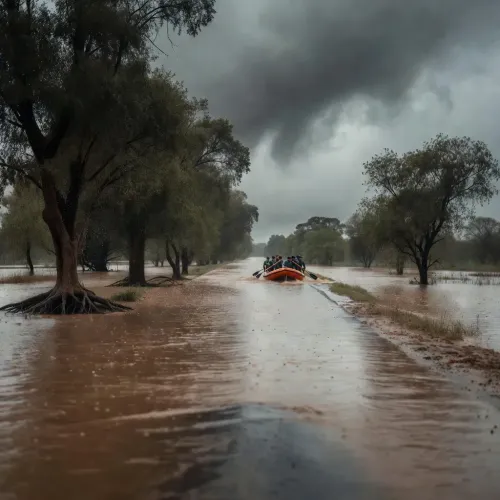
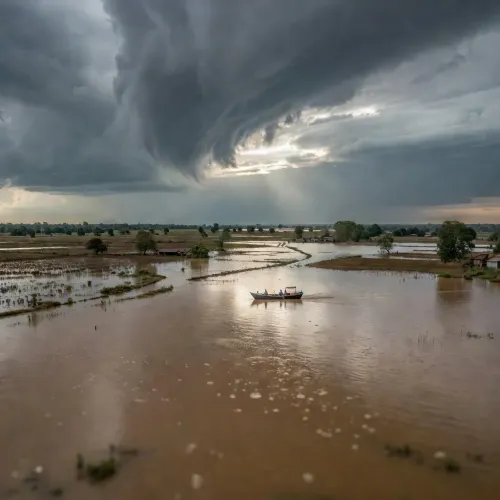
Heavy monsoon rainfall has caused a serious situation in South Gujarat , particularly in Valsad , Surat , and Navsari districts.
The Chief Minister spoke by phone with Minister Nareshbhai Patel and the Valsad District Collector to assess rescue and relief operations.
Additional NDRF teams will be dispatched to Valsad if the situation demands further reinforcement.
Collectors of Surat and Navsari have been directed to evacuate residents from low-lying and waterlogged areas to safe locations immediately.
Gujarat Chief Minister Bhupendra Patel visited the State Emergency Operation Centre in Gandhinagar on Thursday, 23 July 2026, to conduct a detailed review of the flood situation triggered by heavy monsoon rainfall across South Gujarat, with particular focus on Valsad, Surat, and Navsari districts.
What the Chief Minister Did
Posting on X, CM Patel said he arrived at the State Emergency Operation Centre and obtained ground-level details of the situation arising from heavy rainfall, especially in South Gujarat. He held a mobile call with cabinet colleague Minister Nareshbhai Patel and the Valsad District Collector to get a first-hand account of ongoing rescue and relief operations. He also assured that additional NDRF teams would be dispatched to Valsad if required.
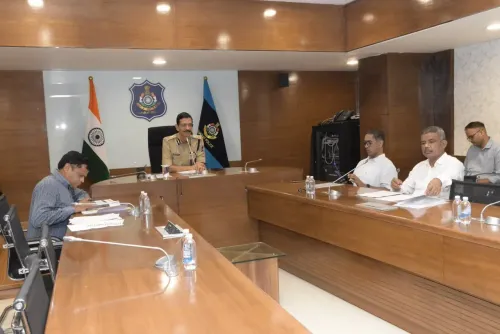
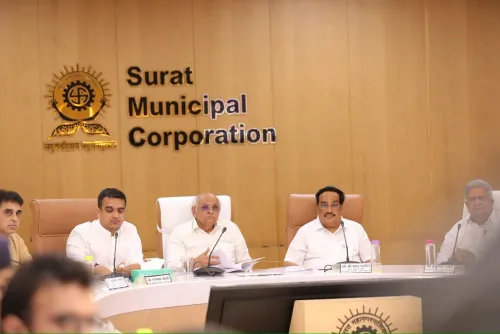
The Chief Minister further spoke with the Surat and Navsari District Collectors and directed them to evacuate residents from low-lying and waterlogged areas to safer locations without delay.
Context
South Gujarat receives some of the highest monsoon rainfall in the state and recurrently faces flooding, waterlogging, and the need for large-scale evacuations. Districts such as Valsad, Surat, and Navsari are particularly vulnerable during intense rainfall spells, when low-lying localities and riverside settlements face inundation.
The State Emergency Operation Centre in Gandhinagar serves as the nerve centre for real-time monitoring and inter-agency coordination during such events, enabling the Chief Minister and senior officials to track developments across multiple districts simultaneously.
Policy Backdrop
Gujarat's institutionalised disaster-response architecture dates to the aftermath of the devastating 2001 Bhuj earthquake, which led to the creation of the Gujarat State Disaster Management Authority. The broader national framework — the National Disaster Management Act, 2005 — formalised the role of state emergency operation centres and established the National Disaster Response Force (NDRF) as a specialised central agency for search, rescue, and relief.
Gujarat Chief Ministers have consistently used the State Emergency Operation Centre as the command hub for monsoon-related crises, reflecting a pattern of direct executive oversight during flood emergencies. Standing arrangements allow states to request additional NDRF battalions when local and state resources are stretched.
Stakeholders and Impact
Residents of low-lying and waterlogged localities across Valsad, Surat, and Navsari are the most immediately affected stakeholders. District administrations in these three districts are now under direct instruction from the Chief Minister to accelerate evacuations and ensure people are moved to safe shelters.
NDRF teams already deployed in the region may be reinforced with additional units if the situation in Valsad worsens, as the Chief Minister has explicitly assured. The coordination chain — from the state cabinet and the Chief Minister's Office down to district collectors and field rescue teams — has been activated at its highest level.
What's Next
Attention will now turn to further NDRF deployments, damage assessments by the state revenue department, and the eventual announcement of relief packages once the rainfall subsides. The scale of evacuations completed, the number of people sheltered, and the status of infrastructure in flood-hit districts will determine the next phase of the state government's response.
Point of View
And the call to three separate collectors in one session reflects a coordinated, multi-district emergency response. This fits a broader pattern in Gujarat politics where visible executive leadership during natural disasters is treated as both a governance imperative and a political signal of administrative competence. The next test will be the speed and scale of evacuations and whether relief packages follow promptly once the rains ease.
NationPress
23 Jul 2026
Frequently Asked Questions
Why did Gujarat CM Bhupendra Patel visit the State Emergency Operation Centre?
CM Bhupendra Patel visited the State Emergency Operation Centre in Gandhinagar on 23 July 2026 to conduct a detailed review of the flooding caused by heavy monsoon rainfall in South Gujarat, particularly in Valsad, Surat and Navsari districts.
Which districts in South Gujarat are affected by heavy rainfall in July 2026?
Valsad, Surat and Navsari are the districts most prominently mentioned in CM Patel's review, with low-lying and waterlogged areas requiring immediate evacuation of residents.
Will additional NDRF teams be sent to Gujarat for flood relief?
CM Bhupendra Patel has assured that additional NDRF teams will be dispatched to Valsad district if the situation demands further reinforcement beyond currently deployed resources.
What instructions did CM Patel give to district collectors during the flood review?
CM Patel instructed the Surat and Navsari District Collectors to evacuate people from low-lying and waterlogged areas to safe locations, and spoke with the Valsad Collector to get details of ongoing rescue and relief operations.
What is the State Emergency Operation Centre in Gandhinagar?
The State Emergency Operation Centre in Gandhinagar is Gujarat's central hub for real-time monitoring and inter-agency coordination during emergencies such as floods, enabling senior officials and the Chief Minister to track and direct relief operations across multiple districts.