CM Chandrababu Distributes DKT Land Pattas in Kuppam
Synopsis
Chief Minister Chandrababu Naidu distributed DKT land pattas to 322 poor families covering 460.19 acres at Kangundi in Kuppam on 4 July 2026, continuing Andhra Pradesh's long-standing practice of assigning government land to landless rural households as a core welfare measure.
Key Takeaways
322 poor families received DKT land title deeds at Kangundi, Kuppam on 4 July 2026 .
The total land distributed amounts to 460.19 acres of government-assigned land.
Chief Minister Nara Chandrababu Naidu personally presided over and addressed the distribution event.
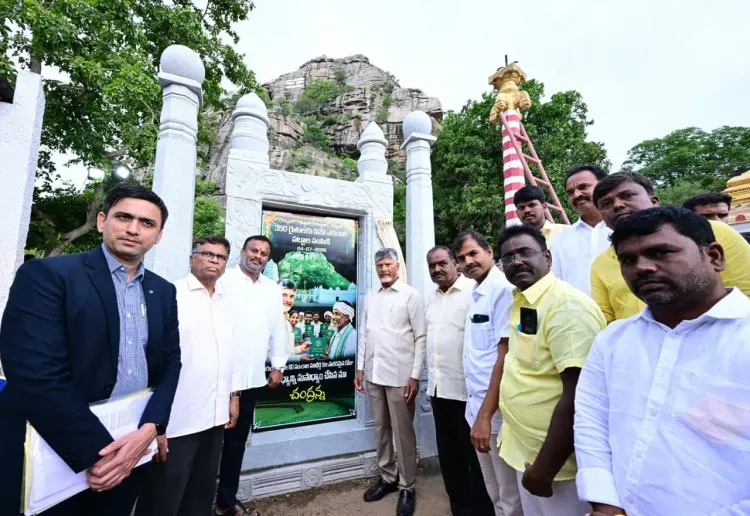
Senior officials including Minister Ram Prasad Reddy , MP Daggumalla Prasadarao , APSRTC Vice Chairman Muniratnam , and Collector Sumit Kumar were present.
DKT pattas grant legal land ownership to landless households, enabling access to credit and government agricultural schemes.
Land patta distribution has been a recurring state welfare instrument in Andhra Pradesh since the 1970s .
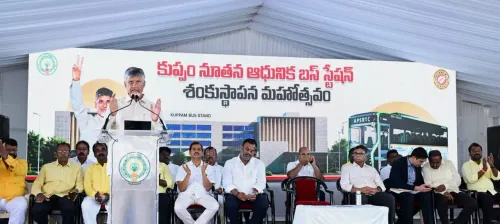
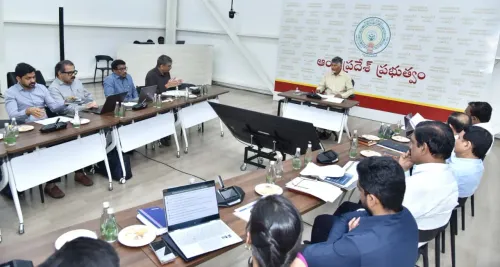
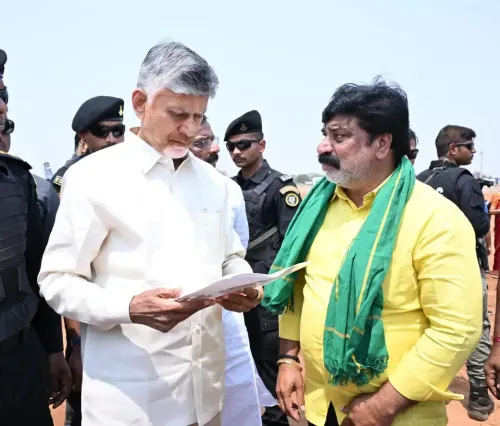
The Chief Minister's Office of Andhra Pradesh announced on Saturday, 4 July 2026 that Chief Minister Nara Chandrababu Naidu distributed DKT (Darkhast) land pattas to the poor at Kangundi in Kuppam constituency, assigning 460.19 acres of land to 322 beneficiaries. The Chief Minister also addressed the gathering after the distribution ceremony.
Context
The event took place at Kangundi village in Kuppam, the assembly constituency that Chandrababu Naidu has represented for several decades in Chittoor district. DKT pattas — formally known as Darkhast title deeds — are government-issued land assignment documents that confer legal ownership rights on landless poor households over government land. The Chief Minister's Office confirmed that 322 poor families received pattas covering a combined area of 460.19 acres.
Senior officials and elected representatives were present at the event, including Minister Ram Prasad Reddy, MP Daggumalla Prasadarao, APSRTC Vice Chairman Muniratnam, and Collector Sumit Kumar.
Policy Backdrop
Land patta distribution to landless poor has been a recurring welfare instrument in Andhra Pradesh since the 1970s, rooted in the state's Assigned Lands (Prohibition of Transfers) framework. The framework prohibits the resale or transfer of assigned lands to ensure they remain with the intended beneficiaries — typically households from Scheduled Castes, Scheduled Tribes, and other economically weaker sections in rural areas.
Successive state governments have used large-scale patta distribution drives to address asset inequality among rural households. Such events are frequently conducted in constituencies represented by the Chief Minister, combining direct benefit delivery with public engagement. The current Telugu Desam Party (TDP) government under Chandrababu Naidu has continued this tradition as part of its broader rural welfare agenda.
Stakeholders and Impact
The 322 beneficiary families in and around Kuppam now hold legal title over land that can serve as a productive agricultural asset and a form of collateral for institutional credit. For landless rural households, a patta can be transformative — enabling access to crop loans, government agricultural subsidies, and input support schemes that are otherwise unavailable without proof of land ownership.
The presence of Collector Sumit Kumar alongside elected representatives signals administrative coordination between the district machinery and the political leadership in executing the distribution. Civil society groups tracking land rights in Andhra Pradesh have historically called for robust post-distribution follow-up to ensure actual physical possession and cultivation support for new patta holders.
What's Next
The immediate priority for district authorities will be ensuring that the 322 families take physical possession of their assigned plots and that demarcation is completed without disputes. Advocacy groups and opposition legislators are likely to watch whether the government announces supplementary support — such as agricultural input kits, irrigation access, or crop insurance — to make the land grants economically viable.
Kuppam's status as the Chief Minister's home constituency means continued political and administrative focus on the area, and further welfare drives are expected in the run-up to local governance reviews. The broader pattern of patta distribution across Andhra Pradesh will be a key metric for the government's rural welfare scorecard in the months ahead.
Point of View
Reinforcing both his welfare credentials and his personal bond with the electorate. The scale, 460.19 acres to 322 families, is modest relative to statewide need, but the symbolism of the Chief Minister personally handing deeds is politically potent. Land distribution also dovetails with the TDP government's broader pitch of 'direct benefit delivery' as a counter-narrative to welfare schemes that critics argue remain on paper. The real test, as civil society has long noted, lies in post-distribution follow-through: possession, demarcation, and productive support.
NationPress
4 Jul 2026
Frequently Asked Questions
What is a DKT patta in Andhra Pradesh?
A DKT (Darkhast) patta is a government-issued land title deed that assigns ownership of government land to a landless poor household in Andhra Pradesh, giving them legal rights to cultivate and use the land.
How much land did Chandrababu Naidu distribute in Kuppam?
Chief Minister Chandrababu Naidu distributed 460.19 acres of land to 322 poor families at Kangundi in Kuppam constituency on 4 July 2026.
Where is Kuppam constituency located?
Kuppam is an assembly constituency in Chittoor district of Andhra Pradesh and is the long-time electoral base of Chief Minister Nara Chandrababu Naidu.
Who attended the DKT patta distribution event in Kuppam?
The event was attended by Minister Ram Prasad Reddy, MP Daggumalla Prasadarao, APSRTC Vice Chairman Muniratnam, and Collector Sumit Kumar, among others.
Can DKT patta land be sold by the beneficiary?
No. Under the Andhra Pradesh Assigned Lands (Prohibition of Transfers) framework, land assigned through DKT pattas cannot be sold or transferred, ensuring it remains with the intended beneficiary household.