CM Samrat Choudhary backs Cabinet nod for IDBI Bank restructuring
Synopsis
Bihar Chief Minister Samrat Choudhary has welcomed the Union Cabinet's approval of IDBI Bank's strategic restructuring, highlighting FDI inflows, a joint 34% government-LIC stake, and expanded credit access for India's MSME sector as key gains from the decision.
Key Takeaways
The Union Cabinet approved the strategic restructuring of IDBI Bank on 14 October 2026 , welcoming a new private strategic partner.
The Government of India and LIC will jointly retain a 34 per cent stake in the restructured entity.
LIC first acquired a controlling stake in IDBI Bank in 2003 ; the 2021 Cabinet had approved the disinvestment direction.
The decision is expected to attract large-scale Foreign Direct Investment (FDI) into India's financial services sector.
MSME sector lending and new industrial growth are cited as primary downstream beneficiaries of the fresh capital infusion.
Next steps include the formal strategic partner selection process and required RBI and SEBI clearances .
A landmark banking reform just cleared a decisive hurdle — and Bihar Chief Minister Samrat Choudhary wants every stakeholder to know what it means. On Wednesday, 14 October 2026, CM Choudhary took to X to welcome the Union Cabinet's approval of the strategic restructuring of IDBI Bank, calling it a critical step for India's financial services sector and industrial growth under Prime Minister Narendra Modi.
In his post, CM Choudhary wrote — translated from Hindi — that the Cabinet decision 'will promote capital investment through a new strategic partner and pave the way for large-scale Foreign Direct Investment (FDI) into the country.' The framing is unambiguous: this is not routine disinvestment paperwork. It is a signal about where India's banking sector is headed.
What the restructuring actually changes for IDBI Bank
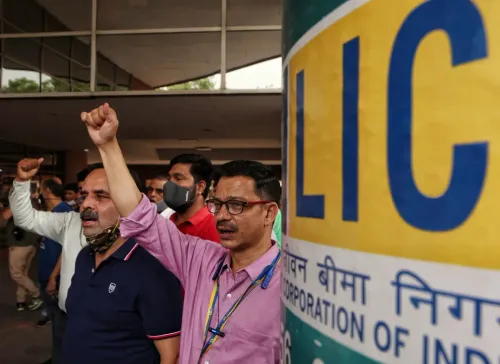
At the heart of the Cabinet decision is a carefully calibrated ownership formula. The Government of India and the Life Insurance Corporation of India (LIC) will jointly retain a 34 per cent stake in the restructured entity. That floor preserves public-sector influence while opening the door wide for a private strategic investor to come in with fresh capital and a new operational mandate.
LIC's connection to IDBI is not new. The state-owned insurer acquired a controlling stake in the bank back in 2003 and has remained its dominant institutional shareholder. The current restructuring builds on a policy direction the Union Cabinet first approved in 2021 — strategic disinvestment with minority public retention — finally reaching a concrete approval stage. CM Choudhary noted that the joint 34 per cent holding will 'strengthen the prospects for value appreciation of their stake,' effectively arguing that staying in at a lower share could be more lucrative than holding a bloated, under-capitalised majority.
The MSME lifeline hidden inside a banking deal
For millions of small business owners, the real headline may not be the ownership percentages at all. CM Choudhary pointed directly at the downstream effect: 'new capital and investment opportunities will accelerate the development of the MSME sector and new industries.'
India's Micro, Small and Medium Enterprises have long cited credit access as their single biggest constraint. A recapitalised IDBI Bank, operating with a private strategic partner's efficiency incentives, could expand industrial lending precisely where state-owned banks have historically been cautious — early-stage manufacturing, green energy supply chains, and tier-2 city industrial clusters. The logic is structural: better-capitalised banks lend more, and MSMEs are first in line when lending capacity grows.
What comes next — and what investors are watching
Cabinet approval is the starting gun, not the finish line. The next critical phase involves the formal process for selecting the strategic partner, a decision that will require clearances from the Reserve Bank of India (RBI) and potentially market regulators. Institutional investors and FDI analysts will be watching whether the government's 34 per cent floor — and its implicit veto power — shapes the appetite of potential acquirers.
India's selective privatisation of public sector financial entities has been a decade-long project under successive reform cycles. IDBI Bank's restructuring is among the most closely watched instances because of LIC's involvement: any value created or destroyed here lands directly on the balance sheet of an insurer backed by hundreds of millions of Indian policyholders. The stakes, in every sense, are national.
Bihar's CM lending his voice to a Union Cabinet banking decision underscores the political bandwidth this reform carries — states with large MSME and agricultural-industrial bases have direct skin in the game when national credit infrastructure is restructured. The clock is now running on the strategic partner selection process.
Point of View
And CM Choudhary's endorsement reflects a broad BJP consensus behind completing it. By anchoring the government-LIC bloc at 34 per cent, the Centre preserves a policy lever while signalling genuine openness to private capital — a tightrope that previous disinvestment attempts struggled to walk. The MSME framing is politically astute: it repackages a financial-sector reform as a Main Street growth story, widening the coalition of stakeholders who see benefit in the deal. The real test arrives at the strategic partner selection stage, where the 34 per cent floor's attractiveness to serious acquirers will determine whether this Cabinet decision translates into actual capital and credit growth.
NationPress
14 Oct 2026
Frequently Asked Questions
What is the IDBI Bank strategic restructuring approved by the Cabinet?
The Union Cabinet approved a plan to bring in a new private strategic partner for IDBI Bank while the Government of India and LIC together retain a 34 per cent stake, aiming to attract fresh capital and FDI into the bank.
Why does LIC hold a stake in IDBI Bank?
LIC acquired a controlling stake in IDBI Bank in 2003 and has remained a major institutional shareholder. Under the restructuring, LIC and the government will jointly hold 34 per cent of the restructured entity.
How will IDBI Bank restructuring help MSMEs?
A recapitalised IDBI Bank with a private strategic partner is expected to expand industrial lending, making credit more accessible to Micro, Small and Medium Enterprises across India.
What happens next after the Cabinet approval of IDBI Bank restructuring?
The next steps involve formally selecting the strategic private partner, followed by required clearances from the Reserve Bank of India and market regulators before capital infusion can begin.
Why did Bihar CM Samrat Choudhary comment on an IDBI Bank decision?
CM Choudhary welcomed the Cabinet decision as a senior BJP leader and as Bihar's chief minister, a state with a large MSME and industrial base that stands to benefit from expanded national banking credit capacity.