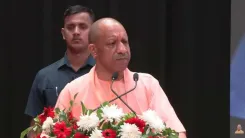
CM Samrat Choudhary inaugurates PMCH Tower-3 in Patna

Synopsis
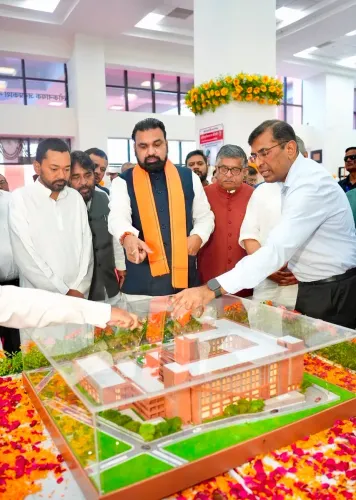
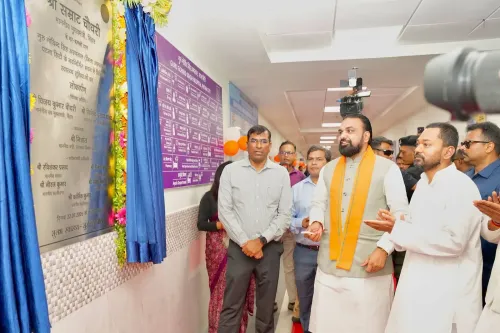
Bihar Chief Minister Samrat Choudhary inaugurated Tower-3 of Patna Medical College and Hospital on October 12, 2026, marking a key milestone in PMCH's phased redevelopment plan and Bihar's drive to modernise public healthcare infrastructure.
Key Takeaways
Bihar CM Samrat Choudhary inaugurated Tower-3 of the PMCH hospital building on October 12, 2026 .
The inauguration falls under Phase-1 of the Patna Medical College and Hospital (PMCH) redevelopment plan.
PMCH is one of eastern India's largest public hospitals, serving patients from across Bihar and neighbouring states.
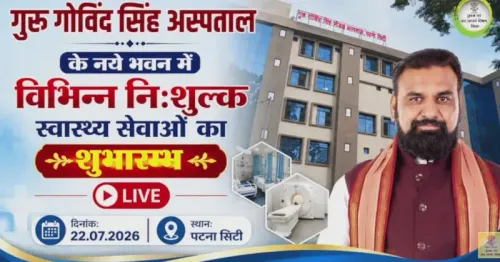
The event was broadcast live, underlining the government's emphasis on public visibility of healthcare infrastructure progress.
Further development phases remain ahead as the state pursues a full modernisation of the PMCH campus.
A landmark moment for Bihar's public healthcare: Bihar Chief Minister Samrat Choudhary on Monday, October 12, 2026 inaugurated Tower-3 of the hospital building at Patna Medical College and Hospital (PMCH), the latest milestone under Phase-1 of the institution's ambitious redevelopment plan.
PMCH's redevelopment: what Tower-3 means for patients
Patna Medical College and Hospital is one of eastern India's oldest and largest public hospitals, serving millions of patients from across Bihar and neighbouring states every year. The redevelopment programme — structured in phases — is aimed at transforming the ageing campus into a modern, high-capacity medical facility. Tower-3 represents the newest addition under Phase-1, expanding the hospital's built infrastructure and bed capacity at a time when Bihar's public health system faces persistent demand pressure.
The inauguration was broadcast live, signalling the government's intent to give the moment wide public visibility — a reflection of how central healthcare infrastructure has become to Bihar's political narrative under the BJP-led NDA government at the state level.
Bihar's push to upgrade its public hospital network
PMCH has historically been stretched thin: a single institution expected to absorb referrals from dozens of districts, often with infrastructure dating back decades. The phased redevelopment plan is designed to address exactly that — newer towers, modern wards, upgraded diagnostics, and improved patient flow. Phase-1's completion milestones, of which Tower-3 is the latest, mark tangible progress in that longer-term transformation.
For Chief Minister Choudhary, the inauguration is also a governance signal — that large-scale capital projects in health are moving from promise to concrete steel and glass. The optics of a live-streamed opening underscore that the administration wants voters and patients alike to see results on the ground.
With more phases still ahead, today's ribbon-cutting is less a finish line and more a proof of concept — one that the state's millions of public-hospital patients will ultimately judge by the quality of care inside those new walls.
Point of View
Presiding over a landmark like PMCH redevelopment reinforces his profile as an administrator who moves projects. The live-broadcast format also signals a communications strategy designed to reach rural voters who rely on PMCH as a last-resort referral centre.
NationPress
12 Oct 2026
Frequently Asked Questions
What is the PMCH redevelopment plan in Patna?
The PMCH redevelopment plan is a phased programme to modernise Patna Medical College and Hospital , one of eastern India's largest public hospitals, by constructing new hospital towers, upgrading wards, and expanding patient capacity. Phase-1 includes the construction of multiple new building towers.
What was inaugurated at PMCH on October 12, 2026?
Tower-3 of the hospital building at Patna Medical College and Hospital (PMCH) was inaugurated on October 12, 2026 by Bihar Chief Minister Samrat Choudhary under Phase-1 of the redevelopment plan.
Who is Samrat Choudhary?
Samrat Choudhary is the Chief Minister of Bihar and a senior leader of the Bharatiya Janata Party (BJP) .
Why is PMCH important for Bihar?
Patna Medical College and Hospital is one of the oldest and largest public hospitals in eastern India. It serves millions of patients from across Bihar and neighbouring states, functioning as a critical tertiary-care referral institution for the region.
Is the PMCH redevelopment complete?
No. The inauguration of Tower-3 marks a milestone within Phase-1 of the PMCH redevelopment, but further phases remain planned as part of the full modernisation programme.