CM Conrad Sangma Calls for Compassion on Anti-Drug Day
Synopsis
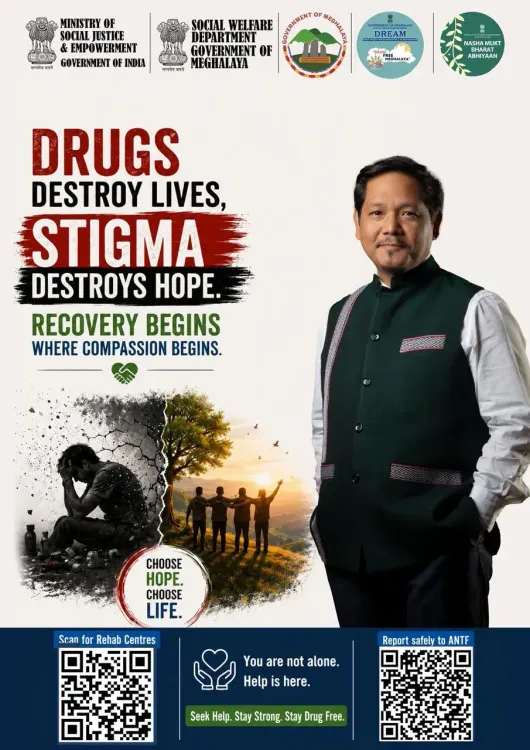
On International Day Against Drug Abuse, Meghalaya Chief Minister Conrad Sangma called on communities to say no to drugs while treating those in recovery with compassion, arguing that hope begins only when stigma ends.
Key Takeaways
Meghalaya Chief Minister Conrad Sangma posted a message on 26 June 2026 , the International Day Against Drug Abuse and Illicit Trafficking .
He urged communities to go beyond rejection of drugs and extend compassion to those in recovery , stating 'hope starts when stigma ends.' Meghalaya borders Bangladesh and has documented challenges with cross-border drug trafficking and youth substance abuse.
India's National Action Plan for Drug Demand Reduction (2014) and UNODC -backed rehabilitation pilots since 2018 have emphasised stigma reduction in the Northeast.
Sangma's framing positions the drug crisis as both a law-and-order and a public-health issue, aligning with evolving national and international policy language.
Potential follow-up measures include expansion of Integrated Rehabilitation Centres for Addicts (IRCAs) and cross-border coordination with Assam and Nagaland .
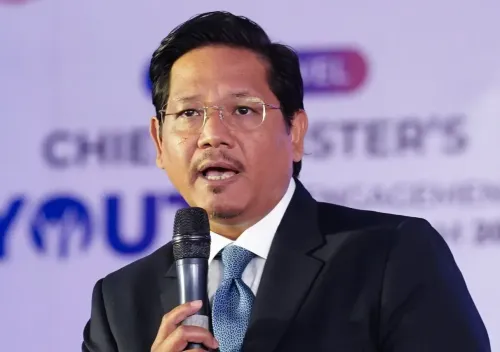
Meghalaya Chief Minister Conrad Sangma on Friday, 26 June 2026, marked the International Day Against Drug Abuse and Illicit Trafficking with a call to communities not only to reject drugs but to embrace those in recovery with compassion, stating that 'hope starts when stigma ends.'
Context
The International Day Against Drug Abuse and Illicit Trafficking is observed every year on 26 June, a date designated by the United Nations since 1987 to strengthen global action and awareness against the drug menace. Chief Minister Sangma's post on X used the occasion to shift the public conversation beyond enforcement, urging communities to treat recovering individuals with dignity rather than social exclusion.
His message — 'Say NO to drugs' paired with 'treat those recovering with compassion' — reflects a dual framing that combines traditional deterrence messaging with a public-health lens on rehabilitation. The post arrived alongside similar observances by political leaders across the country.
Policy Backdrop
Meghalaya, a northeastern state bordering Bangladesh, has long faced the challenge of cross-border drug trafficking and rising youth substance abuse. Synthetic drugs and pharmaceutical opioids have increasingly replaced older opiate routes across the Northeast, making the region a focal point for both supply-side interdiction and demand-reduction efforts.
India's Narcotic Drugs and Psychotropic Substances Act, 1985 established the foundational legal framework for drug control, with later amendments introducing provisions for treatment and rehabilitation. The Ministry of Social Justice and Empowerment launched the National Action Plan for Drug Demand Reduction in 2014, prioritising awareness, counselling, and de-addiction services. From 2018 onward, UNODC-supported community-based rehabilitation pilots in several northeastern states have placed stigma reduction at the centre of their approach — aligning closely with the spirit of Sangma's message.
Stakeholders and Impact
The Chief Minister's appeal is directed most immediately at families and communities in Meghalaya's border districts, where proximity to trafficking corridors has made substance abuse a persistent social challenge. Recovering addicts and their families bear the heaviest burden of social stigma, which advocates argue discourages individuals from seeking help at state-run de-addiction and counselling centres.
State health departments and civil society organisations running Integrated Rehabilitation Centres for Addicts (IRCAs) stand to benefit if Sangma's messaging translates into greater community acceptance of rehabilitation programmes. The National People's Party-led government in Shillong has, under Sangma's tenure since 2018, sought to frame the drug challenge as both a law-and-order and a public-health concern.
What's Next
Observers will watch whether the Chief Minister's public statement ahead of the next Meghalaya budget session is followed by concrete announcements — such as the expansion of district-level rehabilitation centres or coordinated border-trafficking initiatives with neighbouring states like Assam and Nagaland. The broader trajectory of Indian drug policy, increasingly incorporating harm-reduction language alongside enforcement, suggests that messaging from state leaders like Sangma could reinforce calls for greater rehabilitation funding at the national level.
If stigma reduction becomes a measurable policy goal rather than a rhetorical one, Meghalaya could emerge as a model for community-centred drug recovery in the Northeast.
Point of View
Particularly in the Northeast. By pairing the familiar 'Say NO to drugs' refrain with an explicit call to destigmatise recovery, he aligns Meghalaya's political voice with a harm-reduction framework that UNODC and India's own demand-reduction policy have been quietly advancing since 2014. For a border state where enforcement alone has failed to stem synthetic drug flows, this rhetorical shift matters — it signals that community reintegration, not just interdiction, may be on the policy agenda. Whether this translates into budgetary commitments or inter-state coordination will determine if the message carries weight beyond the annual observance.
NationPress
26 Jun 2026
Frequently Asked Questions
What did Conrad Sangma say on International Drug Abuse Day 2026?
Meghalaya Chief Minister Conrad Sangma called on communities to say no to drugs and to treat those recovering from addiction with compassion, writing that 'hope starts when stigma ends' in a post on 26 June 2026.
When is International Day Against Drug Abuse observed?
The International Day Against Drug Abuse and Illicit Trafficking is observed every year on 26 June, a date designated by the United Nations since 1987.
What is Meghalaya's drug problem?
Meghalaya, which borders Bangladesh, faces significant challenges from cross-border drug trafficking and youth substance abuse, with synthetic drugs and pharmaceutical opioids increasingly prevalent across the Northeast region.
What is India's policy on drug rehabilitation?
India's Narcotic Drugs and Psychotropic Substances Act, 1985 provides the legal framework, while the National Action Plan for Drug Demand Reduction launched in 2014 focuses on awareness, counselling, and de-addiction services. UNODC-backed pilots since 2018 have also emphasised community-based rehabilitation and stigma reduction in the Northeast.
What is the National People's Party?
The National People's Party (NPP) is a Northeast-focused regional political party led nationally by Conrad Sangma. It heads the Meghalaya state government and is allied with the NDA at the national level.