CM Conrad Sangma Hails FM Sitharaman's Visit to Khiew Ranei Pottery Village
Synopsis
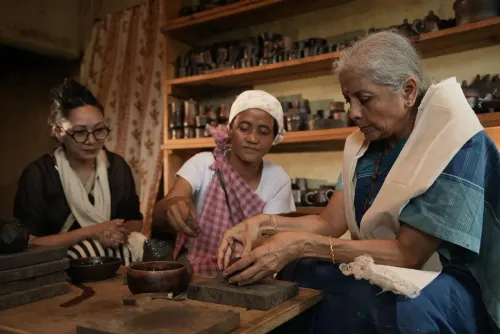
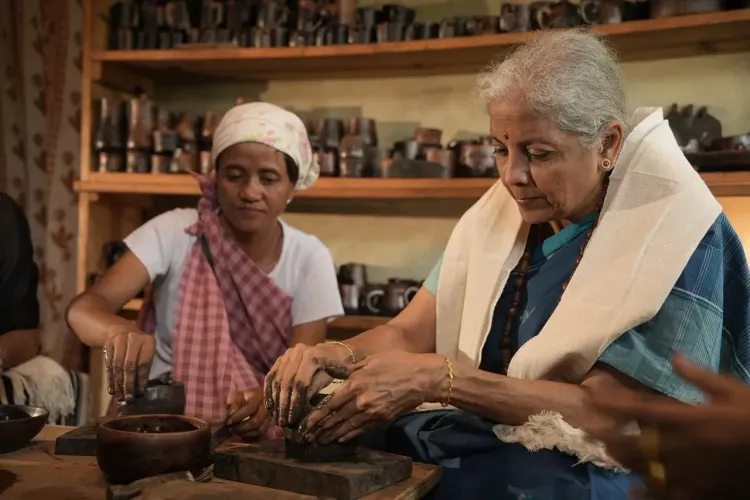
Meghalaya CM Conrad Sangma praised Finance Minister Nirmala Sitharaman's visit to Larnai village in West Jaintia Hills, where she interacted with craftswomen practising Khiew Ranei, a GI-tagged black clay pottery tradition, calling it a moment of great encouragement for the artisan community.
Key Takeaways
Union Finance Minister Nirmala Sitharaman visited Larnai village in West Jaintia Hills, Meghalaya and met local craftswomen.
The craftswomen practise Khiew Ranei , a traditional black clay pottery craft that holds Geographical Indication (GI) status.
Meghalaya CM Conrad Sangma described the visit as 'a moment of great encouragement for the artisan community.' GI protection for Khiew Ranei is governed by India's Geographical Indications of Goods (Registration and Protection) Act, 1999 .
The visit is part of a broader pattern of Central ministers engaging with tribal craft communities in the Northeast .
Possible follow-up outcomes include artisan support measures in future Union Budget sessions or state handicraft policy updates.
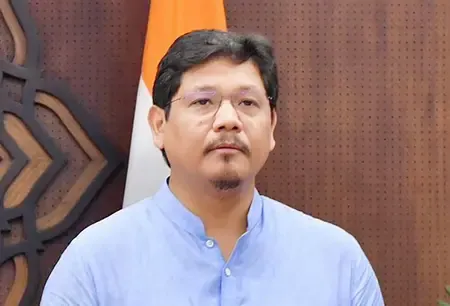
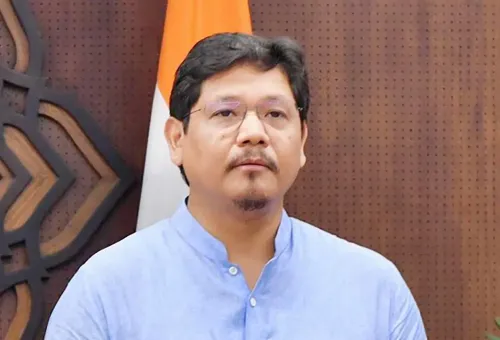
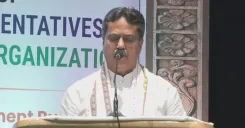
Meghalaya Chief Minister Conrad Sangma on Monday, 22 June 2026 praised Union Finance Minister Nirmala Sitharaman's visit to Larnai village in West Jaintia Hills, calling her interaction with local craftswomen engaged in the GI-tagged black clay pottery tradition, Khiew Ranei, 'a moment of great encouragement for the artisan community.'
Context
Finance Minister Sitharaman visited Larnai village, a settlement in West Jaintia Hills district of Meghalaya known for its centuries-old tradition of black clay pottery. She interacted directly with local craftswomen who practise Khiew Ranei, a craft that carries Geographical Indication (GI) status under India's Geographical Indications of Goods (Registration and Protection) Act, 1999. CM Sangma noted that her 'warmth, humility and genuine interest in preserving our rich cultural heritage has touched our hearts.'
Policy Backdrop
Khiew Ranei pottery is crafted exclusively from black clay found in the Jaintia Hills region and is practised predominantly by women from the local community. The GI tag provides legal protection to the craft, distinguishing it from imitations and enabling artisans to command better market recognition for their work. Central government outreach to GI-tagged craft clusters in the Northeast has been a recurring feature of ministerial field visits, linking cultural preservation with rural livelihood goals.
The GI framework is administered centrally and covers a wide range of India's distinctive regional products — from textiles and handicrafts to agricultural produce. For crafts like Khiew Ranei, GI recognition is often the first step toward organised marketing support, export promotion, and integration into national handicraft schemes. Meghalaya has been working to document and sustain indigenous crafts as part of broader state-level development programmes.
Stakeholders and Impact
The primary beneficiaries of such high-profile ministerial attention are the women artisans of Larnai and surrounding clusters in West Jaintia Hills, for whom visibility from a Union Cabinet minister can translate into wider market access and institutional support. Craft-based livelihoods in the Northeast are often fragile, dependent on seasonal demand and limited distribution networks. A direct visit by the Finance Minister signals potential policy interest ahead of future budget cycles and handicraft promotion initiatives.
For Meghalaya more broadly, the spotlight on Khiew Ranei reinforces the state's identity as a repository of living tribal traditions. CM Sangma's public acknowledgement of the visit also underscores the political importance of cultural diplomacy between the state government and the Centre.
What's Next
Observers will watch whether the Finance Minister's visit to Larnai finds reflection in upcoming Union Budget allocations for artisan welfare, GI-product marketing, or Northeast-specific handicraft schemes. State authorities may also follow up with expanded documentation of other recognised craft clusters across the Jaintia Hills. Any formal commitment to artisan support programmes, if announced, would mark a tangible outcome from what CM Sangma described as a deeply encouraging interaction for the community.
Point of View
And it amplifies visibility for an artisan community that rarely commands national attention. The spotlight on Khiew Ranei could accelerate institutional support for GI-tagged crafts in the region, particularly if the visit feeds into Budget-level artisan welfare commitments. Ultimately, the political value of such interactions is measured not by the visit itself but by the policy follow-through it generates.
NationPress
22 Jun 2026
Frequently Asked Questions
What is Khiew Ranei pottery?
Khiew Ranei is a traditional black clay pottery craft practised in the Jaintia Hills region of Meghalaya. It holds Geographical Indication (GI) status under India's GI Act of 1999, which protects it from imitation and helps artisans gain market recognition.
Why did Nirmala Sitharaman visit Larnai village?
Finance Minister Nirmala Sitharaman visited Larnai village in West Jaintia Hills to interact with local craftswomen engaged in the GI-tagged Khiew Ranei black clay pottery tradition, as part of Central government outreach to tribal craft communities in Meghalaya.
What did Conrad Sangma say about Sitharaman's visit?
CM Conrad Sangma said the Finance Minister's visit was 'a moment of great encouragement for the artisan community' and praised her 'warmth, humility and genuine interest in preserving our rich cultural heritage.'
What is a GI tag and why does it matter for Meghalaya crafts?
A Geographical Indication (GI) tag is a legal certification under the GI Act of 1999 that identifies a product as originating from a specific region with qualities or reputation linked to that origin. For crafts like Khiew Ranei, it provides protection against imitation and opens doors to organised marketing and export support.
What could follow from the Finance Minister's visit to West Jaintia Hills?
Analysts will watch for possible references to artisan welfare or GI-product marketing in upcoming Union Budget sessions, as well as follow-up state-level initiatives to support recognised craft clusters across the Jaintia Hills region.