CM Conrad Sangma Reviews PM Surya Ghar Scheme for Meghalaya
Synopsis
Meghalaya Chief Minister Conrad Sangma reviewed the PM Surya Ghar Scheme on 23 June 2026, discussing rooftop solar expansion, battery storage integration, and a comprehensive renewable energy roadmap for the state with Union Minister Pralhad Joshi and MNRE.
Key Takeaways
CM Conrad Sangma reviewed the PM Surya Ghar Scheme in Meghalaya on 23 June 2026 , focusing on accelerating rooftop solar adoption.
Discussions covered making solar energy more accessible and affordable for households and integrating battery storage solutions .
The review also explored expanding renewable energy adoption across government institutions and communities in the state.
Union Minister Pralhad Joshi and the Ministry of New and Renewable Energy were part of the engagement.
The PM Surya Ghar Muft Bijli Yojana , launched in February 2024 , targets one crore households with up to 300 units of free electricity monthly.
The state aims to build a comprehensive renewable energy roadmap aligned with India's 500 GW non-fossil fuel target by 2030 .
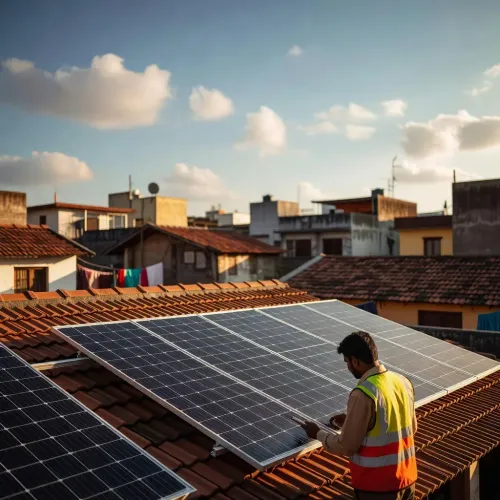
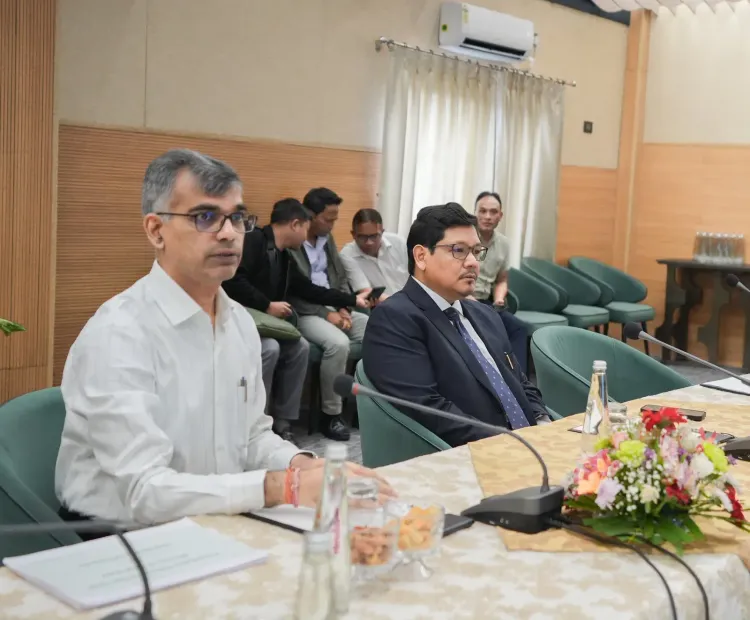
Meghalaya Chief Minister Conrad Sangma on Tuesday, 23 June 2026, reviewed the implementation of the PM Surya Ghar Scheme in the state and held discussions on accelerating rooftop solar adoption, exploring measures to make solar energy more accessible and affordable for households across Meghalaya.
Context
CM Sangma shared that the review meeting examined ways to strengthen awareness efforts, integrate battery storage solutions, and expand renewable energy adoption across government institutions and communities. The discussions also focused on building a comprehensive renewable energy roadmap aimed at enhancing energy security and promoting long-term sustainability for the state's residents. The meeting involved Union Minister of New and Renewable Energy Pralhad Joshi and the Ministry of New and Renewable Energy (MNRE), as indicated by the post's tags.
Policy Backdrop
The PM Surya Ghar Muft Bijli Yojana was launched by the Government of India in February 2024 as a flagship central scheme to accelerate rooftop solar adoption nationwide, offering up to 300 units of free electricity monthly to one crore households. The scheme falls under the nodal oversight of the Ministry of New and Renewable Energy, which is responsible for policy formulation and coordination with state governments on implementation targets. India has set an ambitious national target of 500 GW of non-fossil fuel capacity by 2030 and net-zero emissions by 2070, with distributed rooftop solar forming a key pillar of that strategy.
Northeastern states, including Meghalaya, face distinct challenges in achieving these targets due to difficult terrain, limited grid connectivity, and dispersed settlement patterns. These geographic and infrastructural realities make battery storage integration and adoption by government buildings especially critical to improving energy access and reliability in the region.
Stakeholders and Impact
The primary beneficiaries of an accelerated rollout in Meghalaya would be the state's households, which stand to gain reduced electricity bills and improved energy reliability through rooftop solar installations. Government institutions across the state are also identified as a key focus area, with the review exploring mandates or incentives to drive adoption in public buildings. Broader community-level adoption could contribute to reducing Meghalaya's dependence on conventional grid power and fossil fuel-based generation.
The involvement of Union Minister Pralhad Joshi and MNRE in the discussion signals that the state is seeking central support — whether through additional funding, technical assistance, or policy flexibility — to address the region-specific barriers that have historically slowed renewable energy uptake in the Northeast.
What's Next
The review is expected to feed into a state-level renewable energy roadmap for Meghalaya, with specific attention to battery storage solutions and institutional solar mandates. Observers will watch for follow-up announcements on household registration numbers under the PM Surya Ghar Scheme in the state, as well as any Meghalaya-specific policy notifications on storage incentives or government building requirements. Progress on these fronts will be a key indicator of how effectively the Northeast can be integrated into India's broader clean energy transition.
Point of View
CM Sangma is acknowledging that the standard rooftop solar model needs adaptation for states where grid reliability is uneven. The engagement with Union Minister Joshi and MNRE also suggests the state is lobbying for tailored central support rather than a one-size-fits-all rollout. This positions Meghalaya as an early mover in building a Northeast-specific clean energy framework within India's broader 2030 decarbonisation arc.
NationPress
23 Jun 2026
Frequently Asked Questions
What is the PM Surya Ghar Scheme and how does it apply to Meghalaya?
The PM Surya Ghar Muft Bijli Yojana is a central government scheme launched in February 2024 to provide rooftop solar installations and up to 300 units of free electricity monthly to one crore households across India. Meghalaya CM Conrad Sangma reviewed its implementation in the state on 23 June 2026, focusing on how to accelerate adoption given the region's terrain and grid challenges.
What did Conrad Sangma discuss in the PM Surya Ghar review meeting?
CM Sangma discussed measures to make solar energy more accessible and affordable for Meghalaya households, strengthen awareness efforts, integrate battery storage solutions, and expand renewable energy adoption across government institutions and communities in the state.
Who is Pralhad Joshi and why was he involved in this review?
Pralhad Joshi is the Union Minister of New and Renewable Energy, the nodal central minister overseeing India's solar and renewable energy programmes including the PM Surya Ghar Scheme. CM Sangma tagged him in the post, indicating his ministry's involvement in the review discussions.
Why is battery storage important for solar energy in Meghalaya?
Meghalaya's difficult terrain and limited grid connectivity make consistent electricity supply a challenge. Battery storage solutions allow solar energy generated during the day to be stored and used when sunlight is unavailable, making rooftop solar more reliable and practical for households and institutions in the Northeast.
What is India's renewable energy target and how does Meghalaya fit in?
India has set a target of 500 GW of non-fossil fuel energy capacity by 2030 and net-zero emissions by 2070. States like Meghalaya are expected to contribute through schemes like PM Surya Ghar, though Northeastern states require region-specific approaches involving battery storage and institutional adoption to overcome geographic barriers.