CM Dhami at Pipalkoti: ₹149 Cr Projects, Women Honoured
Synopsis
CM Pushkar Singh Dhami attended the Matrishakti Sammelan in Pipalkoti, Chamoli, on November 17, 2026, launching 30 schemes worth ₹149.77 crore, announcing the Baini-Bhuli Yojana's December first instalment for five lakh women, and honouring grassroots women achievers.
Key Takeaways
Baini-Bhuli Yojana will provide economic support to over five lakh women through direct bank transfers; first instalment due in December 2026 .
Nanda Gaura Yojana offers ₹11,000 at a girl's birth and ₹51,000 on completing Class 12.
Over ₹3 crore disbursed to 900+ poor families across nine Chamoli blocks in four years.
30 development projects worth ₹149.77 crore launched and inaugurated in Chamoli district.
Three new road projects announced: Helang-Dungri Barosi, Gopeshwar-Pokhari, and Trishula-Bhaduda motor roads.
Women in state government services receive 30% horizontal reservation ; cooperatives offer 33% reservation .
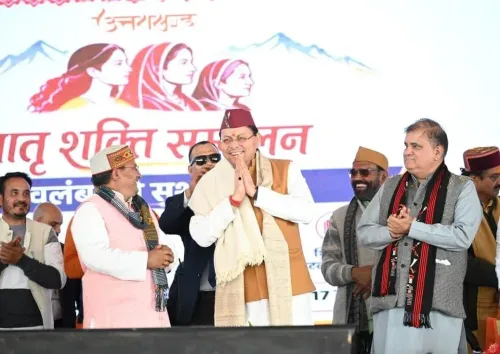
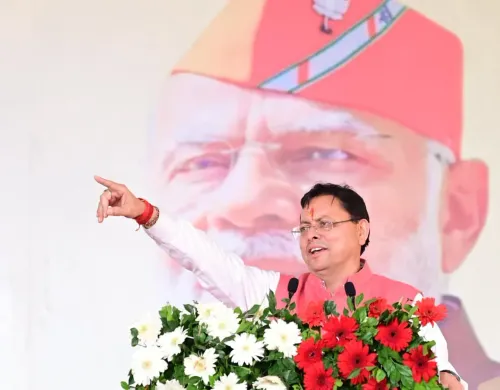
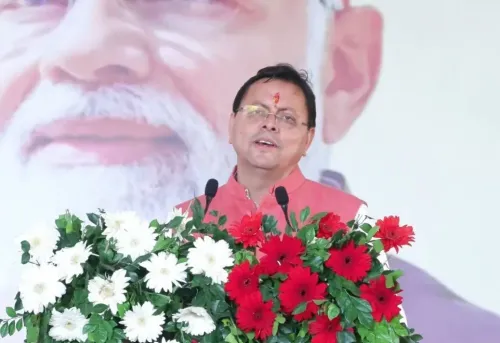
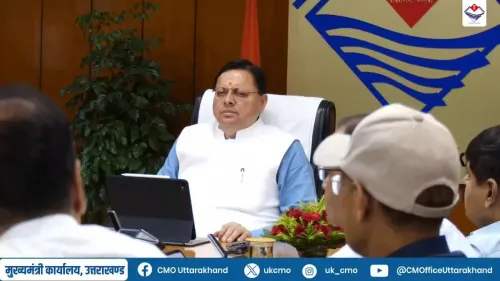
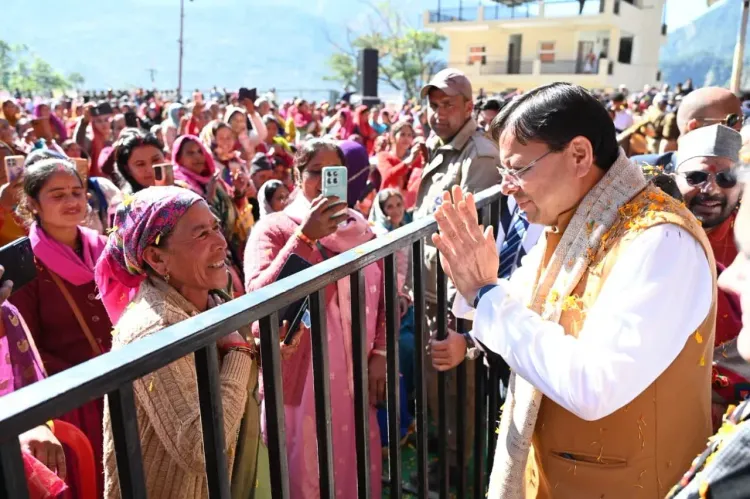
In the shadow of the Himalayas, Chief Minister Pushkar Singh Dhami sat beside mountain women on Tuesday, November 17, 2026, and ground salt on a silbatta (stone grinder) — a gesture that set the tone for a sweeping welfare offensive in Chamoli district. The Chief Minister's Office of Uttarakhand announced that Dhami attended the Matrishakti Sammelan at Pipalkoti, where he launched and inaugurated 30 development schemes worth ₹149.77 crore and outlined a December deadline for the first cash tranche under a new women's benefit programme.
Salt, grain, and buttermilk: a CM on the forest floor
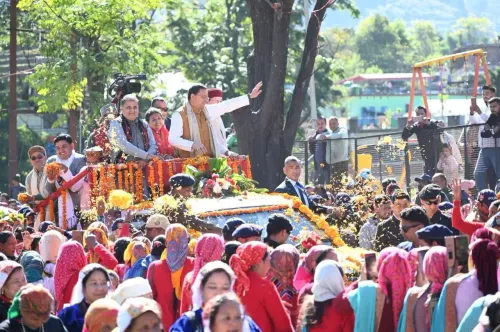
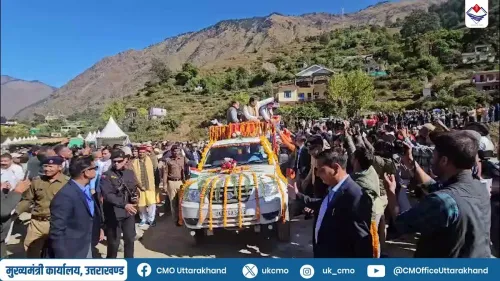
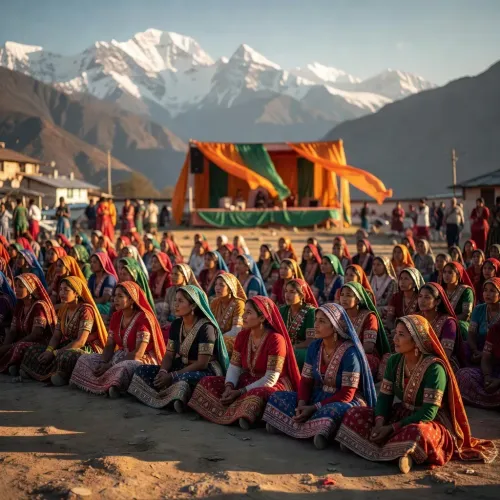
The optics were deliberate. Dhami ground pahadi namak (hill salt) on a stone, turned a jandara (hand mill) to crush grain, and churned curd with a mathani — each act a nod to the daily labour of Uttarakhand's mountain women. Hundreds of women greeted him with traditional instruments, a kalash yatra (pot procession), and a shower of flowers as he moved through a road show before the main event. District Magistrate Gaurav Kumar presented him with a hand-painted artwork of the Nanda Devi Rajjat pilgrimage — the region's most sacred yatra.
Baini-Bhuli Yojana: first cheque arrives in December
The headline policy announcement was the Baini-Bhuli Yojana, under which the state government says it will deliver economic support to more than five lakh women through two instalments directly into bank accounts. Dhami confirmed the first instalment will be released in December. The scheme's name — baini-bhuli, meaning 'sisters' in the Garhwali dialect — signals its cultural pitch to hill households.
Alongside the new scheme, Dhami highlighted the Nanda Gaura Yojana, under which a girl's birth triggers a grant of ₹11,000 and passing Class 12 unlocks ₹51,000. He reported that over the past four years, more than 900 extremely poor families across nine development blocks of Chamoli have received over ₹3 crore in combined assistance through various schemes.
Chipko's daughters and what they built
Addressing the gathering, Dhami invoked Gaura Devi — the woman who in 1973 led villagers of Reni, Chamoli, to hug trees and launch the global Chipko movement. 'The message of environmental protection that Gaura Devi and her fellow women gave from the soil of Chamoli remains a source of inspiration for the entire world even today,' he said. He framed contemporary welfare policy as the institutional successor to that grassroots legacy.
On structural reforms, he pointed to 30 per cent horizontal reservation for women in state government services and 33 per cent reservation in cooperative societies, and cited Uttarakhand's implementation of the Uniform Civil Code as a step toward equal rights. Central schemes — Ujjwala Yojana, Jan Dhan Yojana, and direct benefit transfers — were cited as complementary pillars under Prime Minister Narendra Modi.
Women of Chamoli named and honoured
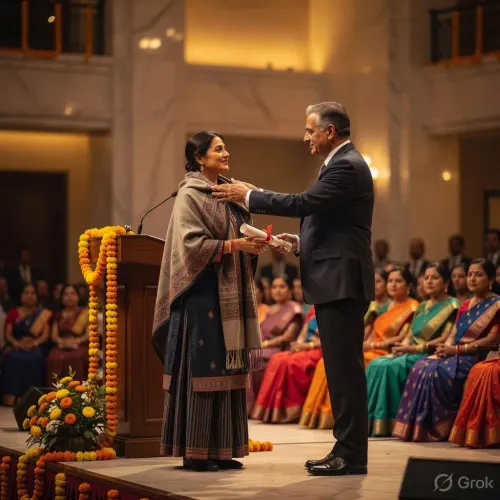
The sammelan was not just a stage for announcements — it was a roll call. Smt. Uttara Devi of Mahila Mangal Dal Maidthali and Smt. Meena Devi of Mahila Mangal Dal Pakhi were recognised for environmental conservation, community labour, micro-savings, and anti-addiction work. Smt. Bhuvana Devi was honoured for beekeeping; Smt. Rameshwari Devi for farming; Smt. Usha Devi for bamboo product making; and Smt. Leela Devi for natural farming.
Athletes Nisha and Swati Badwal were recognised in sports. Nirja, Rameshwari Devi, and Anita Devi were celebrated as Lakhpati Didis — women who have crossed the ₹1 lakh annual income threshold through self-help group enterprise. Poet Surabhi Devi and folk singer Nanda Sati were also honoured, alongside top-scoring high school girls.
Three new roads and ₹149.77 crore on the ground
Beyond the welfare announcements, Dhami laid the foundation stone and inaugurated 30 projects totalling ₹149.77 crore in Chamoli. He also announced construction and improvement of three road corridors: the Helang-Dungri Barosi Motor Road, the Gopeshwar-Pokhari Motor Road, and the Trishula-Bhaduda Motor Road — each one a connectivity lifeline in a district where mountain terrain remains the biggest barrier to access.
When the first Baini-Bhuli instalment hits five lakh bank accounts in December, Pipalkoti's promises will face their first real test.
Point of View
The silbatta, the jandara — to build trust in remote districts where state presence has historically been thin. The Baini-Bhuli Yojana's December instalment promise is politically loaded: a benefits hit timed roughly ahead of local body election cycles gives the ruling party a tangible doorstep narrative. Structurally, the 30% job reservation and Uniform Civil Code implementation signal Uttarakhand's attempt to position itself as a template state for women's rights legislation, a distinction Chief Minister Dhami has consistently sought at the national level. Whether the December disbursement arrives on schedule — and reaches all five lakh accounts — will determine whether this sammelan is remembered as a turning point or a headline.
NationPress
17 Nov 2026
Frequently Asked Questions
What is the Baini-Bhuli Yojana in Uttarakhand?
The Baini-Bhuli Yojana is an Uttarakhand government scheme that provides economic support to over five lakh women through direct bank transfers in two instalments. The first instalment is scheduled for release in December 2026.
What is the Nanda Gaura Yojana and how much money does it give?
The Nanda Gaura Yojana offers ₹11,000 to families at the birth of a girl child and ₹51,000 when she passes her Class 12 examination, supporting girls from birth through higher education.
What reservation do women get in Uttarakhand government jobs?
Women receive 30 per cent horizontal reservation in Uttarakhand state government services and 33 per cent reservation in cooperative societies.
What development projects were launched in Chamoli on November 17 2026?
Chief Minister Pushkar Singh Dhami launched and inaugurated 30 development projects worth ₹149.77 crore in Chamoli district, and also announced construction and improvement of three motor roads: Helang-Dungri Barosi, Gopeshwar-Pokhari, and Trishula-Bhaduda.
Who was Gaura Devi and what is her connection to Chamoli?
Gaura Devi was the leader of the historic Chipko movement that began in 1973 in Reni village, Chamoli district, Uttarakhand. She and fellow women villagers hugged trees to prevent felling, launching a global environmental conservation movement.