CM Dhami Backs Natural Farming to Cut Costs by Half
Synopsis
Chief Minister Pushkar Singh Dhami has called for adopting traditional and natural farming in Uttarakhand, stating it will cut cultivation costs by more than half. The remark, shared by the official CMO handle, aligns with India's broader push for sustainable agriculture under national schemes targeting reduced chemical input dependence.
Key Takeaways
CM Pushkar Singh Dhami stated that adopting natural farming will reduce cultivation costs to less than half of current levels.
The statement was shared by the Chief Minister's Office of Uttarakhand on 26 June 2026 .
Uttarakhand's Himalayan terrain and fragmented landholdings make it particularly suited to low-input, traditional farming models.
The Centre's Paramparagat Krishi Vikas Yojana , launched in 2015 , provides the national policy framework underpinning such state-level pushes.
Small and marginal farmers stand to benefit most if cost-reduction targets are operationalised through training and market support.
Concrete follow-through — including revised agricultural budgets and farmer training programmes — will be the key measure of the commitment's impact.
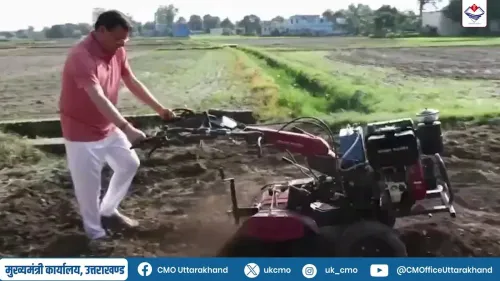
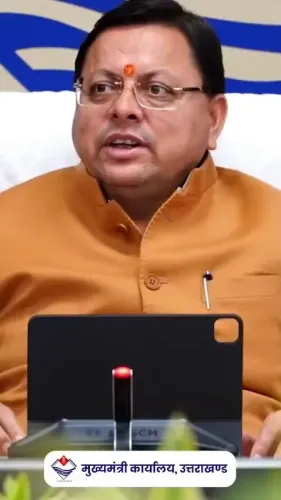
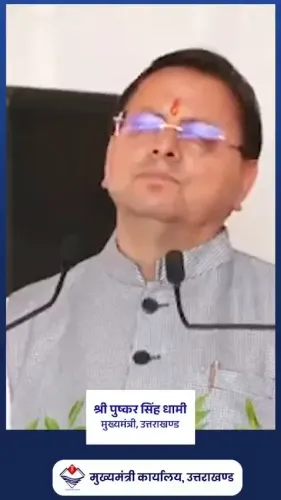
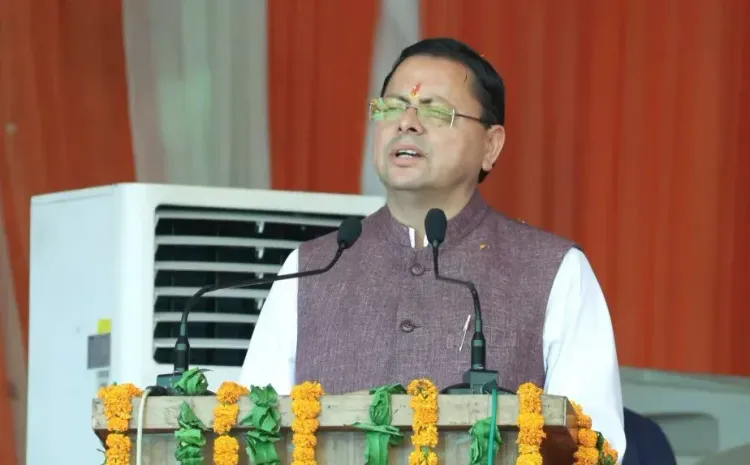
The Chief Minister's Office of Uttarakhand, on Friday, 26 June 2026, shared a statement by Chief Minister Pushkar Singh Dhami calling on farmers to embrace traditional and natural farming practices, asserting that doing so would reduce cultivation costs by more than half.
Context
In the statement shared by the official CMO handle, CM Dhami said: 'हमें पारंपरिक खेती को अपनाना होगा। जब हम प्राकृतिक खेती को अपनाएंगे तो खेती की लागत आधे से भी कम हो जाएगी।' — translated as: 'We will have to adopt traditional farming. When we adopt natural farming, the cost of cultivation will reduce to less than half.'
The remarks reinforce Uttarakhand's longstanding positioning as a state suited to low-input, ecologically sensitive agriculture, given its Himalayan terrain and climate that naturally limits large-scale chemical-intensive cultivation.
Policy Backdrop
The push for natural farming in India has been building since the mid-2010s. The central government's Paramparagat Krishi Vikas Yojana (PKVY), launched in 2015, promoted cluster-based organic farming to wean small farmers off synthetic inputs and reduce input costs.
These efforts sit within the broader National Mission for Sustainable Agriculture, which encourages reduced dependence on chemical fertilisers and pesticides across states. Uttarakhand's agro-ecological profile — fragmented hill landholdings, rain-fed fields, and traditional crop varieties — makes it a natural fit for such models.
Multiple Indian states have piloted zero-budget and natural farming programmes over the past decade, citing twin goals of soil health restoration and farmer income relief. CM Dhami's statement aligns Uttarakhand firmly with this national trend.
Stakeholders and Impact
Small and marginal farmers form the core constituency for this push. In hill states like Uttarakhand, input costs — including fertilisers, pesticides, and seeds — can consume a disproportionate share of farm revenue, making cost-reduction arguments particularly resonant.
A shift to natural farming methods, if supported by adequate state-level training and market linkages, could meaningfully improve net incomes for farming households that currently operate on thin margins. Traditional practices also carry the potential to reduce soil degradation and dependence on supply chains vulnerable to price volatility.
What's Next
Attention will now turn to whether the state government follows the statement with concrete operational steps — including farmer training programmes, revised agricultural budgets, or new scheme announcements that set measurable targets for natural farming adoption.
The degree to which Uttarakhand translates this political commitment into funded, time-bound policy will determine whether the cost-reduction goal articulated by CM Dhami moves from aspiration to measurable outcome for the state's farming communities.
Point of View
The stakes are real: input cost relief could meaningfully shift farm household economics. The statement's true significance will emerge only when budget allocations and training rollouts are announced.
NationPress
26 Jun 2026
Frequently Asked Questions
What did CM Pushkar Singh Dhami say about natural farming?
CM Pushkar Singh Dhami said that adopting natural and traditional farming practices will reduce cultivation costs to less than half of current levels, in a statement shared by the Uttarakhand CMO on 26 June 2026.
How does natural farming reduce costs for farmers?
Natural farming eliminates or drastically reduces expenditure on synthetic fertilisers, pesticides, and purchased seeds, replacing them with locally available inputs. This can significantly cut the per-acre cost of cultivation, particularly for small and marginal farmers.
What is Paramparagat Krishi Vikas Yojana?
Paramparagat Krishi Vikas Yojana (PKVY) is a central government scheme launched in 2015 to promote cluster-based organic and traditional farming across India, aiming to reduce chemical input use and support farmer incomes.
Is Uttarakhand suited to natural farming?
Yes. Uttarakhand's Himalayan terrain, fragmented landholdings, and traditional crop varieties make it naturally compatible with low-input farming models. The state has long been associated with organic and ecologically sensitive agriculture.
What should farmers in Uttarakhand watch for next?
Farmers should watch for state government announcements on training programmes, revised agricultural budgets, or new schemes that operationalise CM Dhami's call for natural farming adoption with measurable cost-reduction targets.