CM Dhami Calls Uttarakhand Residents Brand Ambassadors for Sustainable Growth
Synopsis
Chief Minister Pushkar Singh Dhami called Uttarakhand's residents 'brand ambassadors' of the state on 27 May 2026, defining sustainable development as growth that meets present needs while safeguarding future generations — reinforcing the Himalayan state's eco-conscious governance stance.
Key Takeaways
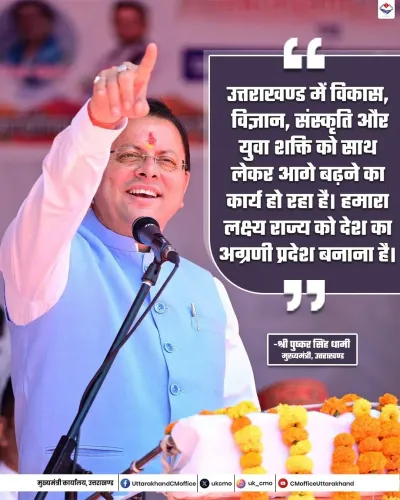
CM Pushkar Singh Dhami described all residents of Uttarakhand as 'brand ambassadors' of the state.
He defined sustainable development as fulfilling present needs while protecting the interests of future generations.
The statement was shared by the official Chief Minister's Office of Uttarakhand on 27 May 2026 .
Uttarakhand , formed in 2000 , relies heavily on tourism, hydropower, and agriculture — all ecologically sensitive sectors.
India adopted the UN Sustainable Development Goals in 2015 , which Uttarakhand has incorporated into its planning frameworks.
Observers will watch for new state-level sustainable tourism or conservation schemes in upcoming policy announcements.
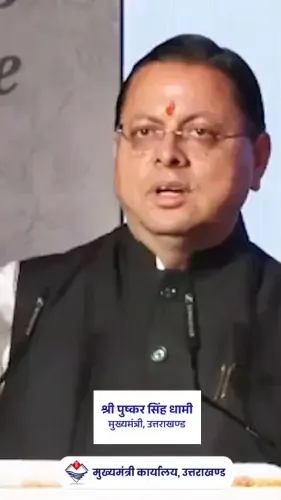
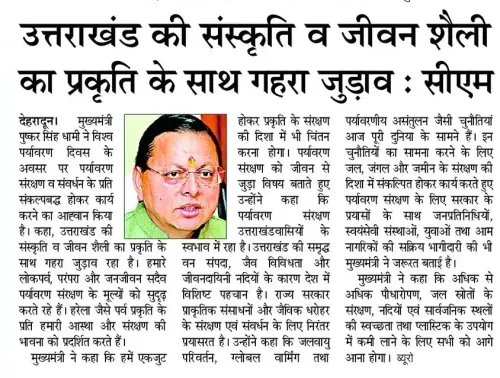
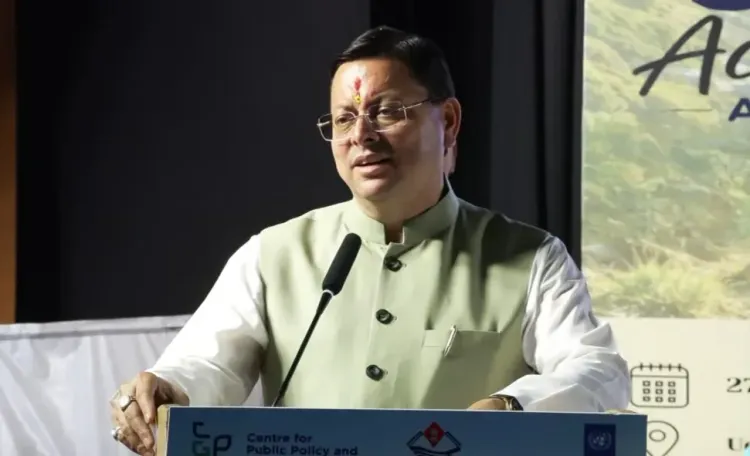
The Chief Minister's Office of Uttarakhand, on Wednesday, 27 May 2026, shared remarks by Chief Minister Pushkar Singh Dhami in which he described the state's residents as its 'brand ambassadors' and articulated a vision of sustainable development that protects future generations while meeting present needs.
Context
Speaking in Hindi, CM Dhami stated: 'Aap sabhi log hamare rajya ke brand ambassadors hain' ['You are all brand ambassadors of our state']. He added that sustainable development means 'development that fulfils the needs of the present while also protecting the interests of generations to come.' The remarks were shared by the official Chief Minister's Office handle on X.
The statement positions Uttarakhand's citizens — particularly those engaged in tourism, agriculture, and local enterprise — as active custodians of the state's identity and ecological heritage, not merely passive beneficiaries of government schemes.
Policy Backdrop
Uttarakhand, carved out as a separate Himalayan state in 2000, has long grappled with the tension between economic development and environmental conservation. The state's economy is heavily anchored in tourism, hydropower, and agriculture, all of which are acutely sensitive to ecological change.
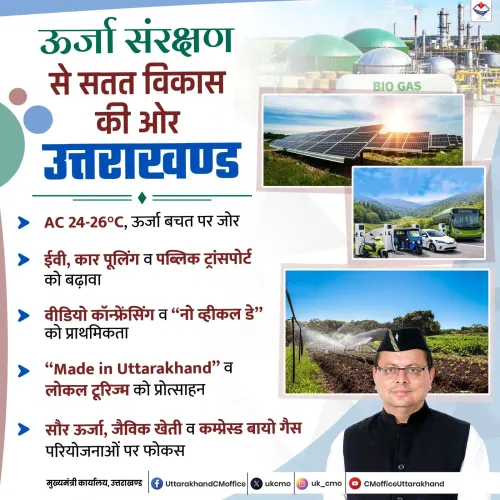
India adopted the United Nations Sustainable Development Goals (SDGs) in 2015, and state governments including Uttarakhand have since woven SDG targets into their planning frameworks. Successive administrations in Dehradun have promoted eco-tourism and renewable energy as twin pillars of a green-growth model for the fragile Himalayan region.
CM Dhami, who has helmed the state since 2021, has consistently emphasised balanced development — seeking investment and infrastructure growth without compromising the Himalayan ecology that underpins the state's tourism appeal and water security.
Stakeholders and Impact
The framing of citizens as 'brand ambassadors' carries practical weight in a state where tourism is a primary economic driver. Local guides, homestay operators, artisans, and residents in pilgrimage corridors such as the Char Dham route directly shape the experience — and therefore the reputation — of Uttarakhand as a destination.
Environmental advocates and civil society groups in the region have long argued that community ownership of conservation goals is essential for any sustainability policy to succeed on the ground. Dhami's formulation aligns with that school of thought, even as the state continues to approve infrastructure projects in ecologically sensitive zones.
For the broader Indian policy landscape, the statement echoes the national government's push for green growth and its international climate commitments, signalling that state-level messaging is increasingly synchronised with New Delhi's sustainability narrative.
What's Next
Observers will watch whether this rhetorical emphasis on sustainable development translates into concrete policy in upcoming state budget cycles or new tourism and conservation scheme announcements. The rollout of any state-level responsible-tourism framework or community-based conservation initiative would give the CM's statement measurable policy teeth.
With Uttarakhand continuing to attract pilgrims, trekkers, and adventure tourists in large numbers, the pressure on the state government to deliver on the balance between growth and ecology — and to genuinely empower citizens as stewards of that balance — will only intensify in the months ahead.
Point of View
Especially ahead of budget cycles when tourism and conservation schemes are announced. For Dhami, who faces the perennial challenge of delivering development to a hill state with fragile ecology, the language of sustainable development also serves as political positioning — signalling both progress and responsibility to a diverse electorate. The real test will be whether the rhetoric is matched by enforceable policy on the ground.
NationPress
10 Oct 2026
Frequently Asked Questions
What did CM Pushkar Singh Dhami say about sustainable development?
CM Dhami said that sustainable development means growth that fulfils the needs of the present while also protecting the interests of future generations, and called Uttarakhand residents the state's 'brand ambassadors.'
Why does Uttarakhand focus on sustainable development?
Uttarakhand is a Himalayan state whose economy depends on tourism, hydropower, and agriculture — all sectors vulnerable to ecological damage — making sustainable development central to its long-term growth strategy.
What are the UN Sustainable Development Goals and how does Uttarakhand follow them?
The UN SDGs are 17 global goals adopted in 2015 to guide balanced economic, social, and environmental progress. Uttarakhand has incorporated these targets into its state planning frameworks alongside eco-tourism and renewable energy policies.
What does it mean for citizens to be brand ambassadors of Uttarakhand?
CM Dhami's phrase positions residents — especially those in tourism, hospitality, and local enterprise — as active representatives of the state's identity and values, responsible for shaping how visitors and investors perceive Uttarakhand.
What policy announcements are expected from Uttarakhand on sustainable development?
Analysts are watching for new state-level sustainable tourism schemes, community conservation initiatives, or green-growth provisions in upcoming Uttarakhand budget and policy announcements.