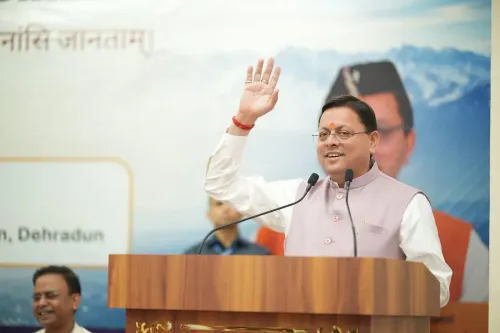
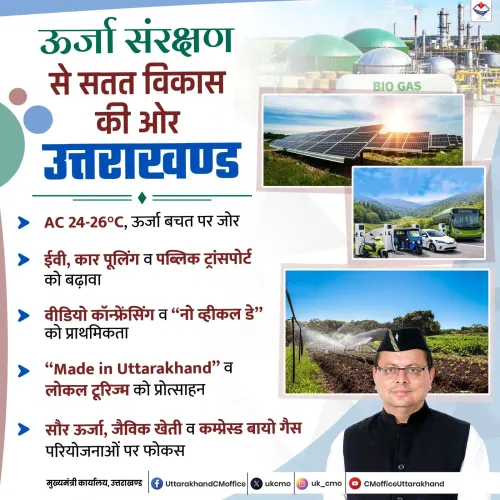
CM Dhami flags Uttarakhand Clean Mobility Policy as green milestone
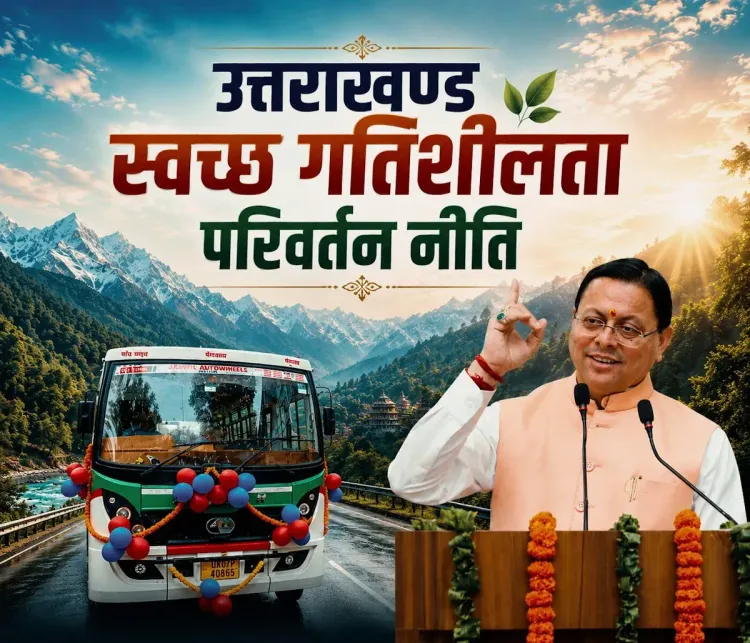
Synopsis
Uttarakhand CM Pushkar Singh Dhami has backed the state's Clean Mobility Transformation Policy as a landmark green step, positioning the ecologically sensitive Himalayan state as a clean-transport leader amid India's broader EV push.
Key Takeaways
CM Pushkar Singh Dhami publicly endorsed the Uttarakhand Clean Mobility Transformation Policy on July 28, 2026 .
The policy is framed as a step toward a 'clean, green, and environment-friendly' Uttarakhand .
Uttarakhand's fragile Himalayan ecology and pilgrimage economy make clean transport especially consequential for the state.
India's national FAME scheme (launched 2015 ) provides the central framework within which state-level clean mobility policies operate.
Specific provisions, incentives, and timelines of the policy have not yet been publicly detailed.
Multiple Indian states have introduced similar EV or clean mobility frameworks, with Uttarakhand now joining that cohort.
A Himalayan state with some of India's most fragile ecosystems just signalled a shift in how it moves. Uttarakhand Chief Minister Pushkar Singh Dhami on Tuesday, July 28, 2026, described the state's newly framed Uttarakhand Clean Mobility Transformation Policy as a significant step toward building a clean, green, and environment-friendly state.
Posting in Hindi, CM Dhami said the policy — 'स्वच्छ गतिशीलता परिवर्तन नीति' (Clean Mobility Transformation Policy) — marks an important stride 'in the direction of building a clean, green, and environment-friendly state.' The framing is deliberate: Uttarakhand sits at the headwaters of the Ganga and Yamuna, and vehicular pollution in its mountain towns and pilgrimage corridors has long been a pressure point for ecologists and residents alike.
Why clean mobility hits differently in the Himalayas
Unlike the Indo-Gangetic plains, Uttarakhand's terrain concentrates exhaust emissions in narrow valleys where dispersal is limited, making the air quality stakes higher per vehicle. The state's identity as a pilgrimage and eco-tourism destination — drawing millions annually to Char Dham sites — adds an economic argument alongside the environmental one: cleaner air is also a tourism asset.
India's central FAME (Faster Adoption and Manufacturing of Electric Vehicles) scheme, launched in 2015, set the national template for clean mobility incentives. Several states have since layered their own EV and clean-transport policies on top of that framework. Uttarakhand's move places it in a growing cohort of states treating green mobility not as a compliance exercise but as a development strategy.
What the policy signals — and what remains to be detailed
The specific provisions, incentive structures, and implementation timelines of the Uttarakhand Clean Mobility Transformation Policy are yet to be publicly detailed. What the Chief Minister's statement does signal is political ownership of the agenda at the top — a necessary condition for any state-level policy to move from announcement to enforcement. The transport sector and Uttarakhand's residents, particularly in high-altitude towns dependent on diesel-run vehicles, will be watching for the fine print.
For a BJP-governed hill state that has consistently positioned itself around environmental stewardship and Himalayan heritage, a clean mobility push also carries a brand logic — aligning governance messaging with the ecology that defines the state's very identity.
The mountains are watching. Now comes the hard part: turning a policy name into a transformed fleet.
Point of View
Framing development through an environmental lens in a Himalayan state is strategically coherent: it neutralises opposition criticism on ecological neglect while appealing to a tourism-dependent constituency. The policy's real test will be in implementation specifics — incentive depth, charging infrastructure rollout, and integration with the state's notoriously difficult mountain terrain. If Uttarakhand can demonstrate a working clean mobility model in high-altitude conditions, it becomes a replicable template for other hill states.
NationPress
28 Jul 2026
Frequently Asked Questions
What is the Uttarakhand Clean Mobility Transformation Policy?
It is a state-level policy announced by the Uttarakhand government, described by Chief Minister Pushkar Singh Dhami as a significant step toward building a clean, green, and environment-friendly state. Specific provisions and timelines have not yet been publicly detailed.
Why is clean mobility important for Uttarakhand?
Uttarakhand's narrow Himalayan valleys trap vehicular emissions, worsening air quality. The state is also a major pilgrimage and eco-tourism hub, making cleaner transport both an environmental and economic priority.
How does this policy relate to India's national EV scheme?
India's central FAME scheme, launched in 2015, provides the national framework for clean mobility. Uttarakhand's policy builds on that foundation, as several states have introduced their own EV or clean-transport policies aligned with national emission-reduction targets.
What did CM Dhami say about the Clean Mobility Policy?
CM Pushkar Singh Dhami stated on July 28, 2026 that the Uttarakhand Clean Mobility Transformation Policy is 'an important step in the direction of building a clean, green, and environment-friendly state.'
Which other Indian states have clean mobility or EV policies?
Multiple Indian states including Delhi, Maharashtra, Rajasthan, and Gujarat have introduced EV or clean mobility policies. Uttarakhand's policy adds a Himalayan state to this growing list, with a focus specific to its fragile ecology.