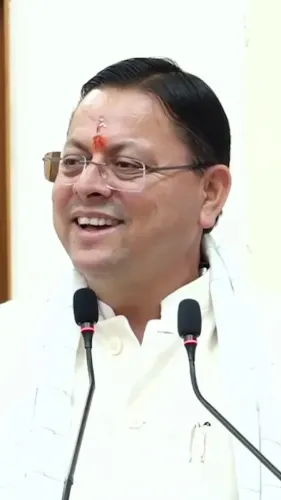
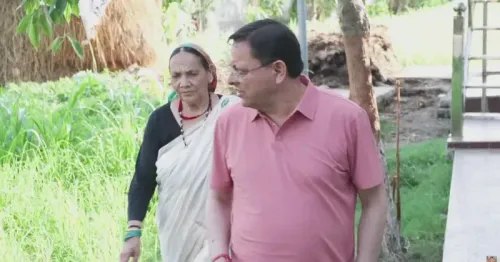
CM Dhami grinds grain by hand, honours Uttarakhand's village heritage
Synopsis
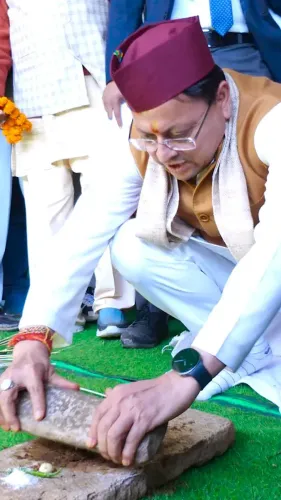
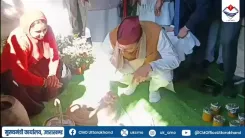
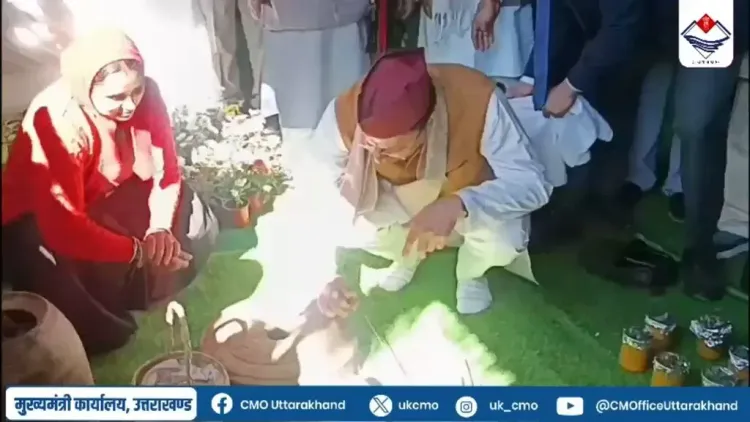
Chief Minister Pushkar Singh Dhami ground grain using a traditional hand mill, with the act shared by the Uttarakhand CMO on 18 November 2026 as a demonstration of respect for the state's Pahari folk culture and rural heritage.
Key Takeaways
CM Pushkar Singh Dhami was filmed grinding grain using a traditional hand mill on 18 November 2026 .
The Chief Minister's Office of Uttarakhand posted the video, citing Dhami's 'sensitivity towards the state's rich folk culture and centuries-old rural heritage.' Traditional grain-grinding — using a stone janto or chakki — was once central to daily life in Uttarakhand 's Pahari hill communities.
The practice has sharply declined due to urbanisation, out-migration, and the spread of electric mills even in remote villages.
Dhami has led Uttarakhand since 2021 , representing the BJP , and has periodically engaged in symbolic cultural gestures connecting his office to rural mountain identity.
In the shadow of the Himalayas, where stone mills have turned for centuries, Chief Minister Pushkar Singh Dhami sat down to grind grain the old way — by hand, in the traditional method that once anchored every Uttarakhand household.
The Chief Minister's Office of Uttarakhand shared the moment on Wednesday, 18 November 2026, posting a video of Dhami working a traditional grain-grinding mill, a practice known locally as the chakki or janto — a cornerstone of Pahari rural life that has steadily receded in an age of electric mills and packaged flour. The post noted that Dhami demonstrated 'sensitivity towards Uttarakhand's rich folk culture and centuries-old rural heritage.'
A tradition that once defined Pahari households
In Uttarakhand's hill villages, manual grain-grinding was never merely a chore — it was a daily ritual woven into the social fabric of mountain communities. Women would gather at the janto, sing folk songs, and exchange the news of the village. The rhythmic grind of stone on grain marked the rhythm of the day. As migration to urban centres accelerated and electric mills arrived even in remote villages, the practice became rare — a living memory more than a living habit. For a state whose identity is inseparable from its agrarian and Himalayan roots, that erosion carries cultural weight. Uttarakhand, carved out of Uttar Pradesh in 2000, has long grappled with demographic and cultural pressures from large-scale out-migration, with entire villages in the hills thinning as younger generations move to the plains.Dhami's signal to rural Uttarakhand
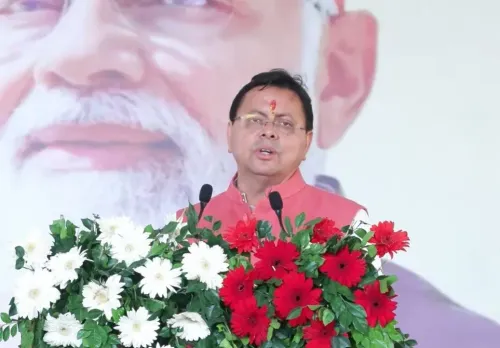
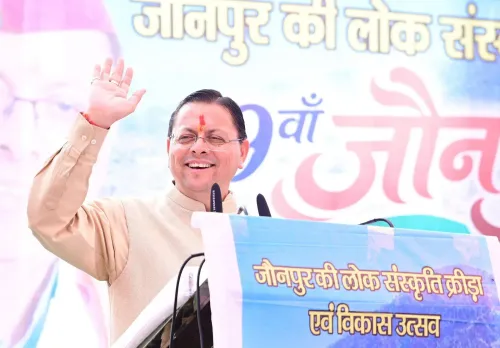
Chief Minister Dhami, who has led the state since 2021 under the BJP, has periodically engaged in cultural gestures that signal solidarity with the state's mountain communities. Symbolic participation in folk practices — whether agricultural rites, local festivals, or traditional crafts — has become a recurring feature of state leadership across India's hill states, where identity politics and cultural pride carry significant electoral and social currency. The grain-grinding demonstration fits that broader pattern: a leader visibly inhabiting the lived experience of a rural constituency, underscoring that the state's development agenda does not come at the cost of its cultural memory. Whether the moment catalyses a broader heritage initiative — a push to document, preserve, or revive traditional Pahari practices — remains to be seen. What it unambiguously signals is that for Dhami and his office, the folk culture of Uttarakhand's villages is not a footnote to governance. It is the story itself.Point of View
Folk culture becomes both a political touchstone and a genuine preservation challenge. The BJP's Uttarakhand unit has consistently leaned on Pahari identity as an electoral and governance frame; symbolic moments like this are part of that sustained narrative. Whether they translate into funded heritage programmes or remain photogenic gestures is the question the state's cultural communities will keep asking.
NationPress
18 Nov 2026
Frequently Asked Questions
What did CM Pushkar Singh Dhami do in this viral video?
CM Pushkar Singh Dhami ground grain using a traditional hand-operated stone mill, demonstrating the centuries-old Pahari practice that was once central to daily life in Uttarakhand's hill villages.
What is a janto or chakki in Uttarakhand culture?
A janto (also called chakki ) is a traditional stone hand-mill used to grind grain in Uttarakhand's mountain villages. It was a daily household tool and a social gathering point, particularly for women, before electric mills became widespread.
Why is traditional grain-grinding significant in Uttarakhand?
It represents a core element of Pahari folk culture and rural heritage. The practice sustained mountain households for centuries and was accompanied by folk songs and community bonding; its decline mirrors the broader erosion of hill-village life due to urbanisation and out-migration.
Who is Pushkar Singh Dhami and when did he become CM?
Pushkar Singh Dhami is the Chief Minister of Uttarakhand, representing the BJP. He has held the post since 2021.
Is Uttarakhand's folk culture at risk of being lost?
Cultural experts and community groups have raised concerns about the decline of Pahari traditions, crafts, and practices as younger generations migrate to urban centres. Uttarakhand has faced significant out-migration from its hill districts since the state was formed in 2000.