CM Dhami: India witnessing cultural renaissance under PM Modi
Synopsis
Uttarakhand Chief Minister Pushkar Singh Dhami declared on June 23, 2026, that India is witnessing a cultural renaissance under PM Modi's leadership. The statement from the official CMO handle reinforces the state's alignment with the central government's decade-long agenda of civilisational heritage revival.
Key Takeaways
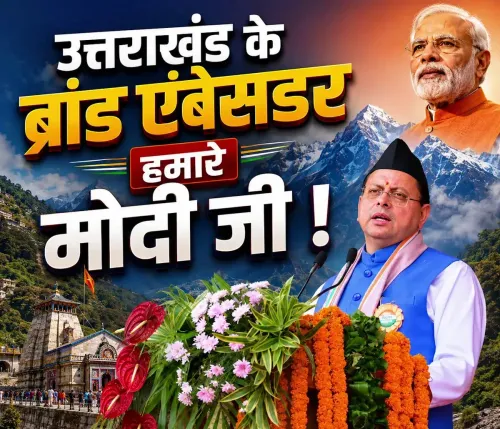
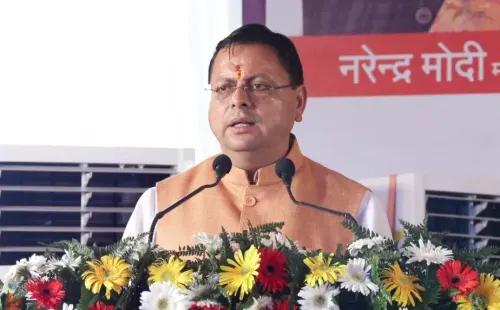
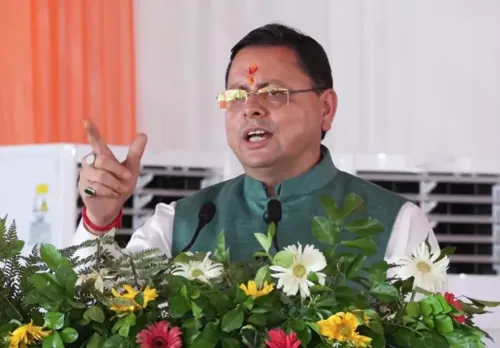
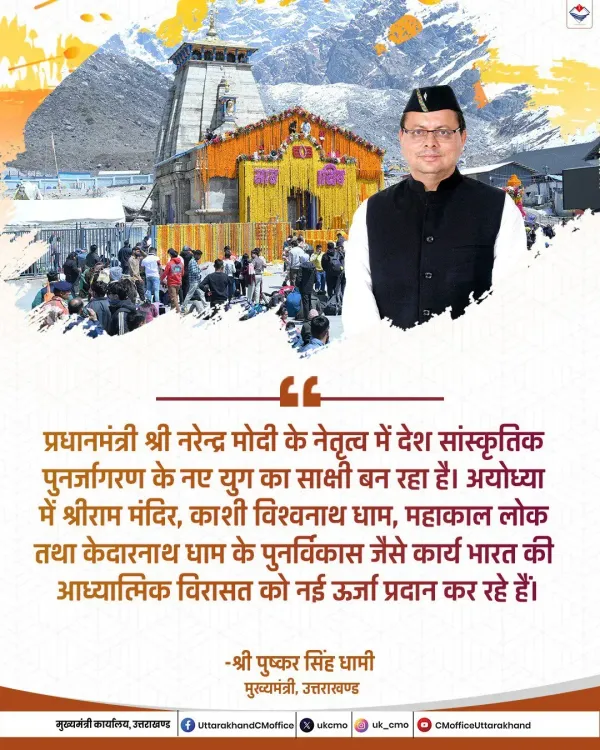
The Chief Minister's Office of Uttarakhand posted CM Pushkar Singh Dhami 's statement on June 23, 2026 , asserting India is witnessing a cultural renaissance under PM Narendra Modi .
Uttarakhand hosts the Char Dham pilgrimage circuit — Kedarnath, Badrinath, Gangotri , and Yamunotri — making it a focal point of India's cultural heritage agenda.
The central government has promoted Indian heritage since 2014 through initiatives including the International Day of Yoga on June 21 and the Ek Bharat Shreshtha Bharat programme launched in 2015 .
The cultural revival framing links domestic policy with temple restoration, traditional knowledge systems, and India's soft-power projection abroad.
Next-phase Char Dham infrastructure upgrades and state heritage conservation budgets are the key policy developments to watch.
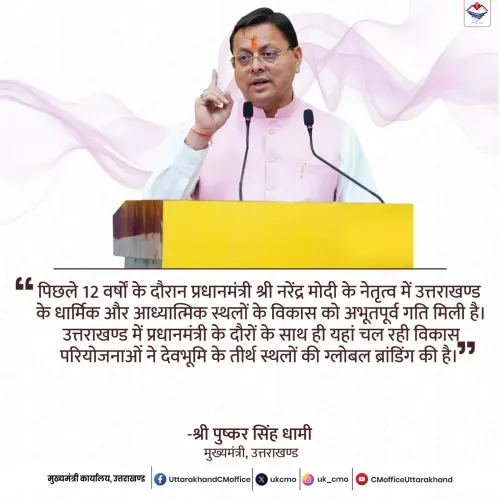
The Chief Minister's Office of Uttarakhand on Tuesday, June 23, 2026, shared a statement by Chief Minister Pushkar Singh Dhami asserting that India is becoming a witness to a cultural renaissance under the leadership of Prime Minister Narendra Modi. The remark, posted on the official CMO handle, reflects the Uttarakhand government's alignment with the central administration's broader civilisational heritage agenda.
Context
CM Dhami's statement — 'Pradhan Mantri Shri Narendra Modi ke netritva mein desh sanskritik punarjagaran ka ban raha sakshi' ('Under the leadership of Prime Minister Narendra Modi, the country is becoming a witness to cultural renaissance') — comes as the BJP-led central and state governments have consistently foregrounded the revival of Indian heritage in their public communication. Uttarakhand, home to the sacred Char Dham pilgrimage circuit, occupies a central position in this cultural narrative. The statement underscores the state government's active participation in what the ruling dispensation frames as a civilisational reawakening.
Policy Backdrop
The cultural renaissance framing draws on a decade-long policy lineage. Since 2014, the central government has promoted Indian heritage through initiatives such as the declaration of June 21 as the International Day of Yoga, now observed in over 190 countries, and the Ek Bharat Shreshtha Bharat programme launched in 2015 to foster inter-state cultural exchanges and awareness of regional traditions. Temple restoration projects, promotion of traditional knowledge systems, and infrastructure upgrades to pilgrimage sites have formed the operational backbone of this agenda. Uttarakhand has been a direct beneficiary, with successive phases of Char Dham highway and connectivity development improving pilgrim access to Kedarnath, Badrinath, Gangotri, and Yamunotri.
Stakeholders and Impact
The statement resonates most directly with pilgrims, cultural organisations, and communities whose livelihoods are tied to religious tourism in the Himalayan state. Uttarakhand receives millions of pilgrims annually, and the political emphasis on cultural revival has translated into sustained infrastructure and conservation spending that benefits local economies. For the broader public, the framing positions cultural policy not merely as heritage preservation but as a statement of national identity — linking domestic practice with India's soft-power projection abroad.
What's Next
Observers will watch for concrete follow-through in the form of next-phase Char Dham infrastructure upgrades and heritage conservation budget allocations in forthcoming Uttarakhand assembly sessions. CM Dhami's statement signals that cultural renaissance will remain a central rhetorical and policy pillar for the state government. How that translates into specific programmes and funding commitments will determine the on-ground impact for pilgrims, local communities, and cultural institutions across the state.
Point of View
Which derives significant economic and political capital from its status as India's spiritual heartland, this alignment is both ideologically consistent and strategically rational. The 'cultural renaissance' framing serves a dual purpose: it reinforces the BJP's core voter base while providing a rhetorical umbrella for infrastructure and tourism spending. The broader arc suggests that cultural policy will remain inseparable from electoral and development strategy in the Hindi heartland through the next election cycle.
NationPress
22 Sept 2026
Frequently Asked Questions
What did Uttarakhand CM Dhami say about PM Modi and cultural renaissance?
CM Pushkar Singh Dhami stated on June 23, 2026, that India is becoming a witness to a cultural renaissance under the leadership of Prime Minister Narendra Modi, as shared by the official Uttarakhand CMO on X.
What is the cultural renaissance initiative by PM Modi?
The term refers to a broader policy agenda pursued since 2014 that includes promoting yoga globally, restoring temples, advancing pilgrimage infrastructure like Char Dham, and fostering inter-state cultural exchanges through programmes such as Ek Bharat Shreshtha Bharat.
What is Uttarakhand's role in India's cultural heritage policy?
Uttarakhand is home to the Char Dham pilgrimage circuit — Kedarnath, Badrinath, Gangotri, and Yamunotri — and has been a central beneficiary of central government investment in pilgrimage infrastructure and heritage conservation.
What is Ek Bharat Shreshtha Bharat?
Ek Bharat Shreshtha Bharat is a programme launched by the central government in 2015 to foster cultural exchanges and awareness of regional heritage across Indian states.
Why does Uttarakhand frequently align with central cultural policy?
Uttarakhand is governed by the BJP, the same party that leads the central government, and the state's economy and identity are closely tied to religious tourism and pilgrimage, making cultural policy alignment both politically and economically advantageous.