CM Dhami Hails Modi's 12-Year Record on Youth Employment
Synopsis
Uttarakhand Chief Minister Pushkar Singh Dhami on 25 July 2026 praised PM Narendra Modi's 12-year tenure for youth empowerment, citing Skill India, Startup India, Mudra Yojana, Digital India, and PMKVY as transformative schemes that shaped India's employment landscape.
Key Takeaways
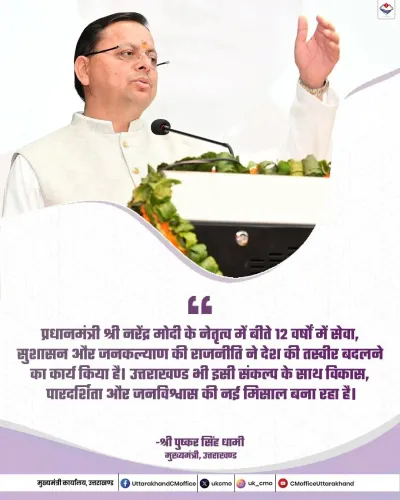
Uttarakhand CM Pushkar Singh Dhami posted praise for PM Narendra Modi 's 12-year tenure on 25 July 2026 .
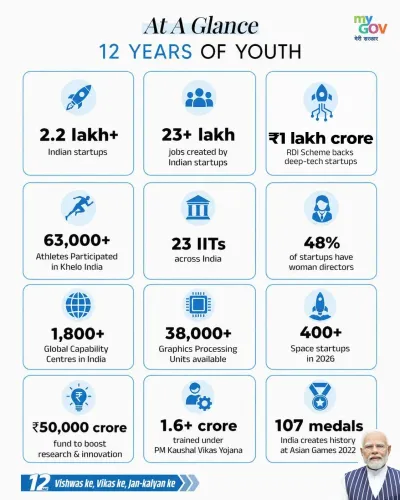
Dhami cited a figure of approximately 17 crore people receiving employment — a claim made in the post and not independently verified.
Five central schemes were specifically named: Skill India Mission , Startup India , Pradhan Mantri Mudra Yojana , Digital India , and Pradhan Mantri Kaushal Vikas Yojana .
All five schemes were launched between 2015 and 2016 as part of the Modi government's demographic dividend strategy.
Dhami described the period as a 'golden chapter' in converting youth energy into nation-building capacity.
Independent verification of employment figures is expected from Ministry of Statistics data and NITI Aayog assessments.
Uttarakhand Chief Minister Pushkar Singh Dhami on Saturday, 25 July 2026 lauded Prime Minister Narendra Modi's twelve-year tenure, calling it a 'golden chapter' dedicated to youth empowerment, skill development, and employment generation across India.
Context
Posting on X, Chief Minister Dhami wrote in Hindi that the 12-year tenure of Prime Minister Modi has been devoted to yuva sashaktikaran, kaushal vikas aur rojgar srijan (youth empowerment, skill development, and employment creation). He cited a figure of approximately 17 crore people having received employment during this period as evidence of the government's commitment — a claim made in the post itself and noted as unverified by independent assessors.
Dhami framed the period not merely as one of job creation but as one that provided youth with a 'powerful platform to become self-reliant,' referencing the broader Atmanirbhar Bharat philosophy that has guided central government policy since 2014.
Policy Backdrop
The Chief Minister specifically named five flagship central schemes: Skill India Mission, Startup India, Pradhan Mantri Mudra Yojana, Digital India, and Pradhan Mantri Kaushal Vikas Yojana. Each was launched between 2015 and 2016 as part of a coordinated effort to address skill gaps and harness India's demographic dividend.
The Skill India Mission, launched in July 2015, aimed to train hundreds of millions in vocational skills. Startup India, announced in January 2016, sought to foster entrepreneurship through tax incentives and funding support. Pradhan Mantri Mudra Yojana, rolled out in April 2015, extended collateral-free micro-credit to small businesses, while Digital India, also launched in July 2015, built the digital infrastructure underpinning e-governance and new-economy employment.
Pradhan Mantri Kaushal Vikas Yojana complemented these by providing certified skill training with a focus on placement outcomes for young Indians seeking formal employment.
Stakeholders and Impact
The primary beneficiaries of these schemes have been Indian youth and aspiring entrepreneurs, particularly those from semi-urban and rural backgrounds who lacked access to formal credit or vocational training. State governments, including Uttarakhand, have acted as implementation partners for each of these centrally sponsored programmes.
By publicly endorsing the central government's record, Chief Minister Dhami links Uttarakhand's own developmental narrative to the broader national policy arc — a pattern common among BJP-governed states where state leaders highlight national scheme outcomes to reinforce alignment with New Delhi's performance metrics.
What's Next
Attention will now turn to the next quarterly employment data release from the Ministry of Statistics and periodic impact assessments by NITI Aayog, which will provide independent benchmarks against which such claims can be evaluated. Parliamentary discussions on skill budget allocations and state-level rollout updates in Uttarakhand are also expected to follow in the coming months.
As India's youth population continues to grow, the effectiveness of these skilling and entrepreneurship schemes in generating sustainable, quality employment will remain a defining political and economic question heading into the next phase of national governance.
Point of View
The statement attempts to ground political loyalty in policy specifics — a messaging shift that reflects the party's broader move toward outcome-based communication. The unverified 17-crore employment figure, however, is likely to draw scrutiny from opposition benches and independent economists, making it a double-edged talking point. For Uttarakhand, the post also signals continued alignment between state and central BJP leadership ahead of any future electoral cycles.
NationPress
25 Jul 2026
Frequently Asked Questions
What did Uttarakhand CM Dhami say about PM Modi's tenure?
CM Pushkar Singh Dhami praised PM Narendra Modi's 12-year tenure as a 'golden chapter' for youth empowerment, citing five flagship schemes and claiming approximately 17 crore people received employment during this period.
What is the Skill India Mission?
The Skill India Mission is a national programme launched in July 2015 to provide vocational training to hundreds of millions of Indians, aimed at addressing skill gaps and harnessing the country's demographic dividend.
What schemes did CM Dhami mention in his post?
CM Dhami specifically named Skill India Mission, Startup India, Pradhan Mantri Mudra Yojana, Digital India, and Pradhan Mantri Kaushal Vikas Yojana as key initiatives driving youth employment and self-reliance.
Is the claim of 17 crore jobs under Modi government verified?
The figure of approximately 17 crore people receiving employment over 12 years was stated by CM Dhami in his post. Independent verification of this specific figure from official statistical sources has not been confirmed.
What is Pradhan Mantri Mudra Yojana?
Pradhan Mantri Mudra Yojana, launched in April 2015, is a central government scheme that provides collateral-free micro-credit loans to small businesses and individual entrepreneurs to support livelihood and employment generation.