CM Dhami Highlights Hillans Herbal Tea Unit as Rural Women's Success
Synopsis
The Uttarakhand CMO has cited the Hillans Herbal Tea Unit in Pauri Garhwal's Dugadda block as the state's most successful example of rural entrepreneurship and women's empowerment under Chief Minister Pushkar Singh Dhami, spotlighting a micro-enterprise model built on Himalayan herbs.
Key Takeaways
The Chief Minister's Office of Uttarakhand posted on 4 July 2026 highlighting the Hillans Herbal Tea Unit in Dugadda block, Pauri Garhwal .
The unit is described by the CMO as the 'most successful example' of rural entrepreneurship and women's empowerment under CM Pushkar Singh Dhami .
The model integrates women's self-help groups with herbal tea processing, a policy approach Uttarakhand has pursued since the early 2000s.
Pauri Garhwal is a hilly district where medicinal and aromatic plant cultivation has long been promoted to support hill livelihoods.
Expansion of similar units to other blocks and potential linkage with the National Rural Livelihood Mission are being watched as next steps.
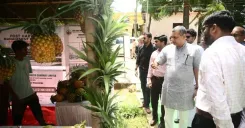
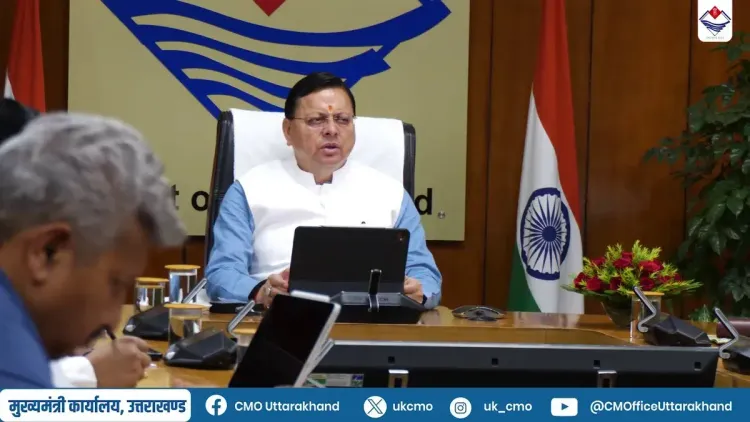
The Chief Minister's Office of Uttarakhand on Saturday, 4 July 2026 highlighted the Hillans Herbal Tea Unit in Dugadda block, Pauri Garhwal, as a flagship example of rural entrepreneurship and women's empowerment under Chief Minister Pushkar Singh Dhami's leadership.
The official post stated that under CM Dhami's leadership, 'Uttarakhand gramin udyamita aur mahila sashaktikaran ki nayi ibarat likh raha hai' — 'Uttarakhand is writing a new chapter in rural entrepreneurship and women's empowerment' — citing the Hillans Herbal Tea Unit as its 'most successful example.'
Context
The Hillans Herbal Tea Unit, located in Dugadda block of Pauri Garhwal district, represents a micro-enterprise model built around the processing of locally grown herbs in the Himalayan region. The unit is presented by the state government as a model of how rural communities, particularly women, can generate sustainable livelihoods from the region's natural biodiversity.
Pauri Garhwal is a hilly district with a significant rural population and a long-standing focus on medicinal and aromatic plant cultivation. Its terrain and climate make it well-suited to herbal farming, which has historically supported hill economies.
Policy Backdrop
Uttarakhand has pursued medicinal and aromatic plant-based livelihoods since the early 2000s, channelling support through women's self-help groups to promote value-addition activities in the herbal sector. The Hillans Herbal Tea Unit fits squarely within this policy lineage, linking biodiversity resources to income generation in remote mountain areas.
The broader approach mirrors similar programmes across other Himalayan states, where micro-enterprises anchored in local herbs and teas have been used as tools to curb out-migration from hill districts. Integrating women's self-help groups with processing units has been a consistent feature of this model across the region.
Stakeholders and Impact
The primary beneficiaries of such herbal processing units are rural women and hill farmers in remote blocks of Uttarakhand. By creating localised value chains — from cultivation to processing and packaging — these units reduce dependence on distant markets and provide income closer to home.
For districts like Pauri Garhwal, which face demographic pressure from out-migration, enterprises of this kind carry particular significance. They offer an economic anchor that keeps working-age populations, especially women, engaged in productive activity within their communities.
What's Next
The state government's emphasis on the Hillans unit as a 'most successful example' signals potential interest in replicating the model across additional blocks in Uttarakhand's hill districts. Observers will watch whether comparable herbal processing units are scaled up and whether they are formally linked to central schemes such as the National Rural Livelihood Mission, which provides institutional and financial backing for exactly this type of women-led rural enterprise.
The spotlight on Dugadda block also raises the question of how the state intends to connect such grassroots successes to broader export and branding opportunities for Uttarakhand's herbal products in national and international markets.
Point of View
Associating his leadership with visible, grassroots success stories in hill districts serves a dual purpose: reinforcing the state's development credentials and addressing the persistent challenge of out-migration from Uttarakhand's remote areas. The Hillans unit also fits into a wider Himalayan-states pattern where herbal micro-enterprises are positioned as a low-capital, high-visibility tool for women's economic inclusion. The real test will be whether this becomes a replicable template or remains an isolated showcase.
NationPress
4 Jul 2026
Frequently Asked Questions
What is the Hillans Herbal Tea Unit in Uttarakhand?
The Hillans Herbal Tea Unit is a rural herbal tea processing enterprise located in Dugadda block of Pauri Garhwal district, Uttarakhand. It has been highlighted by the state's Chief Minister's Office as a model of women's entrepreneurship and rural livelihood generation in the Himalayan region.
Where is Dugadda block located?
Dugadda block is an administrative block within Pauri Garhwal district in the state of Uttarakhand, situated in the hilly terrain of the western Himalayas.
What is CM Pushkar Singh Dhami's role in Uttarakhand's rural development?
Pushkar Singh Dhami has been Chief Minister of Uttarakhand since 2021 and has associated his administration with rural development initiatives, including the promotion of women-led self-help group enterprises in the state's hill districts.
How does Uttarakhand support women's self-help groups in hill areas?
Uttarakhand has promoted medicinal and aromatic plant cultivation and processing through women's self-help groups since the early 2000s, enabling value-addition activities in the herbal sector as a livelihood strategy for remote mountain communities.
What is the National Rural Livelihood Mission and how does it relate to Uttarakhand's herbal units?
The National Rural Livelihood Mission is a central government scheme that provides institutional and financial support for women-led rural enterprises. Herbal processing units like the Hillans unit in Pauri Garhwal are the type of grassroots enterprises that can be formally linked to this mission for scaling up.