CM Dhami holds think-tank dialogue at Uttarakhand Niwas in Delhi
Synopsis
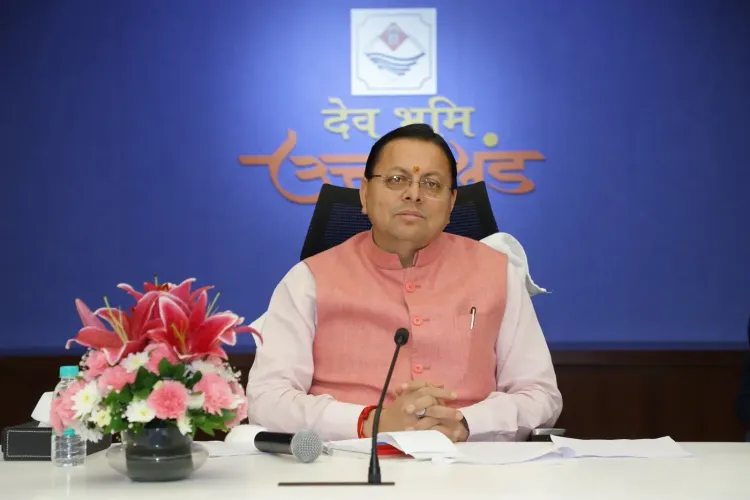
Uttarakhand CM Pushkar Singh Dhami convened a dialogue with state intellectuals at Uttarakhand Niwas in New Delhi on 27 September, receiving suggestions on development, heritage protection, and the push to reverse chronic out-migration from the hills through tourism and self-employment.
Key Takeaways
CM Pushkar Singh Dhami held a structured dialogue with Uttarakhand intellectuals and thinkers at Uttarakhand Niwas, New Delhi on 27 September 2026 .
Discussions covered state development, future opportunities, and public-interest topics, yielding suggestions from participants.
Dhami reiterated his administration's core slogan: the water and youth of the mountains must serve the mountains — a direct reference to keeping talent and resources within the state.
The CM cited positive momentum in reverse migration , attributing it to growth in tourism, self-employment, and local-product economies .
Dhami framed the path ahead as preserving Uttarakhand's Himalayan and cultural heritage while simultaneously pursuing modern economic development.
Specific migration statistics and the identity of participants at the dialogue remain unverified.
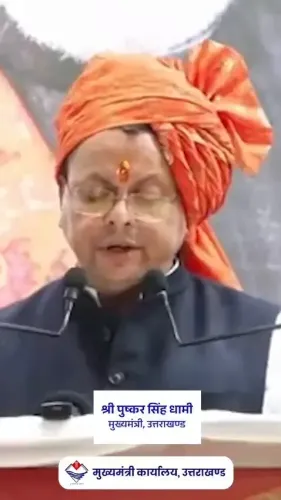
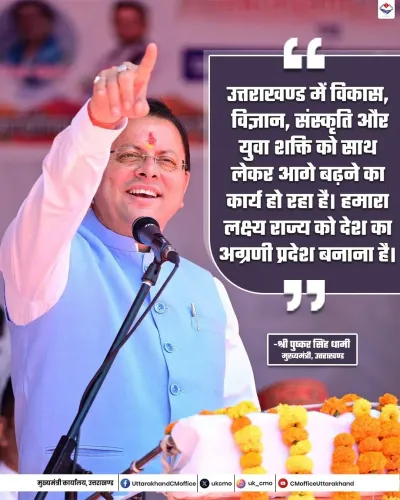
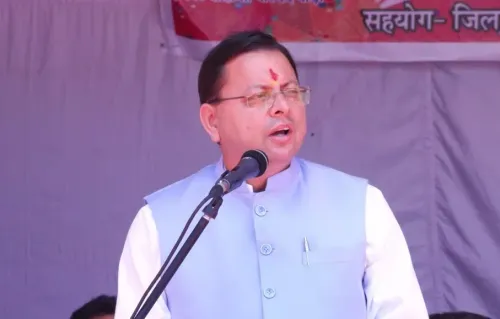
At Uttarakhand Niwas in New Delhi on Sunday, 27 September 2026, Uttarakhand Chief Minister Pushkar Singh Dhami sat down with intellectuals and thinkers from across the state for a wide-ranging conversation on development, heritage, and the single most stubborn challenge the hills have faced since statehood: the steady drain of its people to the plains.
Sharing the outcome on X, CM Dhami wrote — 'पहाड़ का पानी और पहाड़ की जवानी पहाड़ के ही काम आए' ('The water of the mountains and the youth of the mountains must serve the mountains themselves') — a compact phrase that has become something of a north-star slogan for his administration's development agenda.
What the dialogue at Uttarakhand Niwas covered
The meeting brought together what Dhami described as prabuddhjano evam vicharak — informed citizens and thinkers — of the state, convened at the official state residence in the capital. Discussions spanned Uttarakhand's development trajectory, future opportunities, and public-interest concerns, with participants offering suggestions the Chief Minister said he found valuable. The exact roster of attendees and the specific proposals tabled could not be independently confirmed.
Heritage and modernity: Dhami's dual mandate
Uttarakhand, the Himalayan state carved out of Uttar Pradesh in November 2000, carries a layered identity that Dhami invoked explicitly — Himalayan landscapes, river systems, natural beauty, a rich culture, and a distinctive folk heritage. His stated position is that modernisation and heritage protection are not competing goals: the state must walk both paths simultaneously. It is a framing successive Uttarakhand administrations have attempted with varying success since statehood.
Reverse migration: the metric that matters
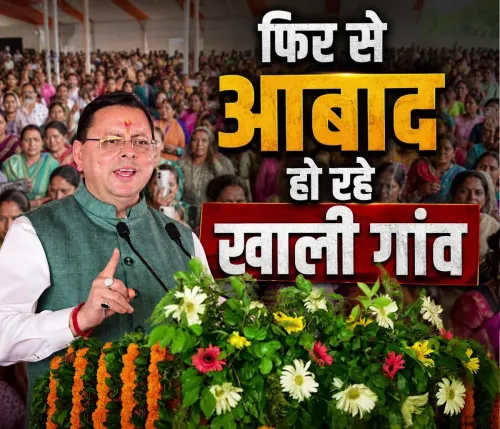
The centrepiece claim in Dhami's post is that reverse migration — people moving back to the hills from urban centres — is now showing 'positive change' in the state, driven by expansion in tourism, self-employment, local products, and broader economic activity. Out-migration from Uttarakhand's hill districts has been a defining demographic anxiety since before the state was even formed, depopulating villages and stressing local economies. Specific migration data to corroborate the trend Dhami cited is unverified and awaits official figures from the state government.
The levers he pointed to — tourism, swarozgar (self-employment), and local-product economies — mirror the policy architecture that Uttarakhand governments have built, adjusted, and rebuilt across multiple administrations. What distinguishes the current moment, his administration argues, is the scale and coherence of execution. Whether the latest budget allocations and scheme rollouts have moved the needle on actual migration patterns is the question analysts and hill communities will be watching.
For a state where ghost villages are a lived reality and where every young person who leaves represents a lost multiplier for the local economy, a genuine reversal of that tide would be far more than a political talking point. It would be a generational shift.
Point of View
Making it harder to contest without seeming anti-hill. The reverse-migration claim, if backed by credible data when it arrives, would be one of the most significant governance wins a Uttarakhand CM could claim since statehood. However, the policy levers cited — tourism and self-employment — have been part of the state's toolkit for two decades, raising the question of whether this cycle is genuinely different in scale or is a refresh of familiar rhetoric ahead of a political calendar. The New Delhi venue and the intellectual-consultation format signals Dhami is building a narrative that plays both to Delhi power corridors and to the aspirational hill electorate simultaneously.
NationPress
28 Sept 2026
Frequently Asked Questions
What did CM Dhami discuss at Uttarakhand Niwas in Delhi?
On 27 September 2026, CM Pushkar Singh Dhami met intellectuals and thinkers from Uttarakhand at Uttarakhand Niwas in New Delhi to discuss the state's development, future opportunities, heritage preservation, and ways to reverse out-migration through tourism and self-employment.
What does 'pahad ka paani aur pahad ki jawaani' mean?
Pahad ka paani aur pahad ki jawaani pahad ke hi kaam aae translates to 'The water of the mountains and the youth of the mountains must serve the mountains themselves.' It is a slogan used by CM Dhami to express the goal of retaining Uttarakhand's natural resources and human capital within the state.
Is reverse migration happening in Uttarakhand?
CM Dhami has stated that positive change in reverse migration is visible in Uttarakhand, driven by tourism, self-employment, and local economic activity. However, specific official migration statistics to confirm this trend have not yet been independently verified.
What is Uttarakhand Niwas in New Delhi?
Uttarakhand Niwas is the official state guest house and residence in New Delhi used by the Uttarakhand government for meetings, official functions, and engagements between the state government and stakeholders visiting the capital.
How long has out-migration been a problem in Uttarakhand?
Out-migration from Uttarakhand's hill districts has been a chronic concern since before the state was formed in November 2000 . Successive governments have tried to address it through tourism promotion, self-employment schemes, and local-product development with mixed results.