CM Dhami flags ropeway work for Kedarnath, Hemkund Sahib

Synopsis
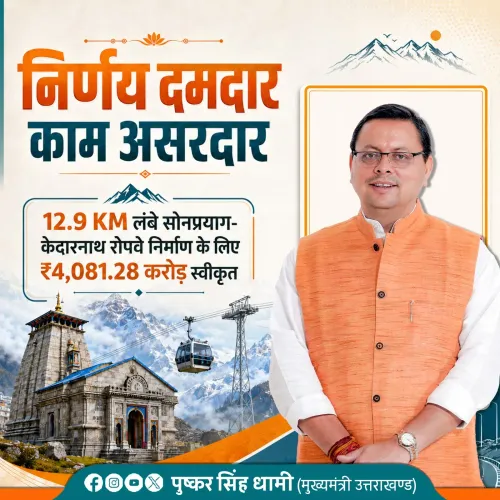
Uttarakhand CM Pushkar Singh Dhami has announced that ropeway construction is under way on the Gaurikund–Kedarnath and Govindghat–Hemkund Sahib corridors under the Centre's Parvatmala Pariyojana, aiming to make pilgrimage travel safer and more accessible for lakhs of devotees each season.
Key Takeaways
CM Pushkar Singh Dhami confirmed on 16 June 2026 that ropeway construction is ongoing on two Uttarakhand pilgrimage corridors.
The two routes are Gaurikund to Kedarnath Dham (Char Dham Hindu shrine) and Govindghat to Hemkund Sahib (Sikh gurudwara).
The projects fall under the Union government's Parvatmala Pariyojana , approved by the Union Cabinet in 2022 .
The stated goal is to make the yatra 'more easy, safe and convenient' for pilgrims, including elderly and differently-abled devotees.
The local tourism sector and hill communities along both corridors are expected to benefit from increased and potentially year-round pilgrim footfall.
Precise construction timelines and funding splits between the Centre and state have not been officially disclosed.
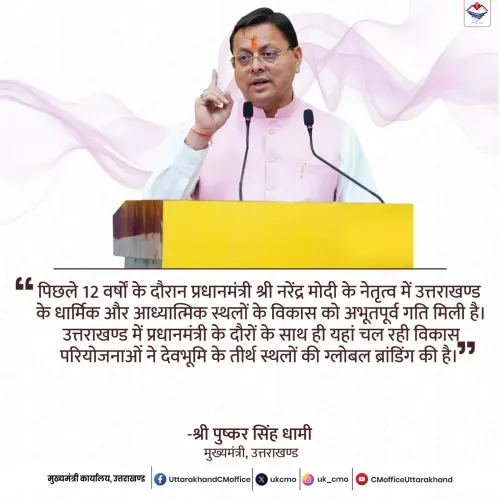
Uttarakhand Chief Minister Pushkar Singh Dhami announced on Tuesday, 16 June 2026 that ropeway construction is under way on two major pilgrimage corridors in the state — from Gaurikund to Kedarnath Dham and from Govindghat to Hemkund Sahib — crediting the projects to the 'double-engine government' led by Prime Minister Narendra Modi.
Context
Posting in Hindi on X, CM Dhami wrote that under Prime Minister Modi's leadership, the state government is taking Uttarakhand's development to new heights. He stated that the ropeway projects are being built to ensure better connectivity to pilgrimage sites, and that they will make the journey for devotees 'adhik sugam, surakshit aur suvidhajanpurn' — 'more easy, safe and convenient.'
The two corridors serve distinct religious communities: the Gaurikund–Kedarnath route is a primary access path to one of the four Char Dham Hindu shrines in the Garhwal Himalayas, while the Govindghat–Hemkund Sahib route leads to a revered Sikh gurudwara situated near Hemkund Lake at high altitude.
Policy Backdrop
The projects fall under the Union government's Parvatmala Pariyojana (National Ropeways Development Programme), approved by the Union Cabinet in 2022 to develop ropeway infrastructure across hilly and pilgrimage zones. The broader Char Dham road connectivity project, launched in 2016, had already sought to upgrade surface access to Kedarnath and other Uttarakhand shrines.
BJP governments at the Centre and in Uttarakhand have consistently prioritised pilgrimage-site connectivity through a combination of roads and ropeways as a pillar of regional development and tourism policy. Similar ropeway proposals have been advanced in Himachal Pradesh and Jammu & Kashmir under the same national framework.
Stakeholders and Impact
The primary beneficiaries are the lakhs of pilgrims who undertake the Char Dham Yatra and Hemkund Sahib Yatra each season, many of whom are elderly or physically challenged and find the steep trekking routes difficult. A functional ropeway is expected to significantly reduce travel time and physical strain on both corridors.
The local tourism sector, including hoteliers, guides, and small traders in towns such as Gaurikund, Sonprayag, and Govindghat, stands to benefit from higher and potentially year-round pilgrim footfall. Hill residents in these remote valleys may also gain improved access to essential services as infrastructure matures around the ropeway stations.
What's Next
Formal completion timelines and funding breakdowns between the Centre and state have not been officially announced. Observers will watch for inauguration milestones ahead of upcoming Char Dham and Hemkund Sahib yatra seasons, which typically draw peak pilgrim numbers between May and November. Any shift in annual pilgrim footfall or safety data on these routes will serve as a key measure of the projects' impact once operational.
Point of View
CM Dhami is also signalling alignment with New Delhi ahead of what are likely to be competitive electoral cycles. The Parvatmala Pariyojana gives these state-level announcements a national policy anchor, lending them institutional credibility beyond routine political messaging. Progress on the ground — particularly before the next major yatra season — will determine whether the projects translate into tangible voter dividends or remain aspirational milestones.
NationPress
15 Sept 2026
Frequently Asked Questions
What is the Kedarnath ropeway project in Uttarakhand?
The Kedarnath ropeway project involves constructing a ropeway from Gaurikund to Kedarnath Dham to provide easier and safer access to the Char Dham pilgrimage site in the Garhwal Himalayas . It is being developed under the Union government's Parvatmala Pariyojana .
What is the Hemkund Sahib ropeway project?
The Hemkund Sahib ropeway will connect Govindghat to Hemkund Sahib , a major Sikh gurudwara located at high altitude in Uttarakhand. The project aims to reduce the steep trek currently required to reach the shrine.
What is Parvatmala Pariyojana?
Parvatmala Pariyojana is the Union government's National Ropeways Development Programme, approved by the Union Cabinet in 2022 , to build ropeway infrastructure in mountainous and pilgrimage areas across India to improve connectivity.
When will the Kedarnath and Hemkund Sahib ropeways be completed?
Precise construction timelines for the Gaurikund–Kedarnath and Govindghat–Hemkund Sahib ropeways have not been officially announced. Observers are watching for formal milestone updates ahead of upcoming yatra seasons.
What is the double-engine government model Dhami refers to?
The 'double-engine government' is a BJP political formulation describing coordinated governance when the same party holds power both at the Centre and in a state — in this case, the Modi government at the national level and the Dhami government in Uttarakhand — enabling faster project approvals and fund flows.