CM Dhami: Rs 4,081 Cr Sonprayag-Kedarnath Ropeway Approved
Synopsis
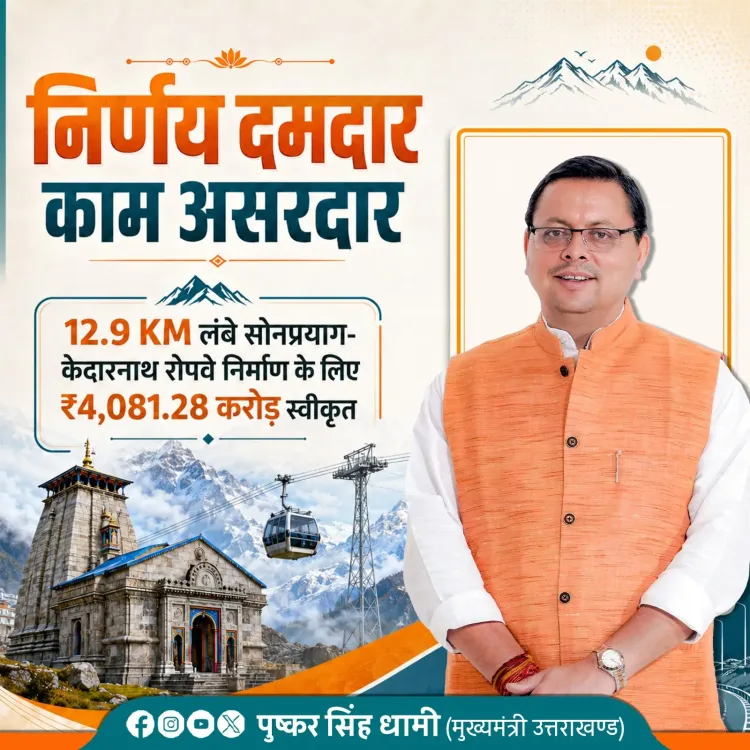
Uttarakhand CM Pushkar Singh Dhami has announced a central government approval of ₹4,081.28 crore for a 12.9-km Sonprayag-Kedarnath ropeway. The project aims to make the Char Dham pilgrimage safer and more accessible while boosting local employment and the regional economy.
Key Takeaways
The central government has approved ₹4,081.28 crore for the 12.9-km Sonprayag-Kedarnath ropeway in Uttarakhand.
CM Pushkar Singh Dhami made the announcement on 23 May 2026 , attributing the approval to PM Narendra Modi's leadership.
The ropeway is designed to make the Char Dham Yatra safer, faster and more accessible, especially for elderly and differently-abled pilgrims.
The project is expected to generate local employment and strengthen the economy of remote Rudraprayag district communities.
Environmental and forest clearances, along with contract awards, remain key milestones before construction can begin.
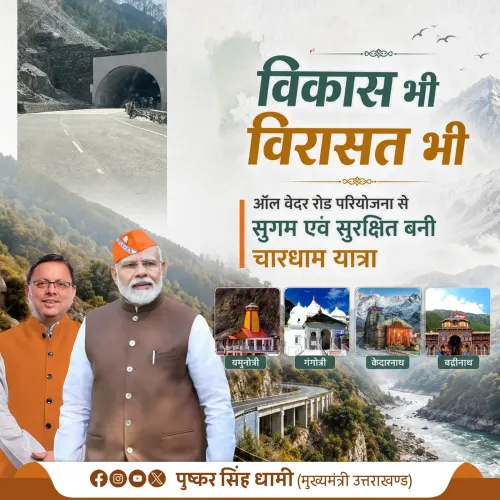
The initiative aligns with the PM Gati Shakti multimodal connectivity framework and the earlier Char Dham Pariyojana launched in 2016.
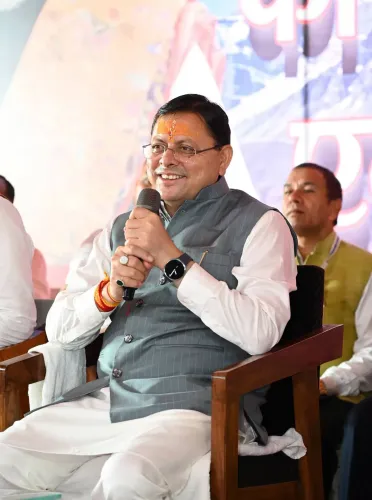
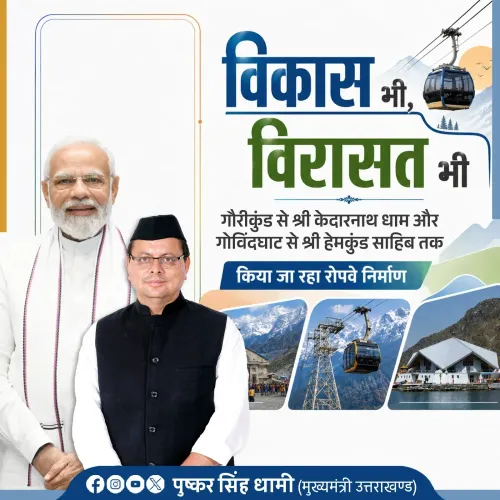
Uttarakhand Chief Minister Pushkar Singh Dhami announced on Saturday, 23 May 2026 that the central government has approved ₹4,081.28 crore for the construction of a 12.9-kilometre Sonprayag-Kedarnath ropeway, describing the project as a major step toward making the annual Char Dham Yatra safer and more accessible for pilgrims.
Context
In a post on X, CM Dhami credited the leadership of Prime Minister Narendra Modi for the approval, stating that religious tourism and infrastructure in Uttarakhand were gaining 'continuous new momentum' under his guidance. He described the project as ambitious, saying it would make the pilgrimage 'more convenient, safe and time-bound' — suगम, सुरक्षित एवं समयबद्ध [convenient, safe and time-bound] — while also strengthening regional development, employment generation and the local economy.
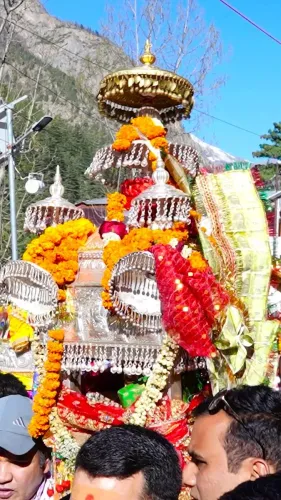
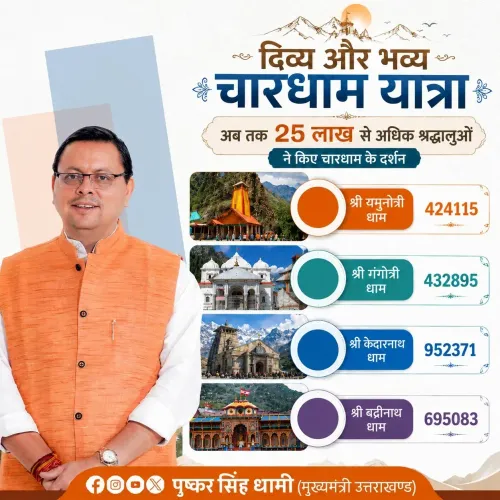
The Kedarnath shrine, one of the four sacred sites of the Char Dham circuit, currently draws several hundred thousand devotees each yatra season. Pilgrims must undertake a steep trek from Sonprayag, a journey that has historically posed challenges of altitude, weather and physical endurance, particularly for elderly and differently-abled visitors.
Policy Backdrop
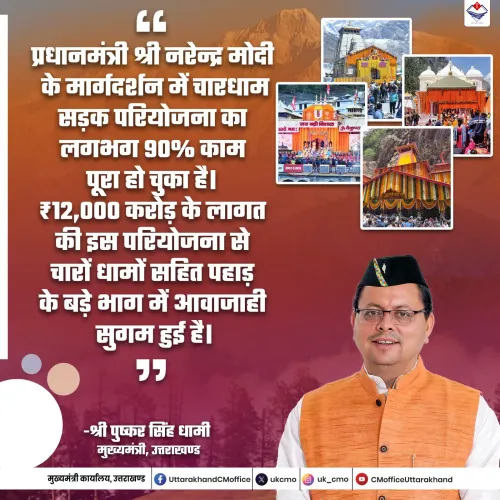
The ropeway approval builds on a decade-long push to modernise connectivity in the Himalayas. The Char Dham Pariyojana, approved in 2016, focused on widening and upgrading roads to the four shrines. By 2018–19, the Uttarakhand government had begun actively exploring ropeway options to supplement road access and reduce vulnerability to landslides — a perennial hazard on mountain routes.
The project fits within the broader PM Gati Shakti framework, under which the central government has promoted multimodal transport combining roads, tunnels and aerial ropeways across mountain states. Similar cable-car and ropeway initiatives have been undertaken in other Himalayan states for both tourism and strategic access, signalling a national pattern rather than an isolated intervention.
Stakeholders and Impact
The most direct beneficiaries are the lakhs of pilgrims who make the Kedarnath journey each season. A functional ropeway is expected to significantly cut travel time, reduce physical strain and lower the risk of weather-related disruptions on the trek route. Differently-abled and elderly devotees, who currently face the greatest barriers, stand to gain the most.
Beyond pilgrims, local communities in Sonprayag and surrounding villages in Rudraprayag district are expected to see direct economic benefits through construction employment and long-term tourism-linked livelihoods. The Uttarakhand government has consistently framed such projects as twin-purpose: spiritual access and economic uplift for remote Himalayan districts.
What's Next
The financial approval marks an early but critical milestone. The project will still require the award of construction contracts and the completion of environmental and forest clearances before ground work can begin in earnest. Terrain complexity and ecological sensitivities in the high-altitude zone are likely to shape both the timeline and the engineering approach.
Observers will watch closely whether the ropeway can be made operational ahead of a future Char Dham Yatra season — a politically and logistically significant benchmark for both the state and central governments. If executed on schedule, the Sonprayag-Kedarnath ropeway could become a template for similar aerial connectivity projects at other pilgrimage and tourism destinations across the Himalayas.
Point of View
Reinforcing their narrative of faith-linked development in Uttarakhand. By framing a large infrastructure outlay as a pilgrim welfare measure, the announcement blurs the line between governance and electoral optics in a state where Char Dham sentiment carries significant political weight. The project also slots neatly into the Modi government's Gati Shakti multimodal connectivity push, giving it a policy legitimacy that extends beyond religious symbolism. The real test will be in execution — timely clearances, contract awards and on-ground progress will determine whether the approval translates into a functioning ropeway or remains a headline.
NationPress
7 Oct 2026
Frequently Asked Questions
What is the Sonprayag-Kedarnath ropeway project?
It is a proposed 12.9-kilometre aerial ropeway connecting Sonprayag to the Kedarnath shrine in Uttarakhand, designed to provide pilgrims a faster, safer and more accessible alternative to the existing steep mountain trek.
How much money has been approved for the Kedarnath ropeway?
The central government has approved ₹4,081.28 crore for the construction of the Sonprayag-Kedarnath ropeway, as announced by Uttarakhand Chief Minister Pushkar Singh Dhami on 23 May 2026.
Who announced the Kedarnath ropeway approval?
Uttarakhand Chief Minister Pushkar Singh Dhami announced the approval on X, crediting Prime Minister Narendra Modi's leadership for the project's progress.
How will the Kedarnath ropeway benefit pilgrims?
The ropeway is expected to significantly reduce travel time, ease physical strain on elderly and differently-abled devotees, and lower the risk of weather and landslide disruptions that affect the current trek route.
When will the Sonprayag-Kedarnath ropeway be ready?
No operational date has been officially announced. The project still requires construction contract awards and environmental and forest clearances before work can begin; the timeline will depend on how swiftly those processes are completed.