CM Dhami Launches Phase 2 of 'Jan-Jan Ki Sarkar' Outreach Camps
Synopsis
Uttarakhand CM Pushkar Singh Dhami has launched the second phase of 'Jan-Jan Ki Sarkar, Jan-Jan Ke Dwar', a 15-day camp drive delivering multi-department welfare services at block and Nyaya Panchayat levels. The first phase had served over 5 lakh citizens across the state.
Key Takeaways
Uttarakhand CM Pushkar Singh Dhami announced the second phase of 'Jan-Jan Ki Sarkar, Jan-Jan Ke Dwar' on 4 July 2026 .
Camps will run for 15 days at all block and Nyaya Panchayat levels across the state.
Multiple government departments will deliver welfare services from a single location to reduce unnecessary office visits.
The first phase of the campaign benefited more than 5 lakh citizens across Uttarakhand.
The initiative targets citizens with limited access to district offices, particularly in remote hill areas.
The programme aims for 'quick, effective and transparent' resolution of public grievances at the grassroots level.
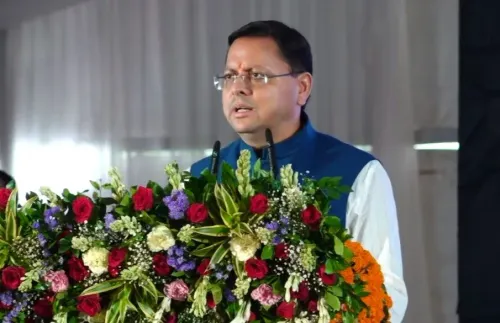
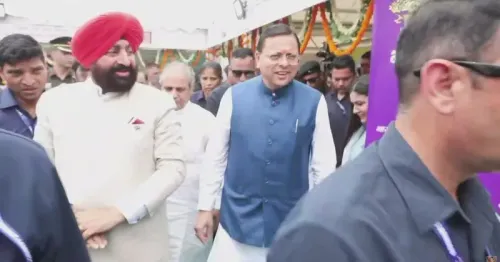
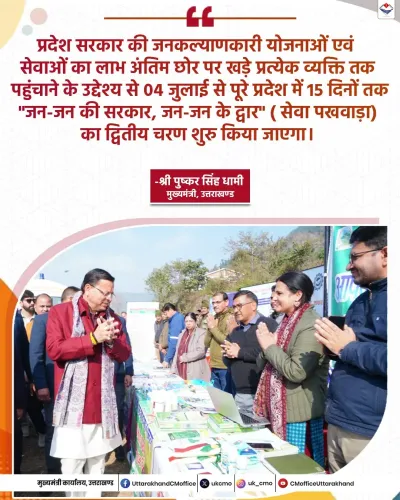
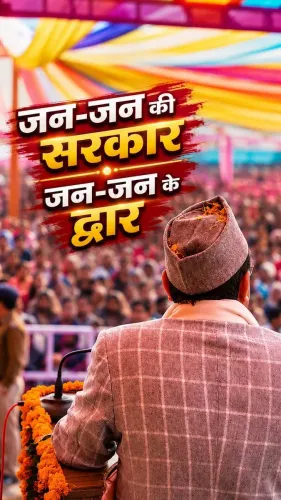
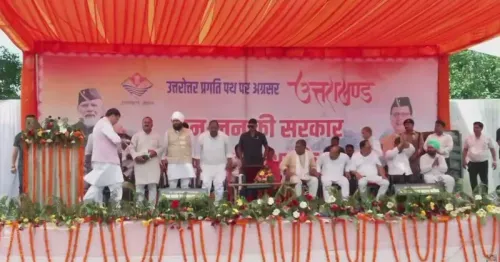
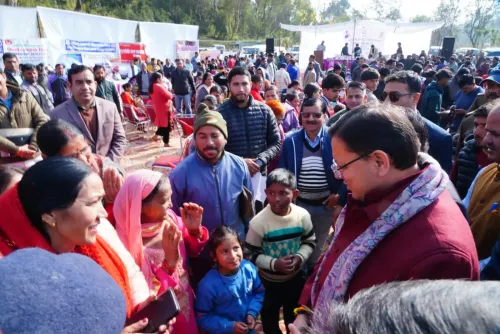
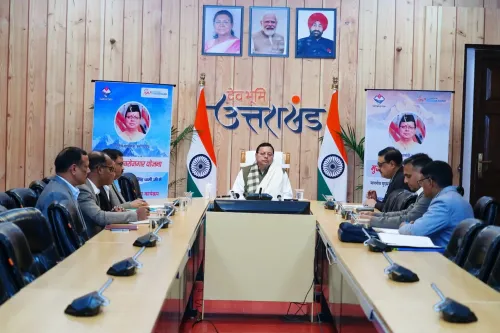
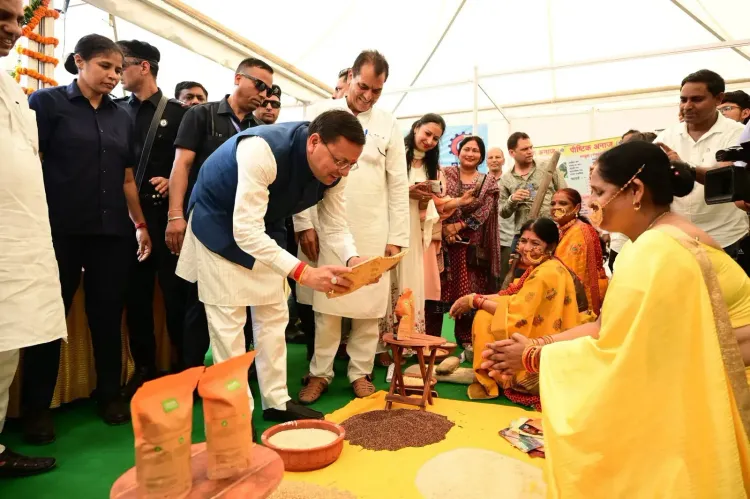
Uttarakhand Chief Minister Pushkar Singh Dhami announced on Saturday, 4 July 2026 that the second phase of the state government's grassroots outreach initiative, 'जन-जन की सरकार, जन-जन के द्वार' ('Government of the People, at the Doorstep of Every Citizen'), will be held across all blocks and Nyaya Panchayats in the state over the next 15 days. The camps are designed to bring welfare services from multiple government departments to a single location, sparing citizens the need to visit separate government offices.
Context
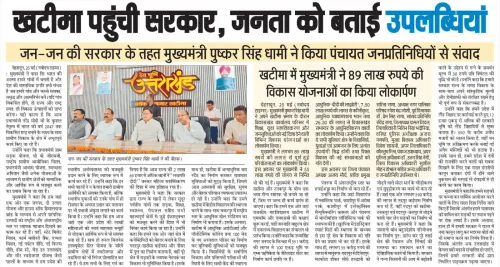
In his post, CM Dhami stated that the camps will ensure 'quick, effective and transparent resolution' of citizens' problems by consolidating departmental services at the block and Nyaya Panchayat level. He noted that during the first phase of the same campaign, more than 5 lakh citizens across Uttarakhand had availed services through these camps — a figure the government has cited as evidence of strong public demand for doorstep delivery.
The Nyaya Panchayat is the lowest tier of the state's rural administrative structure, making it the most accessible point for residents of remote hill villages. By anchoring the camps at this level, the initiative targets populations who face the greatest difficulty travelling to district or tehsil headquarters.
Policy Backdrop
Since Dhami first assumed office in 2021, the state government has prioritised decentralised grievance redressal as a governance cornerstone. The 'जन-जन की सरकार, जन-जन के द्वार' programme is a direct expression of that priority, bundling services from the revenue, social welfare, health and other departments into periodic physical camps rather than relying solely on digital portals.
The approach reflects a broader pattern seen across several BJP-governed states, where mass outreach camps are used to both address implementation gaps in centrally sponsored schemes and project a visible, accessible face of government. Physical camps remain essential in Uttarakhand given the state's mountainous terrain and pockets of limited internet connectivity.
Stakeholders and Impact
The primary beneficiaries are rural citizens and welfare recipients in Uttarakhand's hills and plains, particularly those eligible for social pension, ration cards, land records, health schemes and other entitlements that typically require multiple office visits. The first phase's reported figure of over 5 lakh beneficiaries suggests significant latent demand for consolidated service delivery at the village level.
Block-level officials, Nyaya Panchayat representatives and staff from participating departments are the key implementing actors. The success of each camp depends heavily on inter-departmental coordination and the presence of authorised officials with the power to resolve grievances on the spot rather than merely register them.
What's Next
The government's own benchmark — the 5 lakh-plus beneficiary count from phase one — sets a floor against which phase two will be measured. Observers will watch whether beneficiary numbers, grievance disposal rates and the range of departments participating improve in this iteration. A key longer-term question is whether the state converts the most effective elements of these camps into permanent facilitation centres at the block level, institutionalising what is currently a periodic campaign into a standing service-delivery infrastructure.
Point of View
Jan-Jan Ke Dwar' is as much a governance exercise as a political one — the Dhami administration is using a tangible, visible deliverable to reinforce its 'accessible government' brand ahead of continued scrutiny of its development record in a geographically challenging state. The 5 lakh beneficiary figure from phase one gives the campaign a credible baseline, but the real test lies in grievance disposal quality, not footfall. Across BJP-ruled states, such outreach camps have become a standard template for demonstrating administrative reach, but their long-term value depends on whether they seed permanent infrastructure or remain periodic spectacles. For Uttarakhand specifically, where terrain isolates large sections of the electorate from district-level services, institutionalising this model could have genuine governance dividends.
NationPress
4 Jul 2026
Frequently Asked Questions
What is 'Jan-Jan Ki Sarkar, Jan-Jan Ke Dwar' in Uttarakhand?
'Jan-Jan Ki Sarkar, Jan-Jan Ke Dwar' is a state government outreach initiative that sets up camps at block and Nyaya Panchayat levels to deliver welfare services from multiple departments at a single location, reducing the need for citizens to visit separate government offices.
How long will the second phase of the Jan-Jan Ke Dwar camps run?
The second phase will run for 15 days, covering all blocks and Nyaya Panchayats across Uttarakhand, as announced by Chief Minister Pushkar Singh Dhami on 4 July 2026.
How many people benefited from the first phase of Jan-Jan Ke Dwar?
More than 5 lakh citizens across Uttarakhand availed services during the first phase of the 'Jan-Jan Ki Sarkar, Jan-Jan Ke Dwar' campaign, according to CM Dhami's post.
What services are provided at Jan-Jan Ke Dwar camps?
The camps consolidate welfare services from multiple government departments — including revenue, social welfare and health — at a single venue, allowing citizens to resolve grievances and access entitlements without visiting separate offices.
Why is Uttarakhand holding block-level service camps?
Uttarakhand's mountainous terrain makes it difficult for many residents to reach district or tehsil offices. Block and Nyaya Panchayat-level camps bring government services closer to remote communities with limited connectivity and mobility.