CM Dhami Marks 51 Years Since 1975 Emergency
Synopsis
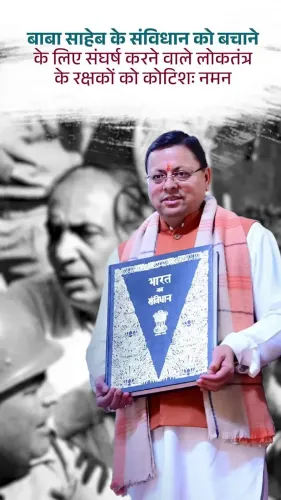
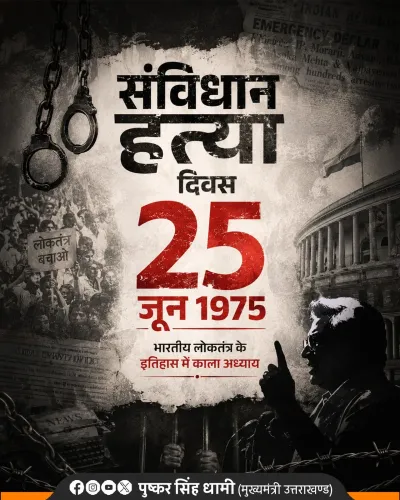
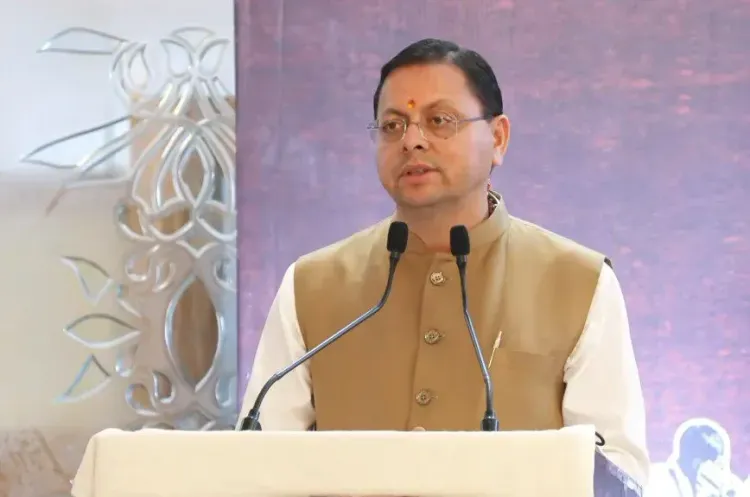
On the 51st anniversary of the 1975 national Emergency, Uttarakhand Chief Minister Pushkar Singh Dhami called it a 'murder of the Constitution,' with the statement issued through the official Chief Minister's Office on 25 June 2026.
Key Takeaways
The Chief Minister's Office of Uttarakhand issued the statement on 25 June 2026 , exactly 51 years after the Emergency was declared.
CM Pushkar Singh Dhami described the 1975 Emergency as a 'murder of the Constitution' driven by the 'arrogance of power.' The national Emergency was proclaimed on 25 June 1975 under Article 352 on the advice of PM Indira Gandhi and lasted 21 months .
During the Emergency, fundamental rights were suspended and press censorship was imposed across India.
Annual 25 June statements by BJP-governed states form part of a consistent political narrative contrasting current governance with the Congress-era record.
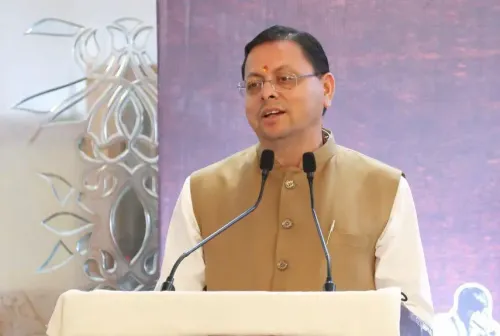
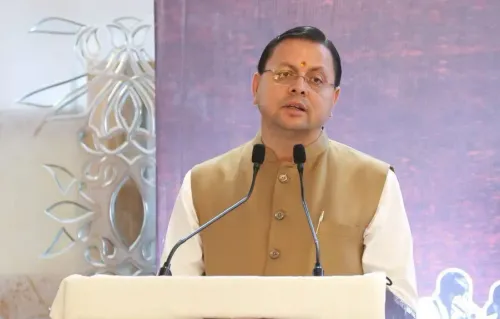
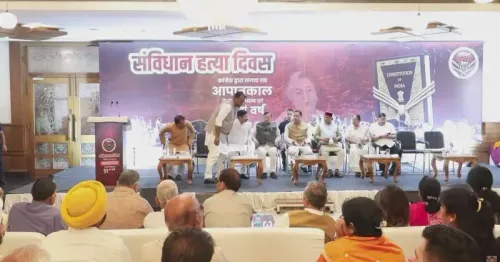
The Chief Minister's Office of Uttarakhand on 25 June 2026 quoted Chief Minister Pushkar Singh Dhami marking the 51st anniversary of the declaration of the 1975 national Emergency, calling it an assault on the Constitution and on Indian democracy that continues to resonate with citizens.
Context
The post quotes CM Dhami as saying: 'Aaj se 51 varsh poorv satta ke ahankaar mein doobee tatkaleen sarkar ne Samvidhan ki hatya ki thi' — 'Fifty-one years ago today, the government of the time, drunk on the arrogance of power, murdered the Constitution.' He added that the blow dealt to democracy that day 'still aches in the hearts of Indians.'
The statement was issued through the official Chief Minister's Office (@ukcmo) account on 25 June 2026, the precise calendar date on which the Emergency was proclaimed in 1975.
Policy Backdrop
The national Emergency of 25 June 1975 was proclaimed under Article 352 of the Indian Constitution by President Fakhruddin Ali Ahmed on the advice of then Prime Minister Indira Gandhi. It remained in force for 21 months, during which fundamental rights were suspended, the press was censored, and thousands of political opponents were detained without trial.
The Emergency ended in March 1977 after the Congress party's defeat in general elections. It remains one of the most contested episodes in post-independence Indian political history, with successive governments invoking it as a reference point in debates about constitutional propriety and executive overreach.
Stakeholders and Impact
Annual 25 June commemorations have become a consistent feature of the political calendar for BJP-governed states, positioning the party as a defender of constitutional values against what it characterises as a historical precedent of democratic subversion by the Indian National Congress. Uttarakhand, governed by the BJP since 2017, has issued such statements in previous years as well.
For ordinary citizens and civil society, the anniversary serves as an occasion to reflect on press freedom, judicial independence, and the limits of executive authority — themes that remain relevant to contemporary democratic discourse in India.
What's Next
Similar commemorative statements are expected from other BJP-ruled state governments and central leadership on this date. The anniversary is also likely to be referenced in upcoming parliamentary sessions and on Constitution Day (26 November), reinforcing the broader political narrative around constitutional safeguards. Opposition parties, particularly the Congress, are expected to issue counter-statements contextualising the Emergency within the political circumstances of the time.
Point of View
Using the Emergency's anniversary to draw a sharp contrast with the Congress party's governance legacy. The framing — 'murder of the Constitution' — is deliberately constitutional in register, echoing language used by the Supreme Court and civil liberties advocates in the post-Emergency period. As India approaches the next general election cycle, such commemorations serve a dual purpose: reinforcing party identity among the base while keeping the Emergency's memory alive as a cautionary political narrative. The consistency of this messaging across BJP-ruled states suggests coordinated communication strategy rather than isolated state-level sentiment.
NationPress
25 Jun 2026
Frequently Asked Questions
What is the 1975 Emergency in India?
The 1975 national Emergency was a 21-month period from 25 June 1975 to March 1977 during which the Indian government, led by PM Indira Gandhi , suspended fundamental rights, imposed press censorship, and detained political opponents under Article 352 of the Constitution.
Why is 25 June significant in Indian politics?
25 June marks the anniversary of the proclamation of the 1975 Emergency , making it an annual occasion for political parties — especially the BJP — to issue statements on democracy and constitutional rights.
What did Uttarakhand CM Dhami say about the Emergency?
CM Pushkar Singh Dhami stated that 51 years ago , the government of the time, 'drunk on the arrogance of power, murdered the Constitution' and dealt a blow to democracy whose pain 'still aches in the hearts of Indians.'
Who declared the 1975 Emergency in India?
The Emergency was proclaimed by President Fakhruddin Ali Ahmed on the advice of Prime Minister Indira Gandhi on 25 June 1975 under Article 352 of the Indian Constitution.
How do BJP-ruled states commemorate Emergency Day?
BJP -governed states typically issue official statements on 25 June each year, framing the Emergency as an example of Congress-era democratic subversion and positioning the BJP as a defender of constitutional values.