CM Dhami Meets Uttarakhand Mahaparishad, Backs Diaspora Culture Push
Synopsis
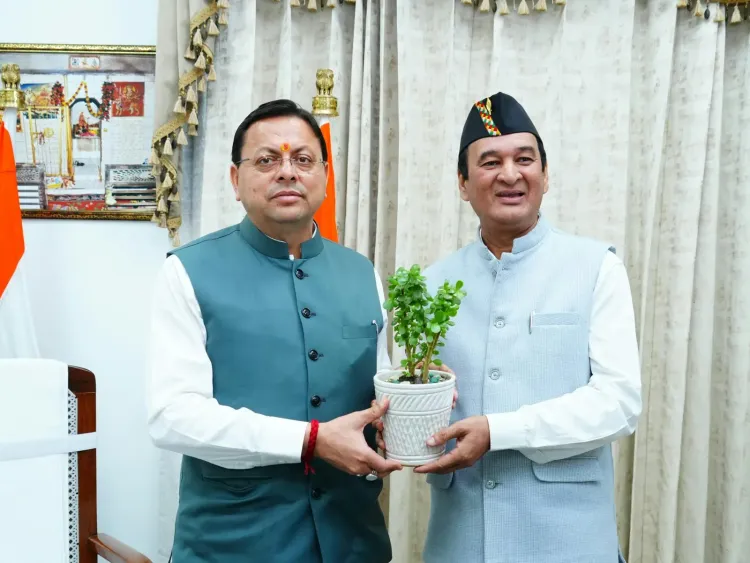
Chief Minister Pushkar Singh Dhami met Uttarakhand Mahaparishad representative Bharat Singh Bisht at the CM Residence on October 14, 2026, discussing preservation of the state's folk culture and diaspora outreach, and accepting an invitation to a Mahaparishad programme.
Key Takeaways
Bharat Singh Bisht of Uttarakhand Mahaparishad, Lucknow met CM Pushkar Singh Dhami at the Chief Minister's Residence on October 14, 2026 .
Bisht invited the Chief Minister to attend an upcoming Uttarakhand Mahaparishad programme.
Discussions covered preservation of Uttarakhand's folk culture, languages, traditions, and cultural heritage.
CM Dhami described the state's cultural heritage as its 'distinct identity' and called preservation a 'collective responsibility'.
The state government is working to promote Uttarakhand's cultural legacy at national and international levels.
The role of diaspora organisations in connecting pravasi Uttarakhandis to their homeland culture was a key discussion point.
Hundreds of thousands of Uttarakhandis live far from their mountain homeland — and a Lucknow-based cultural body wants to make sure the mountains never leave them. Chief Minister Pushkar Singh Dhami received Bharat Singh Bisht, representative of the Uttarakhand Mahaparishad, Lucknow, at the Chief Minister's Residence on Wednesday, October 14, 2026, where Bisht extended a formal invitation for the CM to attend an upcoming Mahaparishad programme.
The meeting moved well beyond calendar logistics. Discussions centred on preserving and promoting Uttarakhand's folk culture, languages, traditions, and cultural heritage — with particular focus on the role that social and cultural organisations play in keeping the state's diaspora connected to its roots and in transmitting those traditions to the next generation.
Dhami frames culture as 'collective responsibility'
Speaking at the meeting, CM Dhami said that Uttarakhand's rich folk culture, traditions, and spiritual heritage are the state's vishisht pehchaan — distinct identity. 'Their preservation and promotion is a collective responsibility,' he said. He added that the state government is continuously working to give the state's cultural heritage recognition at both the national and international level.
The Chief Minister also emphasised the importance of efforts by pravasi Uttarakhandis — those settled outside the state — to stay connected with the culture, traditions, and social concerns of their homeland. It was a signal that the government views diaspora organisations not as peripheral, but as active partners in cultural stewardship.
Why Lucknow's Mahaparishad matters
The Uttarakhand Mahaparishad is a cultural body based in Lucknow that represents migrants from Uttarakhand in Uttar Pradesh and organises events to keep state traditions — including Garhwali and Kumaoni language, music, and festival customs — alive outside the hills. Its existence is a direct product of Uttarakhand's demographic reality: the state has historically seen high out-migration to the plains, leaving large diaspora communities in cities like Lucknow, Delhi, and Dehradun's neighbouring urban centres.
Uttarakhand itself was carved out of Uttar Pradesh in November 2000, and the preservation of a distinct Himalayan cultural identity was central to the rationale for statehood. More than two decades on, that identity remains an active political and social project — not a settled one.
Diaspora outreach as state strategy
Indian hill states facing sustained out-migration have increasingly turned to diaspora engagement as a tool of both soft power and social cohesion. For Uttarakhand, folk forms like Jagar, Chholiya dance, and the Kumaoni and Garhwali languages represent heritage that requires active institutional support to survive generational drift. By personally receiving the Mahaparishad representative and signalling willingness to attend its programme, Dhami is reinforcing a pattern his government has pursued: presenting cultural promotion as a governance priority alongside infrastructure and economy.
The details of the specific programme to which the CM was invited have not yet been announced. What is clear is that the state is treating its scattered diaspora — not just its resident population — as stakeholders in Uttarakhand's cultural future.
Point of View
Institutionalising ties with organisations like the Mahaparishad gives the state government a presence in plains cities where lakhs of Uttarakhandis live and vote in state elections. The emphasis on national and international cultural recognition also reflects ambitions to leverage Uttarakhand's spiritual and heritage brand — Char Dham, Himalayan folk traditions — for tourism and identity politics simultaneously. Whether these meetings translate into concrete funding or policy for language preservation remains the harder question.
NationPress
15 Oct 2026
Frequently Asked Questions
What is the Uttarakhand Mahaparishad?
The Uttarakhand Mahaparishad is a cultural organisation based in Lucknow that represents Uttarakhand migrants settled in Uttar Pradesh and works to preserve the state's folk traditions, languages, and festivals outside the hills.
Why did Bharat Singh Bisht meet CM Pushkar Singh Dhami?
Bharat Singh Bisht, representative of the Uttarakhand Mahaparishad, met CM Dhami on October 14, 2026 to invite him to an upcoming Mahaparishad programme and discuss cultural heritage preservation.
What did CM Dhami say about Uttarakhand's cultural heritage?
CM Dhami said Uttarakhand's folk culture, traditions, and spiritual heritage are the state's distinct identity, called their preservation a collective responsibility, and said the state government is working to promote this heritage nationally and internationally.
What languages and traditions are at stake in Uttarakhand's cultural preservation effort?
Key traditions include Garhwali and Kumaoni languages, folk music forms like Jagar, and dance traditions like Chholiya, all of which face generational erosion as large numbers of Uttarakhandis migrate to plains cities.
When was Uttarakhand formed and why was cultural identity important?
Uttarakhand was formed in November 2000 after separation from Uttar Pradesh, and preserving the region's distinct Himalayan cultural identity was a central argument for statehood from the very beginning.