CM Dhami: Over 33,600 Benefit from Swarozgar Yojana 2.0
Synopsis
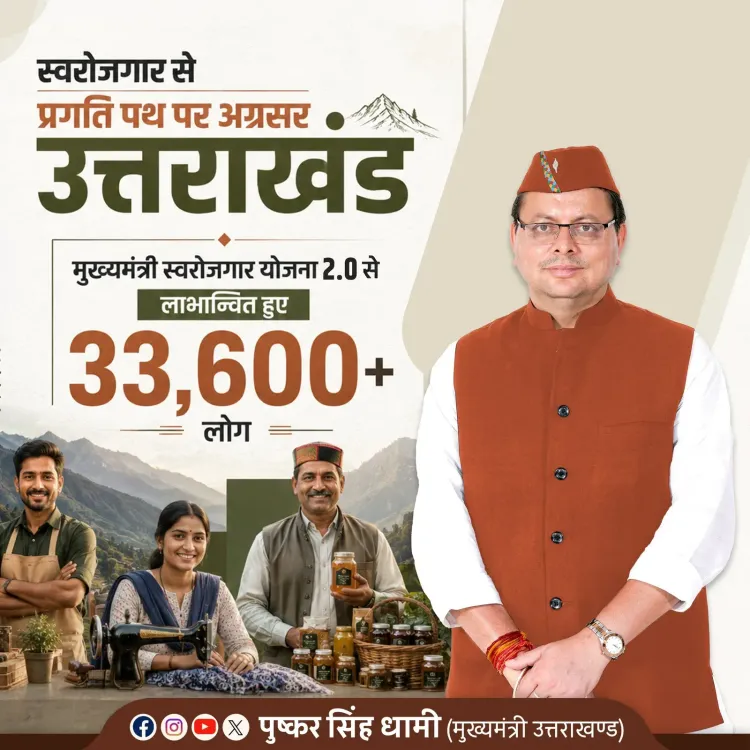
Uttarakhand CM Pushkar Singh Dhami announced on 17 August 2026 that Mukhya Mantri Swarozgar Yojana 2.0 has benefited over 33,600 people, providing financial aid to youth to launch businesses and create local employment in the migration-prone hill state.
Key Takeaways
CM Pushkar Singh Dhami announced on 17 August 2026 that Mukhya Mantri Swarozgar Yojana 2.0 has benefited over 33,600 people in Uttarakhand.
The scheme provides financial assistance to youth to start their own businesses and generate local employment.
The original Swarozgar Yojana was launched around 2021 ; the 2.0 version expands its reach and refines the support model.
Uttarakhand faces chronic out-migration due to limited local industry, making self-employment schemes a key economic strategy for the state.
The initiative aligns with the national Atmanirbhar Bharat framework, positioning local entrepreneurship as a structural solution to migration.
Future budget allocations and independent impact assessments will determine whether the scheme's scale is sustained and expanded.
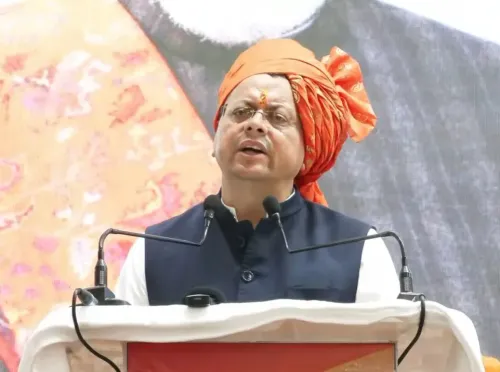
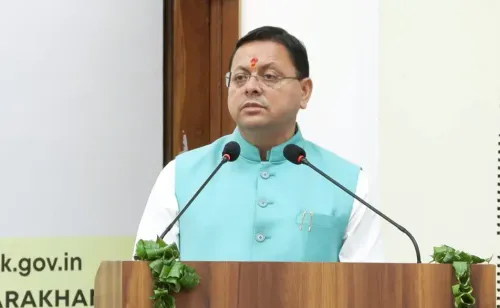
Uttarakhand's hills have long exported their youth to distant cities — but Chief Minister Pushkar Singh Dhami says the tide is turning. On Monday, 17 August 2026, Dhami took to X to announce that the state's flagship self-employment initiative, Mukhya Mantri Swarozgar Yojana 2.0, has now benefited more than 33,600 people — a milestone his government is framing as proof that local enterprise can compete with the pull of migration.
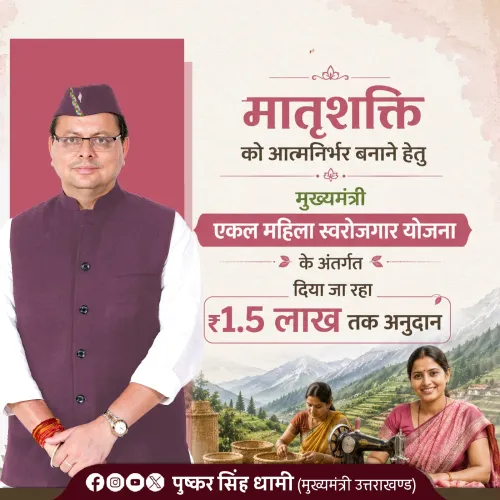
In his post, Dhami wrote: 'Mukhya Mantri Swarozgar Yojana 2.0 ke madhyam se 33,600 se adhik log laabhanvit hue hain' — 'More than 33,600 people have been benefited through Mukhya Mantri Swarozgar Yojana 2.0.' He added that the scheme not only provides financial assistance to youth to start their own businesses but enables them to become self-reliant and, in turn, create employment opportunities for others.
What Swarozgar Yojana 2.0 Does — and Why Uttarakhand Needs It
Uttarakhand is one of India's most migration-prone states. Decades of limited local industry in its mountainous terrain have pushed working-age residents toward the plains — draining villages and straining the rural economy. The original Mukhya Mantri Swarozgar Yojana, launched around 2021, was designed to break that pattern by giving aspiring entrepreneurs direct financial backing to set up small businesses at home.
The 2.0 version of the scheme represents an upgrade of that architecture, expanding outreach and refining the subsidy-and-loan model to reach more beneficiaries across the state. The government's stated logic is a multiplier effect: each new micro-entrepreneur who receives support does not merely become self-sufficient — they hire locally, keeping more economic activity within Uttarakhand's borders.
Atmanirbhar Bharat's Mountain Chapter
Dhami's announcement slots neatly into the broader national Atmanirbhar Bharat framework championed by the BJP at the Centre — which prioritises domestic self-reliance at every level, from household to state. For a hill state where geography constrains large-scale industry, self-employment schemes are not just welfare — they are economic strategy.
The scheme's beneficiary count of 33,600-plus is the headline figure Dhami's government is putting forward; independent assessments of its on-ground impact and the next tranche of budget allocations will be the real test of whether those numbers translate into durable livelihoods.
If the scheme's multiplier logic holds, Uttarakhand's next state budget session will be watched closely for fresh targets — and for whether the government can show that 33,600 beneficiaries is a floor, not a ceiling.
Point of View
600 beneficiary figure, if independently validated, would represent meaningful scale for a hill state with a modest population base. The scheme also gives the Dhami government a tangible Atmanirbhar Bharat deliverable ahead of any electoral cycle, tying state-level welfare to the Centre's broader economic narrative. The real political test comes in the next budget — whether allocations expand or plateau will signal how seriously the government views this as a structural fix versus a headline programme.
NationPress
17 Aug 2026
Frequently Asked Questions
What is Mukhya Mantri Swarozgar Yojana 2.0?
Mukhya Mantri Swarozgar Yojana 2.0 is an Uttarakhand government scheme that provides financial assistance to youth to start their own businesses, aiming to promote self-employment and reduce out-migration from the state.
How many people have benefited from Swarozgar Yojana 2.0 in Uttarakhand?
According to CM Pushkar Singh Dhami's announcement on 17 August 2026, more than 33,600 people have benefited from the scheme.
When was Mukhya Mantri Swarozgar Yojana launched in Uttarakhand?
The original Mukhya Mantri Swarozgar Yojana was launched around 2021 by the Uttarakhand government to support youth entrepreneurship, with the 2.0 version representing an upgrade of that programme.
What is the goal of Uttarakhand's self-employment scheme?
The scheme aims to provide financial support to aspiring entrepreneurs so they can start businesses locally, become self-reliant, and create employment for others — helping to curb the state's long-standing migration problem.
How does Swarozgar Yojana 2.0 relate to Atmanirbhar Bharat?
The scheme aligns with the national Atmanirbhar Bharat policy by promoting local self-reliance and entrepreneurship at the state level, particularly relevant for a hill state like Uttarakhand where large-scale industry is limited by geography.