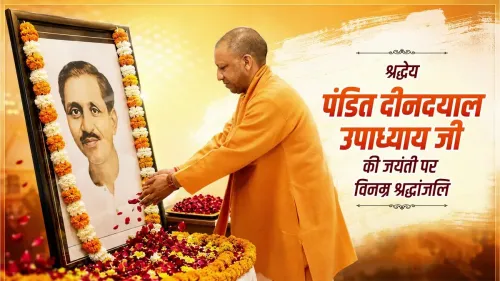
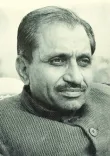
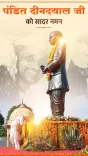
CM Dhami pays tribute to Deendayal Upadhyay on birth anniversary
Synopsis
Uttarakhand CM Pushkar Singh Dhami marked Pandit Deendayal Upadhyay's birth anniversary on September 25, invoking the BJP ideologue's Integral Humanism philosophy and reaffirming his government's commitment to bringing marginalised communities into the development mainstream.
Key Takeaways
Pandit Deendayal Upadhyay's birth anniversary falls on September 25 and is marked annually across BJP-led governments as an ideological touchstone.
Upadhyay formulated Integral Humanism through a series of lectures in 1965 ; the BJP adopted it as its official doctrine.
CM Pushkar Singh Dhami pledged that the Uttarakhand government is working to connect 'deprived and needy' sections to the mainstream of development, drawing inspiration from Upadhyay's philosophy.
Dhami has served as Uttarakhand Chief Minister since 2021 , making inclusive welfare delivery a stated governance priority.
BJP-led state governments consistently frame welfare programmes as practical extensions of Antyodaya — Upadhyay's principle of prioritising the last person in society.
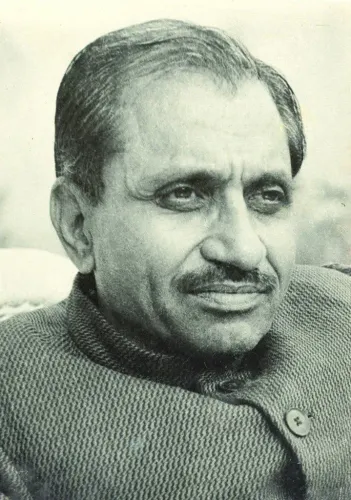
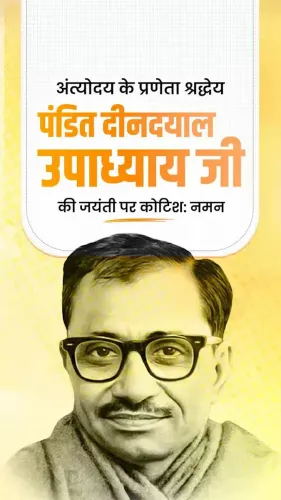
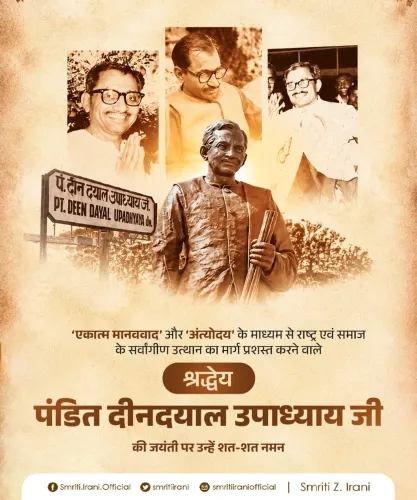
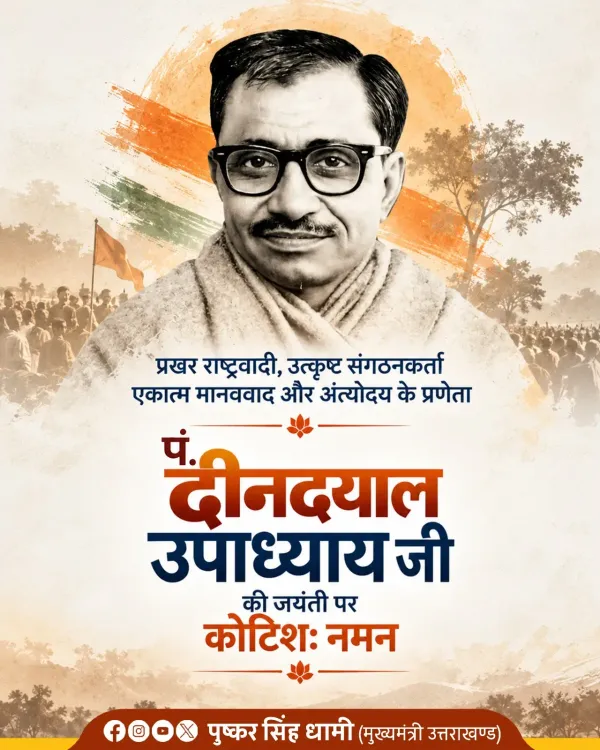
On the birth anniversary of Pandit Deendayal Upadhyay, Uttarakhand Chief Minister Pushkar Singh Dhami offered reverence to the ideologue whose philosophy of Integral Humanism continues to shape BJP's governing doctrine — and pledged that his government's work for the marginalised draws direct inspiration from that legacy.
Posting on Friday, September 25, 2026, Dhami wrote in Hindi: 'Ekātm Mānavvād ke praṇetā' — 'the pioneer of Integral Humanism' — saluting Upadhyay as a 'rāṣṭrasevā ke mahān sādhak', a great devotee of national service who dedicated his entire life to the upliftment of every section of society. 'Inspired by your ideas,' Dhami stated, 'our government is also working diligently to connect the deprived and needy sections of society to the mainstream of development.'
Who was Deendayal Upadhyay and why does BJP invoke him every September 25?
Pandit Deendayal Upadhyay was the principal ideologue of the Bharatiya Jana Sangh — the BJP's predecessor — who delivered a landmark series of lectures in 1965 laying out the philosophy of Integral Humanism. The doctrine argued for a uniquely Indian path to development, one centred on the holistic well-being of the Antyodaya — the last person in the queue — rather than imported Western or Soviet models.
The Bharatiya Janata Party formally adopted Integral Humanism as its official ideological doctrine, making Upadhyay not merely a historical figure but a living policy reference point. His September 25 birth anniversary has become a fixed moment in the BJP political calendar: central and state leaders use it to reaffirm the party's philosophical moorings and link ongoing welfare schemes to his vision of inclusive growth.
Dhami's Uttarakhand governance framed as Integral Humanism in action
By explicitly connecting his government's outreach to 'deprived and needy' communities with Upadhyay's thought, CM Dhami — who has led Uttarakhand since 2021 — positions the state's welfare agenda as ideological continuity, not merely administrative routine. The framing is deliberate: Integral Humanism's core demand is that development must reach society's outermost margins before it can be called complete.
Uttarakhand's mountain geography and high proportion of remote, underserved villages give that framing particular resonance. Welfare delivery in a state where roads often end before the last hamlet does is a real governance challenge — one Dhami has repeatedly cited as central to his administration's mandate.
As the state moves into its next fiscal cycle, budget allocations and scheme implementation reports targeting marginalised communities in Uttarakhand will be the concrete test of how far the tribute translates into policy outcomes.
Point of View
BJP chief ministers insulate their social-spending choices from purely electoral readings and present them as moral obligations rooted in party doctrine. For Dhami specifically, the framing reinforces his positioning as an ideologically grounded leader ahead of future electoral cycles in a state where development gaps between hills and plains remain electorally sensitive. The tribute is ceremonial in form but carries a calibrated policy signal: inclusive development in Uttarakhand is not a concession — it is the doctrine.
NationPress
25 Sept 2026
Frequently Asked Questions
Who was Pandit Deendayal Upadhyay?
Pandit Deendayal Upadhyay was the principal ideologue of the Bharatiya Jana Sangh, the BJP's predecessor, best known for formulating Integral Humanism — a philosophy of holistic, India-centric development — through a series of lectures in 1965.
What is Integral Humanism in Indian politics?
Integral Humanism is the political philosophy developed by Deendayal Upadhyay that argues development must centre on the holistic well-being of every individual, especially the most marginalised, using a distinctly Indian framework rather than Western or Soviet models. The BJP adopted it as its official doctrine.
Why is September 25 significant for the BJP?
September 25 is Pandit Deendayal Upadhyay's birth anniversary. The BJP marks the date each year with tributes and policy reaffirmations, using it as an occasion to link current governance with the party's foundational ideological principles.
What did CM Dhami say about Deendayal Upadhyay?
CM Pushkar Singh Dhami paid tribute to Upadhyay as the 'pioneer of Integral Humanism' and a 'great devotee of national service,' stating that his government draws inspiration from Upadhyay's ideas to connect deprived and needy sections of society to the mainstream of development.
How long has Pushkar Singh Dhami been Chief Minister of Uttarakhand?
Pushkar Singh Dhami has served as Chief Minister of Uttarakhand since 2021.