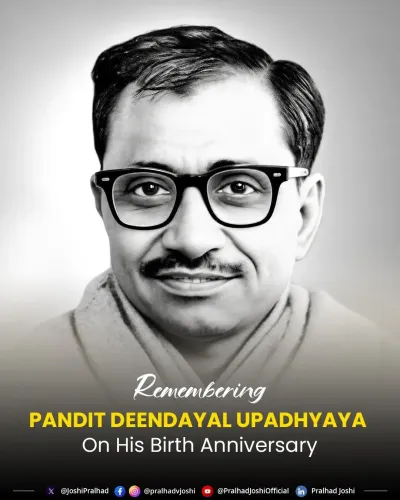
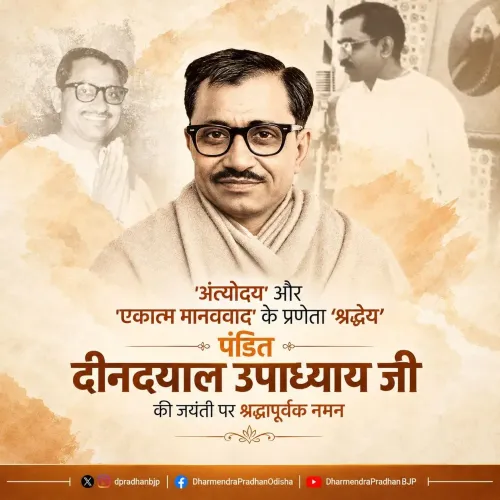
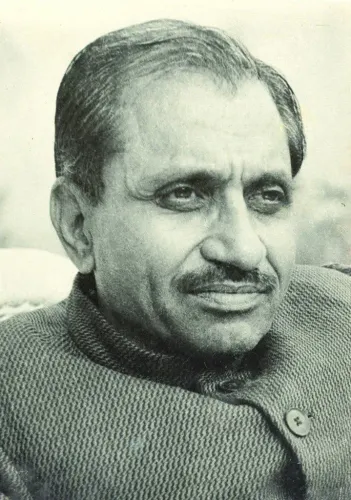
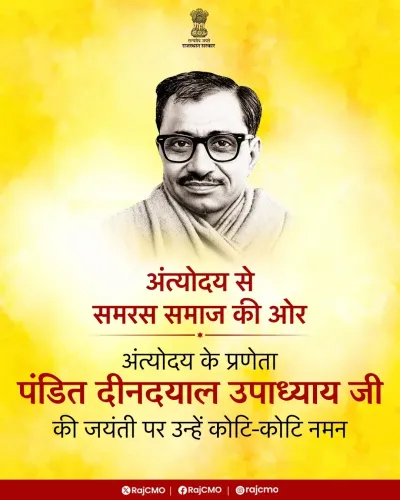
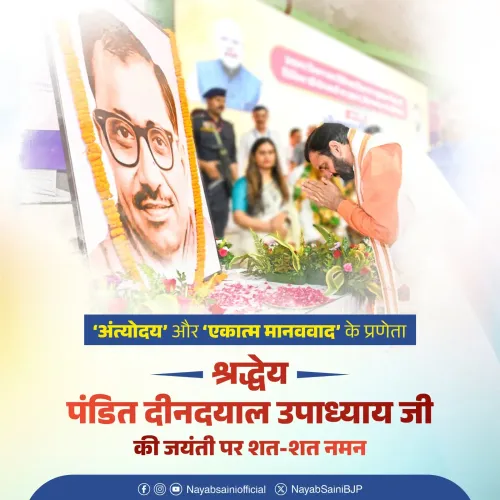
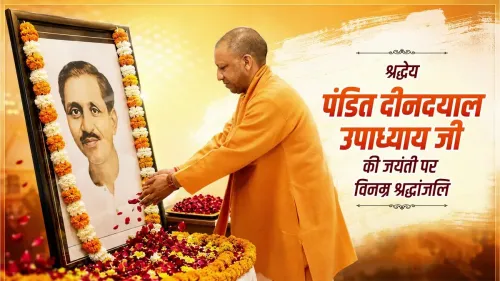
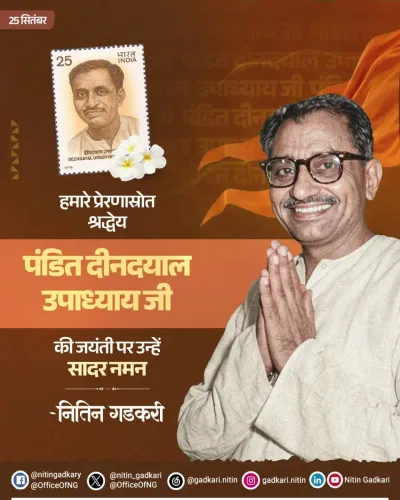
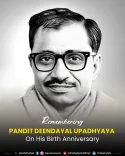
Piyush Goyal pays tribute to Deendayal Upadhyay on birth anniversary
Synopsis
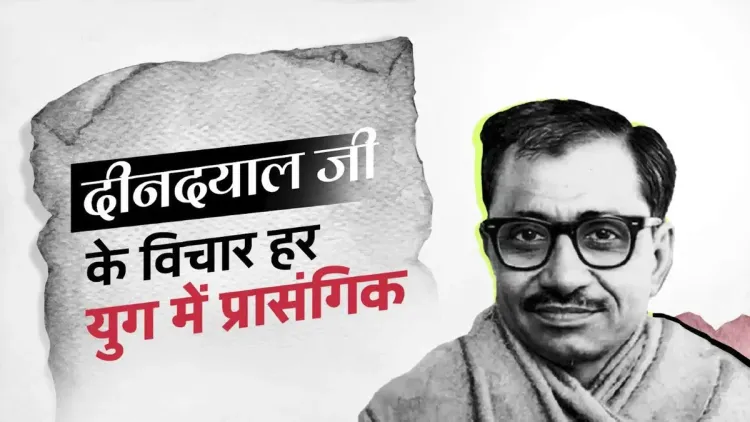
Union Commerce Minister Piyush Goyal marked Pandit Deendayal Upadhyay's birth anniversary on 25 September 2026, honouring the BJP's founding ideologue and invoking his philosophies of Integral Humanism and Antyodaya as guides for national development.
Key Takeaways
Union Commerce and Industry Minister Piyush Goyal paid tribute to Pandit Deendayal Upadhyay on his birth anniversary, 25 September 2026 .
Goyal invoked Upadhyay's twin philosophies: Integral Humanism ( Ekatma Manavavad ) and Antyodaya — upliftment of the last person in society.
Upadhyay was the founding ideologue of the Bharatiya Jana Sangh , the predecessor party to today's BJP.
He articulated Integral Humanism in a landmark lecture series in 1965 , positioning it as an alternative to both capitalism and socialism.
The 25 September birth anniversary is observed annually by BJP leaders as a day of ideological rededication.
On the birth anniversary of one of independent India's most consequential ideological architects, Union Commerce and Industry Minister Piyush Goyal paid tribute to Pandit Deendayal Upadhyay on Friday, 25 September 2026, honouring the thinker whose philosophy continues to shape the BJP's governing vision.
Posting in Hindi on X, Goyal wrote: 'राष्ट्र प्रथम और जनसेवा को जीवन का ध्येय बनाने वाले' — 'one who made nation-first and public service the purpose of life' — Pandit Deendayal Upadhyay showed India the path to becoming self-reliant, self-respecting, and harmonious. His tribute described Upadhyay's twin pillars — Integral Humanism (Ekatma Manavavad) and the philosophy of Antyodaya (upliftment of the last person in society) — as an enduring inspiration for the holistic development of the nation.
The man behind Integral Humanism and Antyodaya
Pandit Deendayal Upadhyay was a founding ideologue of the Bharatiya Jana Sangh, the political predecessor of today's BJP. His philosophy of Integral Humanism, articulated in a landmark series of lectures in 1965, rejected both Western capitalism and Soviet-style socialism, arguing instead for a uniquely Indian development model rooted in 'Chiti' — the soul or innate nature of a civilisation. The concept of Antyodaya — literally 'rise of the last' — placed the welfare of society's most marginalised members at the centre of governance, a principle that successive BJP-led governments have formally invoked in welfare scheme branding. Upadhyay served as the president of the Bharatiya Jana Sangh and was a prolific writer and organiser before his death in February 1968. His birth anniversary, 25 September, is observed as a day of ideological rededication by BJP leaders and workers across the country.Why his anniversary carries weight inside the BJP
Every year on this date, senior BJP leaders — from the Prime Minister to state-level functionaries — post tributes, hold seminars, and invoke Upadhyay's framework to contextualise current policy. The consistency of this commemoration reflects how deeply his legacy is woven into the party's self-image: the Jana Sangh lineage is the BJP's founding credential, and Upadhyay is its most cited philosopher. Goyal's invocation of Antyodaya and national self-reliance carries particular resonance given his own portfolio. As Commerce and Industry Minister, he oversees trade and manufacturing policy — precisely the domain where India's Atmanirbhar Bharat push is tested every quarter. The philosophical thread from Upadhyay's 1965 lectures to today's industrial and welfare policy is one the ruling party draws deliberately and repeatedly. Sixty years after those Integral Humanism lectures, the question India's policymakers wrestle with is essentially the same one Upadhyay posed: can a billion-plus nation grow fast enough to lift its last citizen while staying true to its own civilisational grain? The tribute is brief; the question is not.Point of View
But the specific language he chose — self-reliance, national harmony, upliftment of the last citizen — maps neatly onto the Atmanirbhar Bharat and welfare-scheme vocabulary of the current government. Annual Upadhyay tributes function simultaneously as homage and as ideological positioning, reminding the party's base that current policy has deep philosophical roots. For a Commerce Minister who spends much of his time defending India's trade stance and manufacturing push, invoking the 1965 Integral Humanism framework is a way of grounding contemporary economic nationalism in a long civilisational argument. The ritual consistency of these tributes also signals internal party cohesion around a shared founding myth.
NationPress
25 Sept 2026
Frequently Asked Questions
Who was Pandit Deendayal Upadhyay?
Pandit Deendayal Upadhyay was an Indian politician, thinker, and the founding ideologue of the Bharatiya Jana Sangh, the predecessor of the BJP. He is best known for articulating the philosophy of Integral Humanism in 1965 and the concept of Antyodaya, which prioritises the welfare of society's most marginalised people.
What is Integral Humanism (Ekatma Manavavad)?
Integral Humanism, or Ekatma Manavavad, is a political philosophy articulated by Deendayal Upadhyay in a 1965 lecture series. It rejected both Western capitalism and Soviet socialism, proposing an Indian model of development rooted in the nation's civilisational soul, holistic individual well-being, and social harmony.
What is Antyodaya philosophy?
Antyodaya means 'rise of the last' and is a principle attributed to Deendayal Upadhyay that places the upliftment of the poorest and most marginalised citizen at the centre of governance. It has been formally invoked in several BJP-era welfare schemes.
When is Deendayal Upadhyay's birth anniversary?
Pandit Deendayal Upadhyay was born on 25 September and his birth anniversary is observed each year on that date by BJP leaders and workers as a day of ideological reflection and tribute.
Why does the BJP commemorate Deendayal Upadhyay every year?
Upadhyay is considered the principal ideological architect of the Bharatiya Jana Sangh, from which the BJP traces its origins. His philosophies of Integral Humanism and Antyodaya form the intellectual bedrock of the party's stated governing values, making his birth anniversary a significant occasion for annual rededication.