CM Pema Khandu Pays Tribute to Deendayal Upadhyaya on Birth Anniversary
Synopsis
Arunachal Pradesh Chief Minister Pema Khandu marked Pandit Deendayal Upadhyaya's birth anniversary on 25 September 2026, honouring the Jana Sangh thinker whose Integral Humanism and Antyodaya philosophy continue to shape BJP governance and welfare policy across India.
Key Takeaways
Pandit Deendayal Upadhyaya's birth anniversary falls on 25 September ; CM Pema Khandu paid tribute on behalf of Arunachal Pradesh's BJP leadership.
Upadhyaya (1916–1968) was the chief ideologue of the Bharatiya Jana Sangh , the BJP's predecessor organisation.
His philosophy of Integral Humanism (articulated in 1965) proposed a distinctly Indian development model distinct from capitalism and socialism.
The principle of Antyodaya — welfare of the last, most marginalised person — was directly embedded in the Deendayal Antyodaya Yojana – National Rural Livelihoods Mission , restructured in 2015 .
BJP leaders across all states issue tributes on this date annually, reinforcing the party's ideological continuity with the Jana Sangh era.
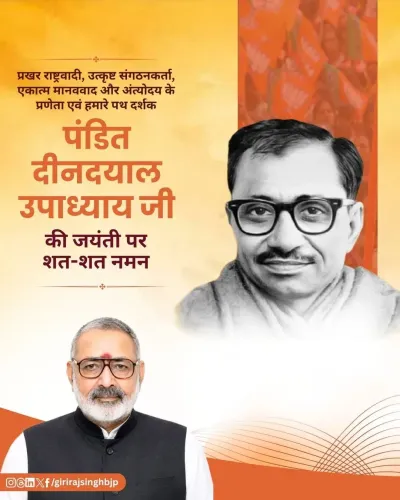
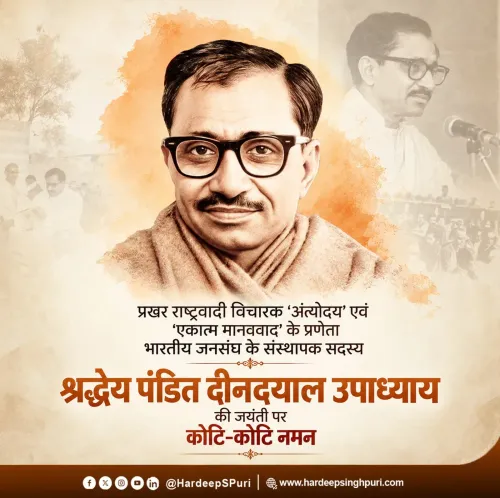
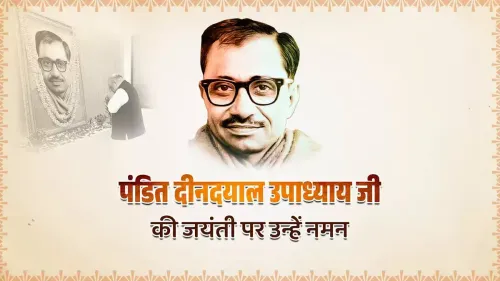
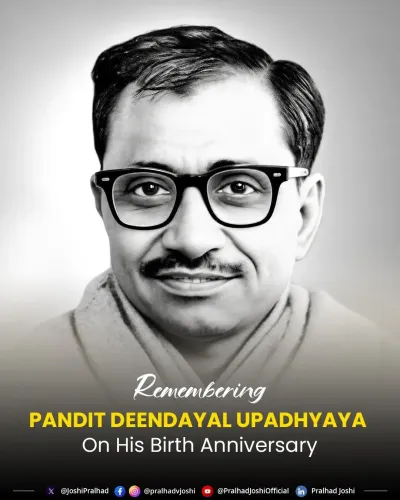
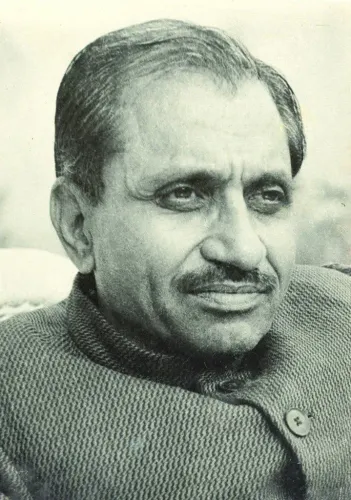
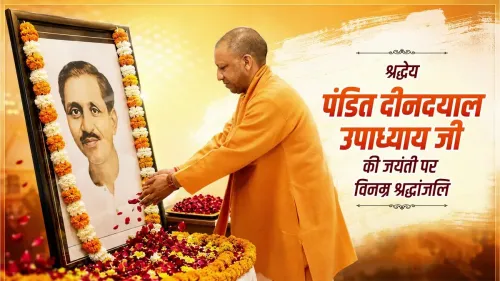
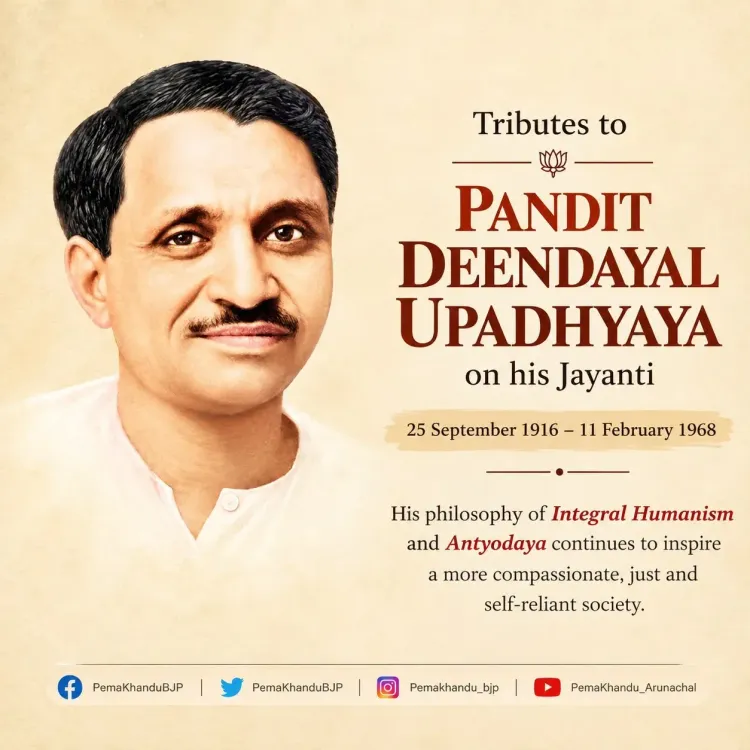
On the 125th birth anniversary of Pandit Deendayal Upadhyaya — the philosopher whose ideas still shape Indian governance — Arunachal Pradesh Chief Minister Pema Khandu offered tribute on Friday, 25 September 2026, honouring a man he called a 'devoted son of Mother India' who dedicated his life to public service.
Khandu's post invoked Upadhyaya's twin pillars: Integral Humanism and Antyodaya — the principle that places the welfare and dignity of the last, most marginalised person at the very centre of national development. 'He envisioned a self-reliant, self-respecting and harmonious India,' the Chief Minister wrote, capturing in a sentence the ideological compass that Upadhyaya drew for the movement that eventually became the Bharatiya Janata Party.
Who Was Pandit Deendayal Upadhyaya?
Pandit Deendayal Upadhyaya (1916–1968) was the principal ideologue of the Bharatiya Jana Sangh, the BJP's predecessor. His philosophy of Integral Humanism — articulated in a landmark 1965 lecture series — rejected both Western capitalism and Soviet-style socialism, proposing instead a distinctly Indian model that balanced individual, society, and nature in harmony. Antyodaya, meaning 'rise of the last,' demanded that the yardstick of any policy be its impact on the poorest citizen, not the average.
His life was cut short in mysterious circumstances in February 1968, but his ideas were never shelved. They became the organisational soul of the Jana Sangh and, later, the intellectual foundation on which the BJP built its welfare rhetoric.
From Philosophy to Policy: The Antyodaya Yojana Legacy
Upadhyaya's ideas did not remain confined to party pamphlets. In 2015, the central government restructured and expanded the Deendayal Antyodaya Yojana – National Rural Livelihoods Mission, explicitly drawing from the Antyodaya principle to promote self-employment and skill development among rural and marginalised communities. The scheme's very name is a living citation — a direct acknowledgement that Upadhyaya's vision of the last person's dignity has been translated into budgeted, ground-level policy.
For a frontier state like Arunachal Pradesh, where geography isolates communities and development gaps remain steep, the Antyodaya framework carries particular resonance. Khandu's tribute is not merely ceremonial; it signals continued ideological alignment with a welfare model built around the state's most remote and underserved citizens.
A Party-Wide Anniversary Ritual
Across India every 25 September, BJP leaders from state capitals to district headquarters issue tributes to Upadhyaya — a choreographed but genuinely felt practice that reaffirms the party's ideological lineage stretching back to the Jana Sangh era. Khandu's post fits that pattern but is also consistent with his administration's stated focus on grassroots welfare in one of India's most geographically and demographically complex states.
Upadhyaya imagined a country where the last person in the furthest village was not a footnote to progress but its very proof. Seventy-five years since his birth, that question — whether policy reaches those furthest from power — remains as live as ever.
Point of View
Party-wide commemoration that serves a dual purpose: celebrating an intellectual ancestor and signalling ongoing commitment to a welfare model centred on the marginalised. For the BJP, Upadhyaya's Antyodaya is not just history — it is the ideological cover for flagship schemes like the rural livelihoods mission, giving grassroots welfare policy a philosophical pedigree that predates the party itself. In a border state like Arunachal Pradesh, where development delivery is complicated by terrain and demography, invoking Antyodaya also carries a quiet administrative message: the furthest villages are the benchmark, not an afterthought.
NationPress
25 Sept 2026
Frequently Asked Questions
When is Pandit Deendayal Upadhyaya's birth anniversary?
Pandit Deendayal Upadhyaya was born on 25 September 1916 , and his birth anniversary is observed every year on that date.
What is Integral Humanism, the philosophy of Deendayal Upadhyaya?
Integral Humanism is a political philosophy articulated by Upadhyaya in 1965 , proposing an Indian model of development that balances the individual, society, and nature — rejecting both Western capitalism and Soviet socialism in favour of a holistic, culturally rooted approach.
What is the meaning of Antyodaya?
Antyodaya means 'rise of the last' — the principle that the welfare and dignity of the poorest and most marginalised person should be the primary measure of any development policy.
What is the Deendayal Antyodaya Yojana?
The Deendayal Antyodaya Yojana – National Rural Livelihoods Mission is a central government scheme restructured in 2015 to promote self-employment and skill development among rural communities, named directly after Upadhyaya's Antyodaya principle.
Why does the BJP commemorate Deendayal Upadhyaya every year?
The BJP traces its ideological lineage to the Bharatiya Jana Sangh , of which Upadhyaya was the chief thinker. Annual tributes on his birth anniversary reaffirm the party's commitment to his welfare-centred, culturally rooted development philosophy.