CM Dhami Pushes Beekeeping with 80% Subsidy for Uttarakhand Farmers
Synopsis
Uttarakhand CM Pushkar Singh Dhami has announced subsidies of up to 80% for beekeeping and honey production, aiming to create self-employment and supplement incomes for the state's hill farmers through apiculture.
Key Takeaways
Uttarakhand CM Pushkar Singh Dhami announced a beekeeping promotion initiative on September 24, 2026 .
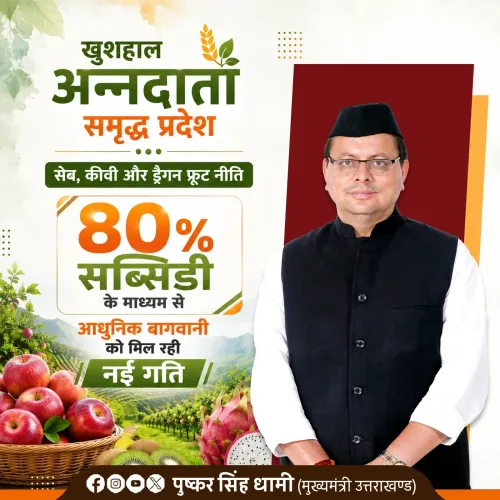
The state government is offering subsidies of up to 80% to encourage farmers to adopt apiculture.
The initiative targets self-employment, supplementary income, and local resource utilisation for hill farmers.
The scheme aligns with the Central government's National Beekeeping and Honey Mission launched in 2020 .
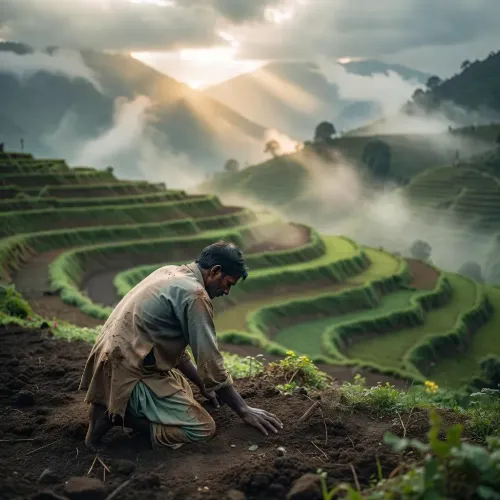
Uttarakhand's hilly terrain and rich floral biodiversity make it well-suited for honey production of diverse varieties.
Successful rollout depends on training infrastructure, beneficiary enrolment, and matching state budget allocations.
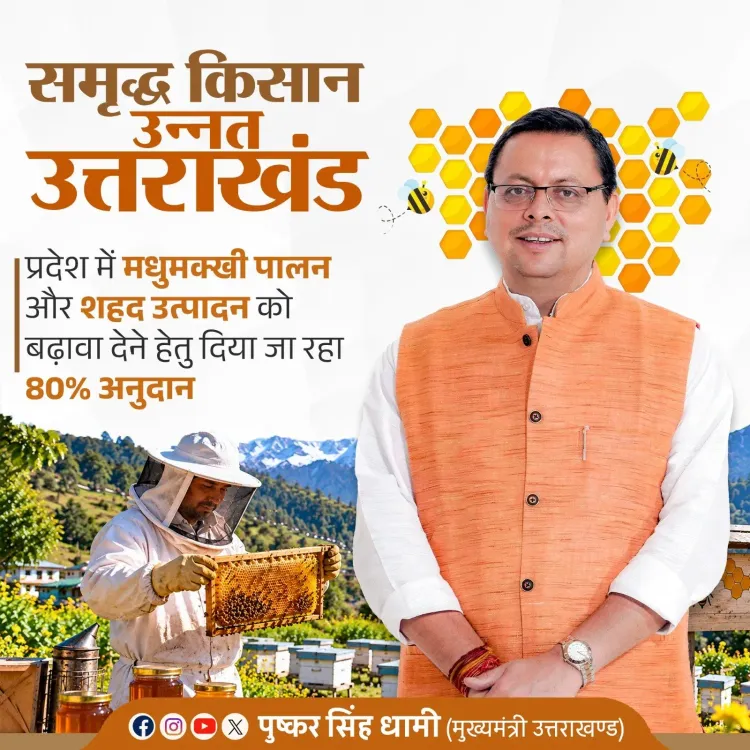
In the hills of Uttarakhand, where flat arable land is a luxury, Uttarakhand Chief Minister Pushkar Singh Dhami is betting on a small but transformative creature to lift farmer incomes — the honeybee. On Thursday, September 24, 2026, Dhami announced that the state government is actively connecting farmers to beekeeping and honey production, offering subsidies of up to 80% to encourage adoption of apiculture across the state.
In his post, CM Dhami stated: 'प्रदेश के किसानों को मधुमक्खी पालन और शहद उत्पादन से जोड़कर उनकी आय के नए अवसरों को बढ़ावा दिया जा रहा है' — 'New income opportunities are being promoted by connecting the state's farmers to beekeeping and honey production.' He described the initiative as a push toward self-employment, supplementary income, and better use of local natural resources.
Why Beekeeping Makes Strategic Sense for Uttarakhand
Uttarakhand's hilly terrain makes large-scale conventional farming difficult for most households. Beekeeping — low on land requirement, high on return — fits the geography with unusual precision. The state's diverse floral biodiversity, from the lower foothills to the mid-Himalayan range, creates ideal conditions for honey production of varied and premium varieties.
The initiative aligns directly with the National Beekeeping and Honey Mission, launched by the Central government in 2020 under the Ministry of Agriculture, which sought to scale up apiculture nationally, improve honey quality, and create micro-enterprises in rural areas. Uttarakhand's state-level subsidy push amplifies that framework at the ground level, specifically targeting farmers who have limited alternatives to diversify their income.
Self-Employment at the Centre of Dhami's Farm Push
CM Dhami, who has helmed Uttarakhand since 2021, has consistently emphasised agriculture diversification as a pillar of rural economic policy. Beekeeping fits neatly into a broader national pattern — Indian states, particularly hill states, have leaned into allied agricultural activities such as mushroom cultivation, herbal farming, and apiculture to chip away at rural underemployment without requiring large capital investment.
The promise of up to 80% subsidy on beekeeping equipment and setup costs dramatically lowers the entry barrier for small and marginal farmers. Beyond honey, beekeeping carries a secondary agricultural dividend: pollination services that improve yields of fruit and vegetable crops grown alongside, multiplying the benefit for the same farming household.
The key test now lies in execution — how many farmers are enrolled, what training infrastructure backs the subsidy, and whether state budget allocations match the ambition. India's doubling-farmer-income target has seen many well-designed schemes stumble at the last mile. Uttarakhand's hills deserve to see this one land.
Point of View
Giving Uttarakhand a visible, photographable policy win ahead of any electoral cycle. The real analytical question is whether the state pairs the subsidy with robust extension services — equipment alone rarely transforms livelihoods. If training and market linkages follow, this could become a replicable model for other Himalayan states.
NationPress
24 Sept 2026
Frequently Asked Questions
What subsidy is Uttarakhand offering for beekeeping?
The Uttarakhand government is offering subsidies of up to 80% to farmers who take up beekeeping and honey production as part of its apiculture promotion initiative announced by CM Pushkar Singh Dhami.
Why is Uttarakhand promoting beekeeping for farmers?
Uttarakhand's hilly terrain limits conventional farming, so beekeeping offers a low-land, low-capital path to supplementary income and self-employment, making it a strategic fit for the state's rural economy.
What is the National Beekeeping and Honey Mission?
The National Beekeeping and Honey Mission was launched by the Central government in 2020 under the Ministry of Agriculture to scale up apiculture, improve honey quality, and support farmer incomes through micro-enterprises across India.
How does beekeeping help farmers beyond honey production?
Beyond honey, bees provide pollination services that improve yields of fruit and vegetable crops grown alongside, effectively multiplying the agricultural benefit for the same farming household.
Who is Pushkar Singh Dhami?
Pushkar Singh Dhami is the Chief Minister of Uttarakhand and a BJP leader who has been in office since 2021, with a policy focus on agriculture diversification and rural self-employment in the hill state.